Limited beta · What is this?

pgTrue is under active development: reports may contain significant mistakes, inaccuracies, or bugs. Please report anything you find to pgtrue@postgres.ai.

pgTrue is an independent fact-check of technical Postgres articles. Read the questions and answers.

pgTrue fact-check

ElephantSeal ALimited coverage

Embed

The ElephantSeal always shows this report's latest edition and links here. Copies cached elsewhere may update later.

[![pgTrue fact-check](https://pgtrue.postgres.ai/badge/aec8a3c4-f851-4544-b818-a4b75984eef8.svg?v=13&theme=light)](https://pgtrue.postgres.ai/shared/brief/aec8a3c4-f851-4544-b818-a4b75984eef8)
<a href="https://pgtrue.postgres.ai/shared/brief/aec8a3c4-f851-4544-b818-a4b75984eef8"><img src="https://pgtrue.postgres.ai/badge/aec8a3c4-f851-4544-b818-a4b75984eef8.svg?v=13&amp;theme=light" alt="pgTrue fact-check" width="90" height="20" loading="lazy" decoding="async" style="display:inline-block;width:90px;height:20px"></a>
https://pgtrue.postgres.ai/badge/aec8a3c4-f851-4544-b818-a4b75984eef8.svg?v=13&theme=light
.. image:: https://pgtrue.postgres.ai/badge/aec8a3c4-f851-4544-b818-a4b75984eef8.svg?v=13&theme=light
   :target: https://pgtrue.postgres.ai/shared/brief/aec8a3c4-f851-4544-b818-a4b75984eef8
   :alt: pgTrue fact-check
   :width: 90
   :height: 20
[![pgTrue fact-check](https://pgtrue.postgres.ai/badge/aec8a3c4-f851-4544-b818-a4b75984eef8.svg?v=13&theme=dark)](https://pgtrue.postgres.ai/shared/brief/aec8a3c4-f851-4544-b818-a4b75984eef8)
<a href="https://pgtrue.postgres.ai/shared/brief/aec8a3c4-f851-4544-b818-a4b75984eef8"><img src="https://pgtrue.postgres.ai/badge/aec8a3c4-f851-4544-b818-a4b75984eef8.svg?v=13&amp;theme=dark" alt="pgTrue fact-check" width="90" height="20" loading="lazy" decoding="async" style="display:inline-block;width:90px;height:20px"></a>
https://pgtrue.postgres.ai/badge/aec8a3c4-f851-4544-b818-a4b75984eef8.svg?v=13&theme=dark
.. image:: https://pgtrue.postgres.ai/badge/aec8a3c4-f851-4544-b818-a4b75984eef8.svg?v=13&theme=dark
   :target: https://pgtrue.postgres.ai/shared/brief/aec8a3c4-f851-4544-b818-a4b75984eef8
   :alt: pgTrue fact-check
   :width: 90
   :height: 20
[![pgTrue fact-check](https://pgtrue.postgres.ai/badge/aec8a3c4-f851-4544-b818-a4b75984eef8.svg?v=13)](https://pgtrue.postgres.ai/shared/brief/aec8a3c4-f851-4544-b818-a4b75984eef8)
<a href="https://pgtrue.postgres.ai/shared/brief/aec8a3c4-f851-4544-b818-a4b75984eef8"><img src="https://pgtrue.postgres.ai/badge/aec8a3c4-f851-4544-b818-a4b75984eef8.svg?v=13" alt="pgTrue fact-check" width="90" height="20" loading="lazy" decoding="async" style="display:inline-block;width:90px;height:20px"></a>
https://pgtrue.postgres.ai/badge/aec8a3c4-f851-4544-b818-a4b75984eef8.svg?v=13
.. image:: https://pgtrue.postgres.ai/badge/aec8a3c4-f851-4544-b818-a4b75984eef8.svg?v=13
   :target: https://pgtrue.postgres.ai/shared/brief/aec8a3c4-f851-4544-b818-a4b75984eef8
   :alt: pgTrue fact-check
   :width: 90
   :height: 20
[![pgTrue fact-check](https://pgtrue.postgres.ai/badge/aec8a3c4-f851-4544-b818-a4b75984eef8/radar.svg?v=13&theme=light)](https://pgtrue.postgres.ai/shared/brief/aec8a3c4-f851-4544-b818-a4b75984eef8)
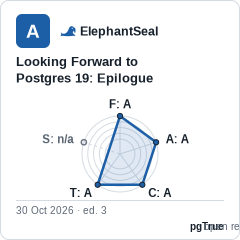
<a href="https://pgtrue.postgres.ai/shared/brief/aec8a3c4-f851-4544-b818-a4b75984eef8"><img src="https://pgtrue.postgres.ai/badge/aec8a3c4-f851-4544-b818-a4b75984eef8/radar.svg?v=13&amp;theme=light" alt="pgTrue fact-check" width="240" height="240" loading="lazy" decoding="async" style="display:inline-block;width:240px;height:240px"></a>
https://pgtrue.postgres.ai/badge/aec8a3c4-f851-4544-b818-a4b75984eef8/radar.svg?v=13&theme=light
.. image:: https://pgtrue.postgres.ai/badge/aec8a3c4-f851-4544-b818-a4b75984eef8/radar.svg?v=13&theme=light
   :target: https://pgtrue.postgres.ai/shared/brief/aec8a3c4-f851-4544-b818-a4b75984eef8
   :alt: pgTrue fact-check
   :width: 240
   :height: 240
[![pgTrue fact-check](https://pgtrue.postgres.ai/badge/aec8a3c4-f851-4544-b818-a4b75984eef8/radar.svg?v=13&theme=dark)](https://pgtrue.postgres.ai/shared/brief/aec8a3c4-f851-4544-b818-a4b75984eef8)
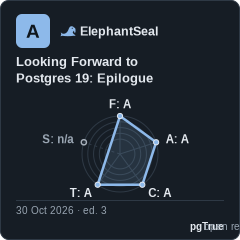
<a href="https://pgtrue.postgres.ai/shared/brief/aec8a3c4-f851-4544-b818-a4b75984eef8"><img src="https://pgtrue.postgres.ai/badge/aec8a3c4-f851-4544-b818-a4b75984eef8/radar.svg?v=13&amp;theme=dark" alt="pgTrue fact-check" width="240" height="240" loading="lazy" decoding="async" style="display:inline-block;width:240px;height:240px"></a>
https://pgtrue.postgres.ai/badge/aec8a3c4-f851-4544-b818-a4b75984eef8/radar.svg?v=13&theme=dark
.. image:: https://pgtrue.postgres.ai/badge/aec8a3c4-f851-4544-b818-a4b75984eef8/radar.svg?v=13&theme=dark
   :target: https://pgtrue.postgres.ai/shared/brief/aec8a3c4-f851-4544-b818-a4b75984eef8
   :alt: pgTrue fact-check
   :width: 240
   :height: 240
[![pgTrue fact-check](https://pgtrue.postgres.ai/badge/aec8a3c4-f851-4544-b818-a4b75984eef8/radar.svg?v=13)](https://pgtrue.postgres.ai/shared/brief/aec8a3c4-f851-4544-b818-a4b75984eef8)
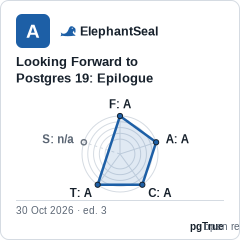
<a href="https://pgtrue.postgres.ai/shared/brief/aec8a3c4-f851-4544-b818-a4b75984eef8"><img src="https://pgtrue.postgres.ai/badge/aec8a3c4-f851-4544-b818-a4b75984eef8/radar.svg?v=13" alt="pgTrue fact-check" width="240" height="240" loading="lazy" decoding="async" style="display:inline-block;width:240px;height:240px"></a>
https://pgtrue.postgres.ai/badge/aec8a3c4-f851-4544-b818-a4b75984eef8/radar.svg?v=13
.. image:: https://pgtrue.postgres.ai/badge/aec8a3c4-f851-4544-b818-a4b75984eef8/radar.svg?v=13
   :target: https://pgtrue.postgres.ai/shared/brief/aec8a3c4-f851-4544-b818-a4b75984eef8
   :alt: pgTrue fact-check
   :width: 240
   :height: 240
[![pgTrue fact-check](https://pgtrue.postgres.ai/badge/aec8a3c4-f851-4544-b818-a4b75984eef8/wide.svg?v=13&theme=light)](https://pgtrue.postgres.ai/shared/brief/aec8a3c4-f851-4544-b818-a4b75984eef8)
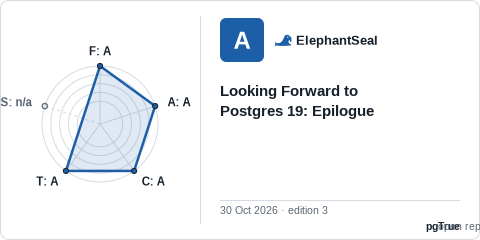
<a href="https://pgtrue.postgres.ai/shared/brief/aec8a3c4-f851-4544-b818-a4b75984eef8"><img src="https://pgtrue.postgres.ai/badge/aec8a3c4-f851-4544-b818-a4b75984eef8/wide.svg?v=13&amp;theme=light" alt="pgTrue fact-check" width="480" height="240" loading="lazy" decoding="async" style="display:inline-block;width:480px;height:240px"></a>
https://pgtrue.postgres.ai/badge/aec8a3c4-f851-4544-b818-a4b75984eef8/wide.svg?v=13&theme=light
.. image:: https://pgtrue.postgres.ai/badge/aec8a3c4-f851-4544-b818-a4b75984eef8/wide.svg?v=13&theme=light
   :target: https://pgtrue.postgres.ai/shared/brief/aec8a3c4-f851-4544-b818-a4b75984eef8
   :alt: pgTrue fact-check
   :width: 480
   :height: 240
[![pgTrue fact-check](https://pgtrue.postgres.ai/badge/aec8a3c4-f851-4544-b818-a4b75984eef8/wide.svg?v=13&theme=dark)](https://pgtrue.postgres.ai/shared/brief/aec8a3c4-f851-4544-b818-a4b75984eef8)
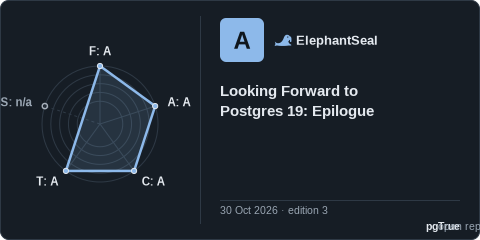
<a href="https://pgtrue.postgres.ai/shared/brief/aec8a3c4-f851-4544-b818-a4b75984eef8"><img src="https://pgtrue.postgres.ai/badge/aec8a3c4-f851-4544-b818-a4b75984eef8/wide.svg?v=13&amp;theme=dark" alt="pgTrue fact-check" width="480" height="240" loading="lazy" decoding="async" style="display:inline-block;width:480px;height:240px"></a>
https://pgtrue.postgres.ai/badge/aec8a3c4-f851-4544-b818-a4b75984eef8/wide.svg?v=13&theme=dark
.. image:: https://pgtrue.postgres.ai/badge/aec8a3c4-f851-4544-b818-a4b75984eef8/wide.svg?v=13&theme=dark
   :target: https://pgtrue.postgres.ai/shared/brief/aec8a3c4-f851-4544-b818-a4b75984eef8
   :alt: pgTrue fact-check
   :width: 480
   :height: 240
[![pgTrue fact-check](https://pgtrue.postgres.ai/badge/aec8a3c4-f851-4544-b818-a4b75984eef8/wide.svg?v=13)](https://pgtrue.postgres.ai/shared/brief/aec8a3c4-f851-4544-b818-a4b75984eef8)
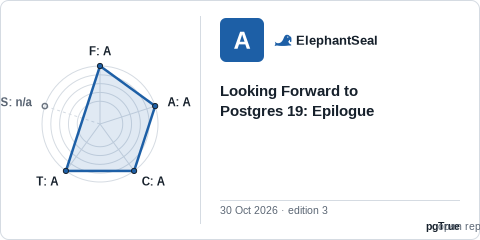
<a href="https://pgtrue.postgres.ai/shared/brief/aec8a3c4-f851-4544-b818-a4b75984eef8"><img src="https://pgtrue.postgres.ai/badge/aec8a3c4-f851-4544-b818-a4b75984eef8/wide.svg?v=13" alt="pgTrue fact-check" width="480" height="240" loading="lazy" decoding="async" style="display:inline-block;width:480px;height:240px"></a>
https://pgtrue.postgres.ai/badge/aec8a3c4-f851-4544-b818-a4b75984eef8/wide.svg?v=13
.. image:: https://pgtrue.postgres.ai/badge/aec8a3c4-f851-4544-b818-a4b75984eef8/wide.svg?v=13
   :target: https://pgtrue.postgres.ai/shared/brief/aec8a3c4-f851-4544-b818-a4b75984eef8
   :alt: pgTrue fact-check
   :width: 480
   :height: 240

Click the snippet to select all of it, then copy. Where SVG is stripped, as in some email clients and feed readers, change .svg to .png. PNG uses the light theme for Auto. For Markdown PNG embeds, use the HTML snippet where supported to preserve the display size.

Optional colours: append &color=26798E or &labelColor=333C47 after a theme query (use ? for the first parameter). Use 3- or 6-digit hex.

For pages with a light background.

For pages with a dark background. The ElephantSeal gets a thin edge so it does not blend in.

Auto follows the reader's light or dark setting where the host supports it, and shows the light ElephantSeal where it does not.

On a light page
On a dark page

Looking Forward to Postgres 19: Epilogue (opens in new tab)

pgedge.com
Sound as far as we checked.
0
inaccuracy
0
dangerous-recipe
0
misleading
0
imprecise
0
transcription
0
aged
0
withdrawn
14
verified-accurate

Central claim not verified: why PostgreSQL 19 lost features, and whether automated testing and review shortages explain its release uncertainty. We could not verify this, and the article gives no method to reproduce it.

Factual A · Applicable A · Consistent A · Transparent A · Safe —

ReportTechnical fact-check, edition 3 pgTrue versionaudited with v1.0.17 (approx.) · regraded with v1.1.3 Issued EditionUpdated after review. Corrections are listed below. SubmittedSubmitted by the PostgresAI team. Author responseNo written reply from the author. The article changed 1 time after our first audit; we re-audited each version. See Revisions below. Policy: right-of-reply and corrections policy.

InaccuraciesNone in this edition.

Dangerous or recipe bugsNone in this edition.

Misleading / impreciseNone in this edition.

Verified accurate

F2

GROUP BY ALL bypassed ORDER BY operator copying

ACCURATEFactual · holds up after review

Claim ledger

Article says
…skipped the logic copying operator semantics from a matching ORDER BY item…
What is true
REL_19_BETA1 uses default grouping semantics in its ALL branch and returns before ordinary grouping processing. Explicit grouping copies a matching ORDER BY clause. These paths support the article's explanation of different equality semantics.
Charitable reading
The article describes the historical implementation, rather than asserting that the reverted syntax remains available.

Source

Source · REL_19_BETA1 · src/backend/parser/parse_clause.c:2790-2828* Otherwise, add the TLE to the result using default sort/group * semantics. We specify the parse location as the TLE's
In the article · section “Lowered Expectations”

In the article

excerpt · section “Lowered Expectations” · as fetched 2026-10-21 · open in article ↗ (opens in new tab)

Lowered Expectations

Chao Li reported on June 29th that the feature took a separate branch inside transformGroupClause() which skipped the logic copying operator semantics from a matching ORDER BY item. A query with an explicit grouping column and ORDER BY a USING operator(pg_catalog.*<) results in two rows, while GROUP BY ALL returns one.

All sources and excerpts · 3
Evidence * Otherwise, add the TLE to the result using default sort/group * semantics. We specify the parse location as the TLE's

Version note: Historical implementation before the GROUP BY ALL revert.

Evidence if (result != NIL) return result;

Version note: Historical implementation before the GROUP BY ALL revert.

Evidence if (sc->tleSortGroupRef == tle->ressortgroupref) { SortGroupClause *grpc = copyObject(sc);

Version note: Explicit grouping copies the matching ORDER BY clause.

How the review tested this

Review: We compared both REL_19_BETA1 paths. ALL uses default grouping semantics. Explicit grouping copies the matching ORDER BY clause. We checked the historical implementation instead of the current parser. Beta 1 uses default semantics and returns before explicit grouping copies matching ORDER BY operators.

F3

Verified accurate: “…a live batch of pending checks interacts with trigger-firing cycles, subtransactions…”

ACCURATEFactual · partly holds after review

Claim ledger

Article says
…a live batch of pending checks interacts with trigger-firing cycles, subtransactions, deferred constraints, and SET CONSTRAINTS…
What is true
REL_19_BETA3 buffers foreign-key checks and routes subtransaction checks through the per-row path. The September 3 message supports batching lifetime risks (E-10). Its separate snapshot-ordering bug affects the per-row path, and batching masks that bug (E-11).

Source

Source · https://www.postgresql.org/message-id/CA%2BHiwqEDcCSDoYTtoXH4Ta_BpGN%2BrevMZSLLj6GRz2_5ybwE1g%40mail.gmail.comMissing one such interaction can leave a foreign key check buffered and never performed, allowing a violating row to be committed without an error.
In the article · section “Up For Grabs”

In the article

excerpt · section “Up For Grabs” · as fetched 2026-10-21 · open in article ↗ (opens in new tab)

Up For Grabs

“The batching fixes are considerably more concerning than those to the underlying per-row fast path, because they have repeatedly had to address how a live batch of pending checks interacts with trigger-firing cycles, subtransactions, deferred constraints, and SET CONSTRAINTS, rather than merely correcting isolated implementation errors. Missing one such interaction can leave a foreign key check buffered and never performed, allowing a violating row to be committed without an error.”

All sources and excerpts · 4
EvidenceMissing one such interaction can leave a foreign key check buffered and never performed, allowing a violating row to be committed without an error.
EvidenceA referenced row committed during that wait would not be visible to the old snapshot, causing a false foreign key violation.
Evidence /* Flush as soon as the batch is full. */ if (fpentry->batch_count == RI_FASTPATH_BATCH_SIZE) ri_FastPathBatchFlush(fpentry, fk_rel, riinfo);

Version note: Historical batching implementation.

Evidence * - any FK check inside a subtransaction, since the batch cache * is confined to the top transaction level (it cannot be cleanly * unwound on subxact abort);

Version note: Historical fallback for checks inside subtransactions.

How the review tested this

Review: We checked which path caused the snapshot defect. E-11 describes a per-row bug that batching masked. The title incorrectly attributes both risks to batching. We checked which implementation caused the snapshot bug. The September 3 message places it in the per-row path. Batching masked that bug. The batching lifetime risks remain supported.

F5

The submission-timing recommendation matches project guidance

ACCURATEFactual · holds up after review

Claim ledger

Article says
…submit before the start of a new commitfest…
What is true
The Submitting a Patch guide defines CommitFests as review periods. It recommends submitting new patches outside an active CommitFest. The article's timing advice follows that guidance.
Charitable reading
The article gives submission guidance, rather than claiming that an active CommitFest prevents all submissions.

Source

Source · https://wiki.postgresql.org/wiki/Submitting_a_PatchPostgreSQL development is organized with periodic CommitFests , which are periods where new development halts in order to focus on patch review and committing.
In the article · section “The Course of a Year”

In the article

excerpt · section “The Course of a Year” · as fetched 2026-10-21 · open in article ↗ (opens in new tab)

The Course of a Year

The Submitting a Patch wiki page is a great starting place for those interested in joining the fun. Keep patches concise, submit before the start of a new commitfest, and get new functionality in before the feature freeze. The principal ask is that submitters also review; reviews on your patch are the participation trophy for keeping review traffic flowing.

All sources and excerpts · 2
EvidencePostgreSQL development is organized with periodic CommitFests , which are periods where new development halts in order to focus on patch review and committing.
EvidenceIt's best if you can avoid sending in a new patch during the occasional weeks when there is an active CommitFest
How the review tested this

Review: We tested recommendation versus prohibition. The finding preserves that distinction and matches the submission guide's timing advice. We checked whether the recommendation implies a submission prohibition. The finding describes timing advice. The guide recommends avoiding new submissions during an active CommitFest.

F6

PostgreSQL beta releases prohibit new features

ACCURATEFactual · holds up after review

Claim ledger

Article says
…beta, which the project defines as feature-frozen…
What is true
The project's Beta Information page defines beta releases as feature-frozen. Its definition excludes new features. The article correctly recommends landing new functionality before that stage.
Charitable reading
Feature freeze prevents additions. It does not guarantee that existing features will survive beta testing.

Source

Source · https://www.postgresql.org/developer/beta/They are feature-frozen (i.e. no new features are added)
In the article · section “The Course of a Year”

In the article

excerpt · section “The Course of a Year” · as fetched 2026-10-21 · open in article ↗ (opens in new tab)

The Course of a Year

The feature freeze for Postgres 19 was April 8th of 2026. After that comes beta, which the project defines as feature-frozen. Then it says this:

All sources and excerpts · 1
EvidenceThey are feature-frozen (i.e. no new features are added)
How the review tested this

Review: We tested whether feature freeze guarantees retention. The finding only excludes additions, matching the beta policy. We checked whether feature freeze guarantees retention. The finding only excludes additions. The beta policy explicitly defines feature-frozen releases that way.

F7

Beta 3 checksum conversion justified I/O testing

ACCURATEFactual · holds up after review

Claim ledger

Article says
…time the conversion, vary the I/O knobs and build a production playbook…
What is true
REL_19_BETA3 documents page rewrites, WAL writes, and conversion throttling through cost_delay and cost_limit. Those mechanisms support measuring conversion time and varying its I/O controls before production planning.
Charitable reading
The recommendation concerns testing the then-existing online conversion feature. It does not prescribe production use of beta software.

Source

Source · REL_19_BETA3 · doc/src/sgml/wal.sgml:350-358Enabling data checksums can cause significant I/O to the system, as all of the database pages will need to be rewritten, and will be written both to the data files and the WAL. The impact may be limited by throttling using the <parameter>cost_delay</parameter> and <parameter>cost_limit</parameter> parameters of the <function>pg_enable_data_checksums()</function> function.
In the article · section “Fingers Still Crossed”

In the article

excerpt · section “Fingers Still Crossed” · as fetched 2026-10-21 · open in article ↗ (opens in new tab)

Fingers Still Crossed

My Checksums For All post told readers to restore a backup, time the conversion, vary the I/O knobs and build a production playbook, because Postgres 19 was coming very soon. That advice still stands and the feature is still in the tree, but "very soon" has not aged especially well.

All sources and excerpts · 1
Evidence Enabling data checksums can cause significant I/O to the system, as all of the database pages will need to be rewritten, and will be written both to the data files and the WAL. The impact may be limited by throttling using the <parameter>cost_delay</parameter> and <parameter>cost_limit</parameter> parameters of the <function>pg_enable_data_checksums()</function> function.

Version note: Historical documentation for the online checksum feature.

How the review tested this

Review: We rechecked REL_19_BETA3 documentation. It supports I/O measurement and throttling tests. The finding does not certify publication-date availability. We checked whether Beta 3 documentation proves publication-date availability. The finding limits itself to the historical testing rationale. wal.sgml documents page rewrites, WAL writes, and both throttling parameters.

F8

Verified accurate: “…v19 keeps the per-row fast path and loses the batching…”

ACCURATEFactual · partly holds after review · also flagged 1 more time

Claim ledger

Article says
…v19 keeps the per-row fast path and loses the batching…
What is true
The pinned PostgreSQL 19 excerpt documents a per-row foreign-key check through a direct index probe, bypassing SPI. This supports the retained per-row optimization. E-22 does not establish removal of the batching layer.

Source

Source · REL_19_STABLE@48b43081e5 · src/backend/utils/adt/ri_triggers.c:2755-2765* Perform per row FK existence check via direct index probe, * bypassing SPI.
In the article · section “Up For Grabs”

In the article

excerpt · section “Up For Grabs” · as fetched 2026-10-21 · open in article ↗ (opens in new tab)

Up For Grabs

There was a bit more back-and-forth in the thread like this, and Langote finally pushed the changes on the 10th. So v19 keeps the per-row fast path and loses the batching, and master keeps both while batching gets another year to settle. While an acceptable conclusion, reaching it took three weeks and four committers, all because one reviewer had no time in August.

Commitfest Patches Committed % Committed Withdrawn PG19-1 388 139 36 21 PG20-1 628 190 30 51 PG19-2 307 69 22 7 PG20-2 526 91 17 24
All sources and excerpts · 1
Evidence * Perform per row FK existence check via direct index probe, * bypassing SPI.
How the review tested this

Review: We tested whether a retained per-row function proves batching was removed. E-22 documents the direct index probe. It does not establish that batching entry points are absent. F8 certifies both claims from evidence supporting only the first.

F9

The risk-discussion thread began on August 25, 2026

ACCURATEFactual · holds up after review

Claim ledger

Article says
…On August 25th of 2026, Robert Haas opened a pgsql-hackers thread called "scary patch contest"…
What is true
Robert Haas opened “scary patch contest” on August 25, 2026. The original message lists the six feature groups named in the article.
Charitable reading
The article identifies the initial message rather than every later reply.

Source

Source · https://www.postgresql.org/message-id/CA%2BTgmob9NY6m0YNFTQ4nFH2d0iC9SQRruDYxfndGKKzh8OC80w%40mail.gmail.comSubject: scary patch contest Date: 2026-08-25 16:48:25
In the article · section “A Call to Arms”

In the article

excerpt · section “A Call to Arms” · as fetched 2026-10-21 · open in article ↗ (opens in new tab)

A Call to Arms

On August 25th of 2026, Robert Haas opened a pgsql-hackers thread called "scary patch contest" that opened like this:

All sources and excerpts · 1
EvidenceSubject: scary patch contest Date: 2026-08-25 16:48:25
How the review tested this

Review: We distinguished the original message from later replies. Its author, August 25 date, subject, and six-item list match. We checked the original message rather than later thread dates. Its author, August 25 timestamp, subject, and six numbered feature groups support the finding.

F10

CommitFest submitters are expected to review another patch

ACCURATEFactual · holds up after review

Claim ledger

Article says
The principal ask is that submitters also review…
What is true
The submission wiki expects each CommitFest submitter to review at least 1 other patch. It recommends similar size or scope.
Charitable reading
The sentence summarizes mutual review rather than promising patch acceptance.

Source

Source · https://wiki.postgresql.org/wiki/Submitting_a_PatchEach patch submitter to a CommitFest is expected to review at least one other patch.
In the article · section “The Course of a Year”

In the article

excerpt · section “The Course of a Year” · as fetched 2026-10-21 · open in article ↗ (opens in new tab)

The Course of a Year

The Submitting a Patch wiki page is a great starting place for those interested in joining the fun. Keep patches concise, submit before the start of a new commitfest, and get new functionality in before the feature freeze. The principal ask is that submitters also review; reviews on your patch are the participation trophy for keeping review traffic flowing.

All sources and excerpts · 1
EvidenceEach patch submitter to a CommitFest is expected to review at least one other patch.
How the review tested this

Review: We checked whether mutual review guarantees acceptance. The finding makes no such promise and matches the guide's review expectation. We checked whether mutual review promises acceptance. The finding makes no such promise. The guide expects at least 1 review and recommends similar patch size or scope.

F11

The beta policy permits incompatible changes and feature removal

ACCURATEFactual · holds up after review

Claim ledger

Article says
…Features are subject to changes that are backwards incompatible at any time during the development of the betas…
What is true
The PostgreSQL beta policy contains the article's compatibility warning. It also explicitly permits removing features during beta development.
Charitable reading
Feature freeze prevents additions but does not guarantee retention or compatibility during beta.

Source

Source · https://www.postgresql.org/developer/beta/Features are subject to changes that are backwards incompatible at any time during the development of the betas, and could possibly be removed altogether.
In the article · section “The Course of a Year”

In the article

excerpt · section “The Course of a Year” · as fetched 2026-10-21 · open in article ↗ (opens in new tab)

The Course of a Year

Features are subject to changes that are backwards incompatible at any time during the development of the betas, and could possibly be removed altogether.

All sources and excerpts · 1
EvidenceFeatures are subject to changes that are backwards incompatible at any time during the development of the betas, and could possibly be removed altogether.
How the review tested this

Review: We checked both incompatible changes and removal. The beta policy explicitly permits both. We tested the apparent conflict between feature freeze and removal. The beta policy expressly permits incompatible changes and complete feature removal.

F12

Chao Li reported the grouping issue on June 29, 2026

ACCURATEFactual · holds up after review

Claim ledger

Article says
Chao Li reported on June 29th…
What is true
Chao Li posted the GROUP BY ALL operator-semantics report on June 29, 2026. Its example displays 2 explicit-grouping rows and 1 inferred-grouping row.
Charitable reading
This check establishes the report's date, not independent execution of its SQL example.

Source

Source · https://www.postgresql.org/message-id/5243308F-8E5C-45AA-828C-FAD96C4F34DA%40gmail.comSubject: Fix GROUP BY ALL handling of ORDER BY operator semantics Date: 2026-06-29 07:20:24
In the article · section “Lowered Expectations”

In the article

excerpt · section “Lowered Expectations” · as fetched 2026-10-21 · open in article ↗ (opens in new tab)

Lowered Expectations

Chao Li reported on June 29th that the feature took a separate branch inside transformGroupClause() which skipped the logic copying operator semantics from a matching ORDER BY item. A query with an explicit grouping column and ORDER BY a USING operator(pg_catalog.*<) results in two rows, while GROUP BY ALL returns one.

All sources and excerpts · 1
EvidenceSubject: Fix GROUP BY ALL handling of ORDER BY operator semantics Date: 2026-06-29 07:20:24
How the review tested this

Review: We checked the original message's author, date, and displayed results. It shows 2 explicit-grouping rows and 1 inferred-grouping row. We checked the original message and distinguished displayed results from independently reproduced behavior. Chao Li's June 29 message displays 2 explicit-grouping rows and 1 inferred-grouping row.

F13

Langote opened the batching-removal discussion on September 3, 2026

ACCURATEFactual · holds up after review

Claim ledger

Article says
Langote's own summary on September 3rd…
What is true
Amit Langote posted the batching-removal proposal on September 3, 2026. He proposed retaining the per-row path in PostgreSQL 19.
Charitable reading
The September 3 message proposes removal. It does not itself establish the later commit date.

Source

Source · https://www.postgresql.org/message-id/CA%2BHiwqEDcCSDoYTtoXH4Ta_BpGN%2BrevMZSLLj6GRz2_5ybwE1g%40mail.gmail.comSubject: Revert RI fast-path batching from REL_19_STABLE Date: 2026-09-03 13:36:06
In the article · section “Up For Grabs”

In the article

excerpt · section “Up For Grabs” · as fetched 2026-10-21 · open in article ↗ (opens in new tab)

Up For Grabs

Every one of those bugs was eventually fixed. Fixing bugs was never the problem. Langote's own summary on September 3rd, which opens the revert thread for the fast-path batching patch , goes into more detail:

All sources and excerpts · 1
EvidenceSubject: Revert RI fast-path batching from REL_19_STABLE Date: 2026-09-03 13:36:06
How the review tested this

Review: We distinguished proposal date from commit date. The September 3 message proposes removing batching while retaining the per-row path. We checked whether the proposal establishes the later commit date. The finding only establishes September 3 authorship and the proposed retention of the per-row path.

F15

The first commitfest comparison adds up

ACCURATEFactual · holds up after review

Claim ledger

Article says
…PG19-1 388 139 36 21…
What is true
The printed counts yield 36% and 30% committed after rounding. Submissions increased 62% (derived: (628 - 388) / 388). Withdrawals more than doubled (derived: 51 / 21 = 2.43). These checks establish arithmetic consistency, not the historical counts.
Charitable reading
The 62% comparison refers to PG19-1 versus PG20-1, rather than both commitfest pairs combined.

Checked for internal consistency: the evidence is the article itself.

In the article · section “Up For Grabs”

In the article

excerpt · section “Up For Grabs” · as fetched 2026-10-21 · open in article ↗ (opens in new tab)

Up For Grabs

Commitfest Patches Committed % Committed Withdrawn PG19-1 388 139 36 21 PG20-1 628 190 30 51 PG19-2 307 69 22 7 PG20-2 526 91 17 24
How the review tested this

Review: We recalculated the first matched pair. Submission growth rounds to 62%, and withdrawals increase 2.43 times. Both committed percentages round correctly. We recalculated the first pair. Commit percentages round to 36% and 30%. Submission growth rounds to 62%. Withdrawals increased 2.43 times. The finding explicitly leaves historical counts unverified.

F16

The second commitfest percentages add up

ACCURATEFactual · holds up after review

Claim ledger

Article says
…PG19-2 307 69 22 7…
What is true
PG19-2 rounds to 22% committed (derived: 69 / 307). PG20-2 rounds to 17% committed (derived: 91 / 526). The second matched pair supports the stated decline in commit percentage. These calculations do not authenticate the historical counts.
Charitable reading
The table presents committed percentages rounded to whole percentage points.

Checked for internal consistency: the evidence is the article itself.

In the article · section “Up For Grabs”

In the article

excerpt · section “Up For Grabs” · as fetched 2026-10-21 · open in article ↗ (opens in new tab)

Up For Grabs

Commitfest Patches Committed % Committed Withdrawn PG19-1 388 139 36 21 PG20-1 628 190 30 51 PG19-2 307 69 22 7 PG20-2 526 91 17 24
How the review tested this

Review: We recalculated without intermediate rounding. The committed shares round to 22% and 17%. The finding excludes authentication of historical counts. We recalculated both quotients before rounding. Committed shares are 22.5% and 17.3%, which round to the printed 22% and 17%. The finding does not authenticate the counts.

F17

The annual release cadence matches project policy

ACCURATEFactual · holds up after review

Claim ledger

Article says
…Postgres ships a major version about once a year…
What is true
The PostgreSQL versioning policy specifies a new major version about once a year. The article states that approximate cadence accurately.
Charitable reading
About once a year describes the normal cadence and permits a delayed release.

Source

Source · https://www.postgresql.org/support/versioning/The PostgreSQL Global Development Group releases a new major version containing new features about once a year.
In the article · section “The Course of a Year”

In the article

excerpt · section “The Course of a Year” · as fetched 2026-10-21 · open in article ↗ (opens in new tab)

The Course of a Year

Postgres ships a major version about once a year .

All sources and excerpts · 1
EvidenceThe PostgreSQL Global Development Group releases a new major version containing new features about once a year.
How the review tested this

Review: We tested approximate cadence against a guaranteed release date. Both article and policy state an approximate annual cadence. We tested whether annual cadence guarantees a release date. Both the article and policy use an approximate interval. The finding makes no PostgreSQL 19 deadline claim.

Notes

2 not graded: findings no reader would act on differently
F1

Note: “These determine whether a feature, fix, document update, or anything else makes it into…”

NOTEpartly holds after review

Claim ledger

Article says
These determine whether a feature, fix, document update, or anything else makes it into Postgres at all.
What is true
The submission guide permits immediate acceptance through Workflow A (E-2). The article's broad CommitFest description omits that exception. Its separate timing advice recommends submitting before CommitFest, so the claimed instruction to delay fixes does not follow.
So what
Submit fixes to pgsql-hackers when ready instead of waiting for a CommitFest.

Source

Source · https://wiki.postgresql.org/wiki/Submitting_a_PatchIt's best if you can avoid sending in a new patch during the occasional weeks when there is an active CommitFest

Not graded: no reader would act differently on it.

In the article · section “The Course of a Year”

In the article

excerpt · section “The Course of a Year” · as fetched 2026-10-21 · open in article ↗ (opens in new tab)

The Course of a Year

The machine behind that cadence is the commitfest , a scheduled period where submitted patches get continuously reviewed until they're accepted, rejected, or the commitfest ends. These determine whether a feature, fix, document update, or anything else makes it into Postgres at all. The process is as ruthless as it is efficient.

All sources and excerpts · 2
EvidenceIt's best if you can avoid sending in a new patch during the occasional weeks when there is an active CommitFest
EvidenceWorkflow A: You post patch to pgsql-hackers A committer picks it up immediately and commits it.
How the review tested this

Review: We tested whether the article tells contributors to wait. E-14 recommends submitting before CommitFest. E-2 establishes an omitted exception, but does not establish the alleged delay. We tested the reading that CommitFests generally organize acceptance. The article extends that description to every change. Workflow A explicitly permits immediate acceptance. Submitting fixes when ready names a concrete action and avoids unnecessary waiting.

F4

Note: “A nested SET CONSTRAINTS ... IMMEDIATE opens a firing cycle without opening a new query…”

NOTEpartly holds after review

Claim ledger

Article says
A nested SET CONSTRAINTS ... IMMEDIATE opens a firing cycle without opening a new query level…
What is true
The PostgreSQL 19 excerpt shows a deferred-event loop incrementing afterTriggers.firing_counter. It does not establish whether SET CONSTRAINTS opens another query level. We have not verified that part of the article's explanation.

Source

Source · REL_19_STABLE@48b43081e5 · src/backend/commands/trigger.c:6042-6078while (afterTriggerMarkEvents(events, NULL, true)) { CommandId firing_id = afterTriggers.firing_counter++;

Not graded: no reader would act differently on it.

In the article

In the article

Article · exact quote · open in article ↗ (opens in new tab)A nested SET CONSTRAINTS ... IMMEDIATE opens a firing cycle without opening a new query level…
All sources and excerpts · 1
Evidence while (afterTriggerMarkEvents(events, NULL, true)) { CommandId firing_id = afterTriggers.firing_counter++;
How the review tested this

Review: We tested whether incrementing firing_counter proves unchanged query depth. E-13 shows the increment but contains no query_depth reference. The excerpt cannot establish the full distinction that F4 certifies.

More in this report

Section checks · 6 sections

Section checks

AspectGradeFindingsCoverage
Release concernsA1 verified-accurate100% of claims (7 of 7, plus 3 that need data we do not have)
Release processA5 verified-accurate64% of claims (9 of 14, plus 6 that need data we do not have)
Grouping and graphsA2 verified-accurate25% of claims (2 of 8, plus 5 that need data we do not have)provisional
Foreign key batchingA3 verified-accurate50% of claims (6 of 12, plus 12 that need data we do not have)provisional
Commitfest statisticsA2 verified-accurate100% of claims (7 of 7, plus 12 that need data we do not have)
Closing assessmentA1 verified-accurate50% of claims (1 of 2, plus 5 that need data we do not have)provisional
Coverage and assessment · Checked 33 of 51 Postgres claims across 13 sections; 1 section below half

Central claim not verified. We checked PostgreSQL 19 correctness examples, but not the proposed connection between AI, review capacity, and release delays.

We did not check everything in this article. What we did not check is listed below, in the words we recorded at the time. None of it moved the letter. We never charge our own limits to the article.

What we did not check

  • We did not verify the foreign-key cache key introduced by the August 2026 rework.
  • We did not complete checks of property-graph invariants after table alterations.
  • We did not establish the 30-day activity rule or the 21-day CI rule.
  • We could not establish whether PostgreSQL 19 removed online checksum conversion before or after September 18, 2026.
  • We did not check the earlier checksum article's complete backup-restoration guidance.
  • We could not retrieve the six cited revert commits.
  • We did not verify the publication-time release schedule, roadmap, or wiki revision history.
  • We did not verify quotations contained only in replies to the retrieved mailing-list messages.
  • We did not verify every feature's current status or trace every reported bug to its fix.
  • We did not reproduce the query results or foreign-key failures the article describes.
  • We did not verify the CommitFest statistics or the proposed connection between automated testing and review capacity.
  • We did not independently verify the historical counts underlying the four commitfest rows.
  • We did not verify the 47-commit graph revert or the complete foreign-key review timeline.
  • We did not independently verify the two described foreign-key failures or the reported automated audit results.
  • We did not verify the PostgreSQL 19 beta count on September 18, 2026.
  • Safe: we did not complete every applicable check.
  • Section “Grouping and graphs”: we checked 2 of 13 checkable claims.
  • Section “Foreign key batching”: we checked 6 of 24 checkable claims.
  • Section “Closing assessment”: we checked 1 of 7 checkable claims.
  • We could not decide whether the evidence backs the central claim.
Checked 33 of 51 Postgres claims across 13 sections; 1 section below half
  • Page metadata: no checkable claims; not counted: 1 product or opinion, 2 not a claim
  • Introduction: 1 claim is the author's own account; nothing checkable; not counted: 1 product or opinion, 2 not a claim
  • Release concerns: 7 of 7 Postgres claims checked, plus 3 that need data we do not have; not counted: 2 product or opinion, 4 not a claim
  • Reverted features: 1 of 1 Postgres claims checked, plus 9 that need data we do not have; not counted: 1 product or opinion, 4 not a claim
  • Release process: 9 of 14 Postgres claims checked, plus 6 that need data we do not have; not counted: 5 product or opinion, 2 not a claim; not checked: 5 for other reasons
  • Grouping and graphs: 2 of 8 Postgres claims checked, plus 5 that need data we do not have; not counted: 8 product or opinion, 3 not a claim; not checked: 6 for other reasons
  • AI and review: 1 claim is the author's own account; nothing checkable; not counted: 17 product or opinion, 1 not a claim
  • Foreign key batching: 6 of 12 Postgres claims checked, plus 12 that need data we do not have; not counted: 5 product or opinion, 3 duplicate, 1 not a claim; not checked: 6 for other reasons
  • Commitfest statistics: 7 of 7 Postgres claims checked, plus 12 that need data we do not have; not counted: 1 duplicate, 1 not a claim
  • Review capacity: no checkable claims; not counted: 6 product or opinion
  • Release schedule: 12 claims are the author's own account; nothing checkable; not counted: 9 product or opinion, 1 not a claim
  • Closing assessment: 1 of 2 Postgres claims checked, plus 5 that need data we do not have; not counted: 13 product or opinion, 2 duplicate, 6 not a claim; not checked: 1 for other reasons
  • Footer: no checkable claims; not counted: 2 product or opinion, 5 not a claim

Average of 4 axes: 4 · result A

Some explanatory text is not shown in this edition; the grade and findings are complete.

Scorecard · the five axes
FACTS scorecard Scorecard radar, 5 axes, bigger is better. Overall A. Factual A · 0 wrong of 14 checked · 0 caveats. Applicable A · 0 wrong of 4 checked · 0 caveats. Consistent A · 0 wrong of 14 checked · 0 caveats. Transparent A · 0 wrong of 9 checked · 0 caveats. Safe not applicable (n/a). A 0 wrong of 14 checked · 0 caveatsFactual A0 wrong of 140 caveats A 0 wrong of 4 checked · 0 caveatsApplicable A0 wrong of 40 caveats A 0 wrong of 14 checked · 0 caveatsConsistent A0 wrong of 140 caveats A 0 wrong of 9 checked · 0 caveatsTransparent A0 wrong of 90 caveats not applicable (n/a), nothing to checkSafe n/anothingto check A

By topic: Release concerns — 1 finding, 0 wrong · Release process — 5 findings, 0 wrong · Grouping and graphs — 2 findings, 0 wrong · Foreign key batching — 3 findings, 0 wrong · Commitfest statistics — 2 findings, 0 wrong · Closing assessment — 1 finding, 0 wrong

Further out is better. Each axis has its own letter, from the wrong claims and caveats among the claims we checked of that kind.

Checked on the FACTS: Factual, Applicable, Consistent, Transparent, Safe. Clockwise: Factual (is it true?), Applicable (does it apply to my setup, today?), Consistent (does it agree with itself?), Transparent (can I check it myself?), Safe (can I run this on prod?).

We checked 14 claims.

AxisLetterWrongCaveatsCheckedCoverage
FactualA0014assessed: A · 0 wrong of 14 checked · 0 caveats
ApplicableA004assessed: A · 0 wrong of 4 checked · 0 caveats
ConsistentA0014assessed: A · 0 wrong of 14 checked · 0 caveats
TransparentA009assessed: A · 0 wrong of 9 checked · 0 caveats
Safe—000partly assessed
Topics · 6 topics

Topics

TopicFactualApplicableConsistentTransparentSafe
Release concerns0 issues 1 checked F90 issues 1 checked0 issues 1 checked
Release process0 issues 5 checked F5 F6 F10 F11 F170 issues 5 checked0 issues 5 checked
Grouping and graphs0 issues 2 checked F2 F120 issues 1 checked0 issues 2 checked0 issues 1 checked
Foreign key batching0 issues 3 checked F3 F8 F130 issues 2 checked0 issues 3 checked0 issues 1 checked
Commitfest statistics0 issues 2 checked F15 F160 issues 2 checked
Closing assessment0 issues 1 checked F70 issues 1 checked0 issues 1 checked0 issues 1 checked

Issues found among the claims checked, per topic and axis. Each link goes to the finding behind the count.

Revisions: 3 · A -> A -> A

We audited this article 3 times. Each row is the final edition of one audit. Letters and findings of earlier revisions stay readable at their own address.

  1. Revision 1 · 2026-09-21 16:11 UTC · A · audit version not recorded · regrade version not recorded

    Article as first submitted. 11 accurate · 0 wrong · 0 caveats.

    ElephantSeal: A. Open: the central claim is not yet backed by evidence.

    Changes: First audit. Open: none.

  2. Revision 2 · 2026-10-19 21:11 UTC · A · audited with v1.0.16 (approx.)

    Article text changed. 14 accurate · 0 wrong · 1 caveat.

    ElephantSeal: A.

    Changes: No longer reported: none. New: F8 “PostgreSQL 19 RC 1 shipped after publication” (outdated).

  3. Revision 3 · this page · 2026-10-21 05:13 UTC · A · audited with v1.0.17 (approx.) · regraded with v1.1.3

    Same article text, re-audited. 14 accurate · 0 wrong · 0 caveats.

    ElephantSeal: A.

    Changes: No longer reported: “PostgreSQL 19 RC 1 shipped after publication”. New: none.

Questions and answers

Questions and answers

What is pgTrue?

pgTrue is an independent fact-check of technical Postgres articles, made by PostgresAI. It helps you check advice before you use it.

What does the letter grade mean?

The letter grade summarizes the claims we checked. Five axes show what we checked:

  • Factual: is it true?
  • Applicable: does it apply to my setup, today?
  • Consistent: does it agree with itself?
  • Transparent: can I check it myself?
  • Safe: can I run this in production?

What is the ElephantSeal?

The ElephantSeal is the mark an article earns. It always shows the latest edition. “Open:” lists what is still open.

Can an author reply?

Authors can ask us to correct a finding, reply to it, or withdraw it. Right-of-reply policy.

Paste into your AI assistant to fix the article, then ask for a re-review.

Show the text
Fix the article with this report, then ask pgTrue for a re-review.

# pgTrue report: Looking Forward to Postgres 19: Epilogue

Article title: Looking Forward to Postgres 19: Epilogue
Article URL: https://www.pgedge.com/blog/looking-forward-to-postgres-19-epilogue
Report URL: https://pgtrue.postgres.ai/shared/brief/aec8a3c4-f851-4544-b818-a4b75984eef8
Audited revision: 3 of 3, 2026-10-21 05:13:04 UTC
Overall letter: A

## Axes

- Factual: A · 0 wrong · 14 checked · 0 caveats · assessed
- Applicable: A · 0 wrong · 4 checked · 0 caveats · assessed
- Consistent: A · 0 wrong · 14 checked · 0 caveats · assessed
- Transparent: A · 0 wrong · 9 checked · 0 caveats · assessed
- Safe: — · 0 wrong · 0 checked · 0 caveats · partly assessed

ElephantSeal: A.

## Report metadata

- Report: Technical fact-check, edition 3
- pgTrue version: audited with v1.0.17 (approx.) · regraded with v1.1.3
- Issued: 2026-10-21
- Edition: Updated after review. Corrections are listed below.
- Submitted: Submitted by the PostgresAI team.
- Author response: No written reply from the author. The article changed 1 time after our first audit; we re-audited each version. See Revisions below. Policy: [right-of-reply and corrections policy](/pgtrue/security).

## Findings needing a change (0)

None.

## Verified accurate claims (14)

### F2 · Accurate · Factual · GROUP BY ALL bypassed ORDER BY operator copying
Location: excerpt · section “Lowered Expectations” · as fetched 2026-10-21 · [open in article](https://www.pgedge.com/blog/looking-forward-to-postgres-19-epilogue#:~:text=skipped%20the%20logic%20copying%20operator,a%20matching%20ORDER%20BY%20item)
Article says:
```text
…skipped the logic copying operator semantics from a matching ORDER BY item…
```
What is true:
REL_19_BETA1 uses default grouping semantics in its ALL branch and returns before ordinary grouping processing. Explicit grouping copies a matching ORDER BY clause. These paths support the article's explanation of different equality semantics.
Charitable reading:
The article describes the historical implementation, rather than asserting that the reverted syntax remains available.
Review: We compared both REL_19_BETA1 paths. ALL uses default grouping semantics. Explicit grouping copies the matching ORDER BY clause. We checked the historical implementation instead of the current parser. Beta 1 uses default semantics and returns before explicit grouping copies matching ORDER BY operators.

Sources:
- [REL_19_BETA1 · src/backend/parser/parse_clause.c:2790-2828](https://github.com/postgres/postgres/blob/4b0bf0788b066a4ca1d4f959566678e44ec93422/src/backend/parser/parse_clause.c#L2790-L2828)
  Qualification: Version note: Historical implementation before the GROUP BY ALL revert.
  Excerpt:
  ```text
  * Otherwise, add the TLE to the result using default sort/group
			 * semantics.  We specify the parse location as the TLE's
  ```
- [REL_19_BETA1 · src/backend/parser/parse_clause.c:2829-2842](https://github.com/postgres/postgres/blob/4b0bf0788b066a4ca1d4f959566678e44ec93422/src/backend/parser/parse_clause.c#L2829-L2842)
  Qualification: Version note: Historical implementation before the GROUP BY ALL revert.
  Excerpt:
  ```text
  if (result != NIL)
			return result;
  ```
- [REL_19_BETA1 · src/backend/parser/parse_clause.c:2566-2588](https://github.com/postgres/postgres/blob/4b0bf0788b066a4ca1d4f959566678e44ec93422/src/backend/parser/parse_clause.c#L2566-L2588)
  Qualification: Version note: Explicit grouping copies the matching ORDER BY clause.
  Excerpt:
  ```text
  if (sc->tleSortGroupRef == tle->ressortgroupref)
			{
				SortGroupClause *grpc = copyObject(sc);
  ```

Finding URL: https://pgtrue.postgres.ai/shared/brief/aec8a3c4-f851-4544-b818-a4b75984eef8#F2

### F3 · Accurate · Factual · Verified accurate: “…a live batch of pending checks interacts with trigger-firing cycles, subtransactions…”
Location: excerpt · section “Up For Grabs” · as fetched 2026-10-21 · [open in article](https://www.pgedge.com/blog/looking-forward-to-postgres-19-epilogue#:~:text=a%20live%20batch%20of%20pending,deferred%20constraints%2C%20and%20SET%20CONSTRAINTS)
Article says:
```text
…a live batch of pending checks interacts with trigger-firing cycles, subtransactions, deferred constraints, and SET CONSTRAINTS…
```
What is true:
REL_19_BETA3 buffers foreign-key checks and routes subtransaction checks through the per-row path. The September 3 message supports batching lifetime risks (E-10). Its separate snapshot-ordering bug affects the per-row path, and batching masks that bug (E-11).
Review: We checked which path caused the snapshot defect. E-11 describes a per-row bug that batching masked. The title incorrectly attributes both risks to batching. We checked which implementation caused the snapshot bug. The September 3 message places it in the per-row path. Batching masked that bug. The batching lifetime risks remain supported.

Sources:
- [https://www.postgresql.org/message-id/CA%2BHiwqEDcCSDoYTtoXH4Ta_BpGN%2BrevMZSLLj6GRz2_5ybwE1g%40mail.gmail.com](https://www.postgresql.org/message-id/CA%2BHiwqEDcCSDoYTtoXH4Ta_BpGN%2BrevMZSLLj6GRz2_5ybwE1g%40mail.gmail.com)
  Excerpt:
  ```text
  Missing one such interaction can leave a foreign key check buffered and never performed, allowing a violating row to be committed without an error.
  ```
- [https://www.postgresql.org/message-id/CA%2BHiwqEDcCSDoYTtoXH4Ta_BpGN%2BrevMZSLLj6GRz2_5ybwE1g%40mail.gmail.com](https://www.postgresql.org/message-id/CA%2BHiwqEDcCSDoYTtoXH4Ta_BpGN%2BrevMZSLLj6GRz2_5ybwE1g%40mail.gmail.com)
  Excerpt:
  ```text
  A referenced row committed during that wait would not be visible to the old snapshot, causing a false foreign key violation.
  ```
- [REL_19_BETA3 · src/backend/utils/adt/ri_triggers.c:2895-2930](https://github.com/postgres/postgres/blob/3638289fb57bdabec00deda98ee9624a35f5d66a/src/backend/utils/adt/ri_triggers.c#L2895-L2930)
  Qualification: Version note: Historical batching implementation.
  Excerpt:
  ```text
  /* Flush as soon as the batch is full. */
	if (fpentry->batch_count == RI_FASTPATH_BATCH_SIZE)
		ri_FastPathBatchFlush(fpentry, fk_rel, riinfo);
  ```
- [REL_19_BETA3 · src/backend/utils/adt/ri_triggers.c:459-507](https://github.com/postgres/postgres/blob/3638289fb57bdabec00deda98ee9624a35f5d66a/src/backend/utils/adt/ri_triggers.c#L459-L507)
  Qualification: Version note: Historical fallback for checks inside subtransactions.
  Excerpt:
  ```text
  * - any FK check inside a subtransaction, since the batch cache
			 * is confined to the top transaction level (it cannot be cleanly
			 * unwound on subxact abort);
  ```

Finding URL: https://pgtrue.postgres.ai/shared/brief/aec8a3c4-f851-4544-b818-a4b75984eef8#F3

### F5 · Accurate · Factual · The submission-timing recommendation matches project guidance
Location: excerpt · section “The Course of a Year” · as fetched 2026-10-21 · [open in article](https://www.pgedge.com/blog/looking-forward-to-postgres-19-epilogue#:~:text=submit%20before%20the%20start%20of%20a%20new%20commitfest)
Article says:
```text
…submit before the start of a new commitfest…
```
What is true:
The Submitting a Patch guide defines CommitFests as review periods. It recommends submitting new patches outside an active CommitFest. The article's timing advice follows that guidance.
Charitable reading:
The article gives submission guidance, rather than claiming that an active CommitFest prevents all submissions.
Review: We tested recommendation versus prohibition. The finding preserves that distinction and matches the submission guide's timing advice. We checked whether the recommendation implies a submission prohibition. The finding describes timing advice. The guide recommends avoiding new submissions during an active CommitFest.

Sources:
- [https://wiki.postgresql.org/wiki/Submitting_a_Patch](https://wiki.postgresql.org/wiki/Submitting_a_Patch)
  Excerpt:
  ```text
  PostgreSQL development is organized with periodic CommitFests , which are periods where new development halts in order to focus on patch review and committing.
  ```
- [https://wiki.postgresql.org/wiki/Submitting_a_Patch](https://wiki.postgresql.org/wiki/Submitting_a_Patch)
  Excerpt:
  ```text
  It's best if you can avoid sending in a new patch during the occasional weeks when there is an active CommitFest
  ```

Finding URL: https://pgtrue.postgres.ai/shared/brief/aec8a3c4-f851-4544-b818-a4b75984eef8#F5

### F6 · Accurate · Factual · PostgreSQL beta releases prohibit new features
Location: excerpt · section “The Course of a Year” · as fetched 2026-10-21 · [open in article](https://www.pgedge.com/blog/looking-forward-to-postgres-19-epilogue#:~:text=beta%2C%20which%20the%20project%20defines%20as%20feature%2Dfrozen)
Article says:
```text
…beta, which the project defines as feature-frozen…
```
What is true:
The project's Beta Information page defines beta releases as feature-frozen. Its definition excludes new features. The article correctly recommends landing new functionality before that stage.
Charitable reading:
Feature freeze prevents additions. It does not guarantee that existing features will survive beta testing.
Review: We tested whether feature freeze guarantees retention. The finding only excludes additions, matching the beta policy. We checked whether feature freeze guarantees retention. The finding only excludes additions. The beta policy explicitly defines feature-frozen releases that way.

Sources:
- [https://www.postgresql.org/developer/beta/](https://www.postgresql.org/developer/beta/)
  Excerpt:
  ```text
  They
    are feature-frozen (i.e. no new features are added)
  ```

Finding URL: https://pgtrue.postgres.ai/shared/brief/aec8a3c4-f851-4544-b818-a4b75984eef8#F6

### F7 · Accurate · Factual · Beta 3 checksum conversion justified I/O testing
Location: excerpt · section “Fingers Still Crossed” · as fetched 2026-10-21 · [open in article](https://www.pgedge.com/blog/looking-forward-to-postgres-19-epilogue#:~:text=time%20the%20conversion%2C%20vary%20the,and%20build%20a%20production%20playbook)
Article says:
```text
…time the conversion, vary the I/O knobs and build a production playbook…
```
What is true:
REL_19_BETA3 documents page rewrites, WAL writes, and conversion throttling through cost_delay and cost_limit. Those mechanisms support measuring conversion time and varying its I/O controls before production planning.
Charitable reading:
The recommendation concerns testing the then-existing online conversion feature. It does not prescribe production use of beta software.
Review: We rechecked REL_19_BETA3 documentation. It supports I/O measurement and throttling tests. The finding does not certify publication-date availability. We checked whether Beta 3 documentation proves publication-date availability. The finding limits itself to the historical testing rationale. wal.sgml documents page rewrites, WAL writes, and both throttling parameters.

Sources:
- [REL_19_BETA3 · doc/src/sgml/wal.sgml:350-358](https://github.com/postgres/postgres/blob/3638289fb57bdabec00deda98ee9624a35f5d66a/doc/src/sgml/wal.sgml#L350-L358)
  Qualification: Version note: Historical documentation for the online checksum feature.
  Excerpt:
  ```text
  Enabling data checksums can cause significant I/O to the system, as all of the
     database pages will need to be rewritten, and will be written both to the
     data files and the WAL. The impact may be limited by throttling using the
     <parameter>cost_delay</parameter> and <parameter>cost_limit</parameter>
     parameters of the <function>pg_enable_data_checksums()</function> function.
  ```

Finding URL: https://pgtrue.postgres.ai/shared/brief/aec8a3c4-f851-4544-b818-a4b75984eef8#F7

### F8 · Accurate · Factual · Verified accurate: “…v19 keeps the per-row fast path and loses the batching…”
Location: excerpt · section “Up For Grabs” · as fetched 2026-10-21 · [open in article](https://www.pgedge.com/blog/looking-forward-to-postgres-19-epilogue#:~:text=v19%20keeps%20the%20per%2Drow%20fast%20path%20and%20loses%20the%20batching)
Article says:
```text
…v19 keeps the per-row fast path and loses the batching…
```
What is true:
The pinned PostgreSQL 19 excerpt documents a per-row foreign-key check through a direct index probe, bypassing SPI. This supports the retained per-row optimization. E-22 does not establish removal of the batching layer.
Review: We tested whether a retained per-row function proves batching was removed. E-22 documents the direct index probe. It does not establish that batching entry points are absent. F8 certifies both claims from evidence supporting only the first.

Sources:
- [REL_19_STABLE@48b43081e5 · src/backend/utils/adt/ri_triggers.c:2755-2765](https://github.com/postgres/postgres/blob/48b43081e550f9e4b04e1184ed6d3fed4f850691/src/backend/utils/adt/ri_triggers.c#L2755-L2765)
  Excerpt:
  ```text
  *		Perform per row FK existence check via direct index probe,
 *		bypassing SPI.
  ```

Finding URL: https://pgtrue.postgres.ai/shared/brief/aec8a3c4-f851-4544-b818-a4b75984eef8#F8

### F9 · Accurate · Factual · The risk-discussion thread began on August 25, 2026
Location: excerpt · section “A Call to Arms” · as fetched 2026-10-21 · [open in article](https://www.pgedge.com/blog/looking-forward-to-postgres-19-epilogue#:~:text=On%20August%2025th%20of%202026%2C,thread%20called%20%22scary%20patch%20contest%22)
Article says:
```text
…On August 25th of 2026, Robert Haas opened a pgsql-hackers thread called "scary patch contest"…
```
What is true:
Robert Haas opened “scary patch contest” on August 25, 2026. The original message lists the six feature groups named in the article.
Charitable reading:
The article identifies the initial message rather than every later reply.
Review: We distinguished the original message from later replies. Its author, August 25 date, subject, and six-item list match. We checked the original message rather than later thread dates. Its author, August 25 timestamp, subject, and six numbered feature groups support the finding.

Sources:
- [https://www.postgresql.org/message-id/CA%2BTgmob9NY6m0YNFTQ4nFH2d0iC9SQRruDYxfndGKKzh8OC80w%40mail.gmail.com](https://www.postgresql.org/message-id/CA%2BTgmob9NY6m0YNFTQ4nFH2d0iC9SQRruDYxfndGKKzh8OC80w%40mail.gmail.com)
  Excerpt:
  ```text
  Subject: scary patch contest Date: 2026-08-25 16:48:25
  ```

Finding URL: https://pgtrue.postgres.ai/shared/brief/aec8a3c4-f851-4544-b818-a4b75984eef8#F9

### F10 · Accurate · Factual · CommitFest submitters are expected to review another patch
Location: excerpt · section “The Course of a Year” · as fetched 2026-10-21 · [open in article](https://www.pgedge.com/blog/looking-forward-to-postgres-19-epilogue#:~:text=The%20principal%20ask%20is%20that%20submitters%20also%20review)
Article says:
```text
The principal ask is that submitters also review…
```
What is true:
The submission wiki expects each CommitFest submitter to review at least 1 other patch. It recommends similar size or scope.
Charitable reading:
The sentence summarizes mutual review rather than promising patch acceptance.
Review: We checked whether mutual review guarantees acceptance. The finding makes no such promise and matches the guide's review expectation. We checked whether mutual review promises acceptance. The finding makes no such promise. The guide expects at least 1 review and recommends similar patch size or scope.

Sources:
- [https://wiki.postgresql.org/wiki/Submitting_a_Patch](https://wiki.postgresql.org/wiki/Submitting_a_Patch)
  Excerpt:
  ```text
  Each patch submitter to a CommitFest is expected to review at least one other patch.
  ```

Finding URL: https://pgtrue.postgres.ai/shared/brief/aec8a3c4-f851-4544-b818-a4b75984eef8#F10

### F11 · Accurate · Factual · The beta policy permits incompatible changes and feature removal
Location: excerpt · section “The Course of a Year” · as fetched 2026-10-21 · [open in article](https://www.pgedge.com/blog/looking-forward-to-postgres-19-epilogue#:~:text=Features%20are%20subject%20to%20changes,the%20development%20of%20the%20betas)
Article says:
```text
…Features are subject to changes that are backwards incompatible at any time during the development of the betas…
```
What is true:
The PostgreSQL beta policy contains the article's compatibility warning. It also explicitly permits removing features during beta development.
Charitable reading:
Feature freeze prevents additions but does not guarantee retention or compatibility during beta.
Review: We checked both incompatible changes and removal. The beta policy explicitly permits both. We tested the apparent conflict between feature freeze and removal. The beta policy expressly permits incompatible changes and complete feature removal.

Sources:
- [https://www.postgresql.org/developer/beta/](https://www.postgresql.org/developer/beta/)
  Excerpt:
  ```text
  Features
    are subject to changes that are backwards incompatible at any time during
    the development of the betas, and could possibly be removed altogether.
  ```

Finding URL: https://pgtrue.postgres.ai/shared/brief/aec8a3c4-f851-4544-b818-a4b75984eef8#F11

### F12 · Accurate · Factual · Chao Li reported the grouping issue on June 29, 2026
Location: excerpt · section “Lowered Expectations” · as fetched 2026-10-21 · [open in article](https://www.pgedge.com/blog/looking-forward-to-postgres-19-epilogue#:~:text=Chao%20Li%20reported%20on%20June%2029th)
Article says:
```text
Chao Li reported on June 29th…
```
What is true:
Chao Li posted the GROUP BY ALL operator-semantics report on June 29, 2026. Its example displays 2 explicit-grouping rows and 1 inferred-grouping row.
Charitable reading:
This check establishes the report's date, not independent execution of its SQL example.
Review: We checked the original message's author, date, and displayed results. It shows 2 explicit-grouping rows and 1 inferred-grouping row. We checked the original message and distinguished displayed results from independently reproduced behavior. Chao Li's June 29 message displays 2 explicit-grouping rows and 1 inferred-grouping row.

Sources:
- [https://www.postgresql.org/message-id/5243308F-8E5C-45AA-828C-FAD96C4F34DA%40gmail.com](https://www.postgresql.org/message-id/5243308F-8E5C-45AA-828C-FAD96C4F34DA%40gmail.com)
  Excerpt:
  ```text
  Subject: Fix GROUP BY ALL handling of ORDER BY operator semantics Date: 2026-06-29 07:20:24
  ```

Finding URL: https://pgtrue.postgres.ai/shared/brief/aec8a3c4-f851-4544-b818-a4b75984eef8#F12

### F13 · Accurate · Factual · Langote opened the batching-removal discussion on September 3, 2026
Location: excerpt · section “Up For Grabs” · as fetched 2026-10-21 · [open in article](https://www.pgedge.com/blog/looking-forward-to-postgres-19-epilogue#:~:text=Langote%27s%20own%20summary%20on%20September%203rd)
Article says:
```text
Langote's own summary on September 3rd…
```
What is true:
Amit Langote posted the batching-removal proposal on September 3, 2026. He proposed retaining the per-row path in PostgreSQL 19.
Charitable reading:
The September 3 message proposes removal. It does not itself establish the later commit date.
Review: We distinguished proposal date from commit date. The September 3 message proposes removing batching while retaining the per-row path. We checked whether the proposal establishes the later commit date. The finding only establishes September 3 authorship and the proposed retention of the per-row path.

Sources:
- [https://www.postgresql.org/message-id/CA%2BHiwqEDcCSDoYTtoXH4Ta_BpGN%2BrevMZSLLj6GRz2_5ybwE1g%40mail.gmail.com](https://www.postgresql.org/message-id/CA%2BHiwqEDcCSDoYTtoXH4Ta_BpGN%2BrevMZSLLj6GRz2_5ybwE1g%40mail.gmail.com)
  Excerpt:
  ```text
  Subject: Revert RI fast-path batching from REL_19_STABLE Date: 2026-09-03 13:36:06
  ```

Finding URL: https://pgtrue.postgres.ai/shared/brief/aec8a3c4-f851-4544-b818-a4b75984eef8#F13

### F15 · Accurate · Factual · The first commitfest comparison adds up
Location: excerpt · section “Up For Grabs” · as fetched 2026-10-21 · [open in article](https://www.pgedge.com/blog/looking-forward-to-postgres-19-epilogue#:~:text=PG19%2D1%20388%20139%2036%2021)
Article says:
```text
…PG19-1 388 139 36 21…
```
What is true:
The printed counts yield 36% and 30% committed after rounding. Submissions increased 62% (derived: (628 - 388) / 388). Withdrawals more than doubled (derived: 51 / 21 = 2.43). These checks establish arithmetic consistency, not the historical counts.
Charitable reading:
The 62% comparison refers to PG19-1 versus PG20-1, rather than both commitfest pairs combined.
Explanation: Checked for internal consistency: the evidence is the article itself.
Review: We recalculated the first matched pair. Submission growth rounds to 62%, and withdrawals increase 2.43 times. Both committed percentages round correctly. We recalculated the first pair. Commit percentages round to 36% and 30%. Submission growth rounds to 62%. Withdrawals increased 2.43 times. The finding explicitly leaves historical counts unverified.

Finding URL: https://pgtrue.postgres.ai/shared/brief/aec8a3c4-f851-4544-b818-a4b75984eef8#F15

### F16 · Accurate · Factual · The second commitfest percentages add up
Location: excerpt · section “Up For Grabs” · as fetched 2026-10-21 · [open in article](https://www.pgedge.com/blog/looking-forward-to-postgres-19-epilogue#:~:text=PG19%2D2%20307%2069%2022%207)
Article says:
```text
…PG19-2 307 69 22 7…
```
What is true:
PG19-2 rounds to 22% committed (derived: 69 / 307). PG20-2 rounds to 17% committed (derived: 91 / 526). The second matched pair supports the stated decline in commit percentage. These calculations do not authenticate the historical counts.
Charitable reading:
The table presents committed percentages rounded to whole percentage points.
Explanation: Checked for internal consistency: the evidence is the article itself.
Review: We recalculated without intermediate rounding. The committed shares round to 22% and 17%. The finding excludes authentication of historical counts. We recalculated both quotients before rounding. Committed shares are 22.5% and 17.3%, which round to the printed 22% and 17%. The finding does not authenticate the counts.

Finding URL: https://pgtrue.postgres.ai/shared/brief/aec8a3c4-f851-4544-b818-a4b75984eef8#F16

### F17 · Accurate · Factual · The annual release cadence matches project policy
Location: excerpt · section “The Course of a Year” · as fetched 2026-10-21 · [open in article](https://www.pgedge.com/blog/looking-forward-to-postgres-19-epilogue#:~:text=Postgres%20ships%20a%20major%20version%20about%20once%20a%20year)
Article says:
```text
…Postgres ships a major version about once a year…
```
What is true:
The PostgreSQL versioning policy specifies a new major version about once a year. The article states that approximate cadence accurately.
Charitable reading:
About once a year describes the normal cadence and permits a delayed release.
Review: We tested approximate cadence against a guaranteed release date. Both article and policy state an approximate annual cadence. We tested whether annual cadence guarantees a release date. Both the article and policy use an approximate interval. The finding makes no PostgreSQL 19 deadline claim.

Sources:
- [https://www.postgresql.org/support/versioning/](https://www.postgresql.org/support/versioning/)
  Excerpt:
  ```text
  The PostgreSQL Global Development Group releases a new major version containing
new features about once a year.
  ```

Finding URL: https://pgtrue.postgres.ai/shared/brief/aec8a3c4-f851-4544-b818-a4b75984eef8#F17

## Notes (not graded) (2)

### F1 · Note ·  · Note: “These determine whether a feature, fix, document update, or anything else makes it into…”
Location: excerpt · section “The Course of a Year” · as fetched 2026-10-21 · [open in article](https://www.pgedge.com/blog/looking-forward-to-postgres-19-epilogue#:~:text=These%20determine%20whether%20a%20feature%2C,it%20into%20Postgres%20at%20all.)
Article says:
```text
These determine whether a feature, fix, document update, or anything else makes it into Postgres at all.
```
What is true:
The submission guide permits immediate acceptance through Workflow A (E-2). The article's broad CommitFest description omits that exception. Its separate timing advice recommends submitting before CommitFest, so the claimed instruction to delay fixes does not follow.
So what:
Submit fixes to pgsql-hackers when ready instead of waiting for a CommitFest.
Explanation: Not graded: no reader would act differently on it.
Review: We tested whether the article tells contributors to wait. E-14 recommends submitting before CommitFest. E-2 establishes an omitted exception, but does not establish the alleged delay. We tested the reading that CommitFests generally organize acceptance. The article extends that description to every change. Workflow A explicitly permits immediate acceptance. Submitting fixes when ready names a concrete action and avoids unnecessary waiting.

Sources:
- [https://wiki.postgresql.org/wiki/Submitting_a_Patch](https://wiki.postgresql.org/wiki/Submitting_a_Patch)
  Excerpt:
  ```text
  It's best if you can avoid sending in a new patch during the occasional weeks when there is an active CommitFest
  ```
- [https://wiki.postgresql.org/wiki/Submitting_a_Patch](https://wiki.postgresql.org/wiki/Submitting_a_Patch)
  Excerpt:
  ```text
  Workflow A: You post patch to pgsql-hackers A committer picks it up immediately and commits it.
  ```

Finding URL: https://pgtrue.postgres.ai/shared/brief/aec8a3c4-f851-4544-b818-a4b75984eef8#F1

### F4 · Note ·  · Note: “A nested SET CONSTRAINTS ... IMMEDIATE opens a firing cycle without opening a new query…”
Location: Article · exact quote · [open in article](https://www.pgedge.com/blog/looking-forward-to-postgres-19-epilogue#:~:text=A%20nested%20SET%20CONSTRAINTS,opening%20a%20new%20query%20level)
Article says:
```text
A nested SET CONSTRAINTS ... IMMEDIATE opens a firing cycle without opening a new query level…
```
What is true:
The PostgreSQL 19 excerpt shows a deferred-event loop incrementing afterTriggers.firing_counter. It does not establish whether SET CONSTRAINTS opens another query level. We have not verified that part of the article's explanation.
Explanation: Not graded: no reader would act differently on it.
Review: We tested whether incrementing firing_counter proves unchanged query depth. E-13 shows the increment but contains no query_depth reference. The excerpt cannot establish the full distinction that F4 certifies.

Sources:
- [REL_19_STABLE@48b43081e5 · src/backend/commands/trigger.c:6042-6078](https://github.com/postgres/postgres/blob/48b43081e550f9e4b04e1184ed6d3fed4f850691/src/backend/commands/trigger.c#L6042-L6078)
  Excerpt:
  ```text
  while (afterTriggerMarkEvents(events, NULL, true))
		{
			CommandId	firing_id = afterTriggers.firing_counter++;
  ```

Finding URL: https://pgtrue.postgres.ai/shared/brief/aec8a3c4-f851-4544-b818-a4b75984eef8#F4

## Withdrawn findings (0)

None.

## Section checks

- Release concerns · A · 1 verified-accurate · 100% of claims (7 of 7, plus 3 that need data we do not have)
- Release process · A · 5 verified-accurate · 64% of claims (9 of 14, plus 6 that need data we do not have)
- Grouping and graphs · A · 2 verified-accurate · 25% of claims (2 of 8, plus 5 that need data we do not have) provisional
- Foreign key batching · A · 3 verified-accurate · 50% of claims (6 of 12, plus 12 that need data we do not have) provisional
- Commitfest statistics · A · 2 verified-accurate · 100% of claims (7 of 7, plus 12 that need data we do not have)
- Closing assessment · A · 1 verified-accurate · 50% of claims (1 of 2, plus 5 that need data we do not have) provisional

## Claim coverage

- Page metadata: no checkable claims; not counted: 1 product or opinion, 2 not a claim
- Introduction: 1 claim is the author's own account; nothing checkable; not counted: 1 product or opinion, 2 not a claim
- Release concerns: 7 of 7 Postgres claims checked, plus 3 that need data we do not have; not counted: 2 product or opinion, 4 not a claim
- Reverted features: 1 of 1 Postgres claims checked, plus 9 that need data we do not have; not counted: 1 product or opinion, 4 not a claim
- Release process: 9 of 14 Postgres claims checked, plus 6 that need data we do not have; not counted: 5 product or opinion, 2 not a claim; not checked: 5 for other reasons
- Grouping and graphs: 2 of 8 Postgres claims checked, plus 5 that need data we do not have; not counted: 8 product or opinion, 3 not a claim; not checked: 6 for other reasons
- AI and review: 1 claim is the author's own account; nothing checkable; not counted: 17 product or opinion, 1 not a claim
- Foreign key batching: 6 of 12 Postgres claims checked, plus 12 that need data we do not have; not counted: 5 product or opinion, 3 duplicate, 1 not a claim; not checked: 6 for other reasons
- Commitfest statistics: 7 of 7 Postgres claims checked, plus 12 that need data we do not have; not counted: 1 duplicate, 1 not a claim
- Review capacity: no checkable claims; not counted: 6 product or opinion
- Release schedule: 12 claims are the author's own account; nothing checkable; not counted: 9 product or opinion, 1 not a claim
- Closing assessment: 1 of 2 Postgres claims checked, plus 5 that need data we do not have; not counted: 13 product or opinion, 2 duplicate, 6 not a claim; not checked: 1 for other reasons
- Footer: no checkable claims; not counted: 2 product or opinion, 5 not a claim

## What we did not check

- We did not verify the foreign-key cache key introduced by the August 2026 rework.
- We did not complete checks of property-graph invariants after table alterations.
- We did not establish the 30-day activity rule or the 21-day CI rule.
- We could not establish whether PostgreSQL 19 removed online checksum conversion before or after September 18, 2026.
- We did not check the earlier checksum article's complete backup-restoration guidance.
- We could not retrieve the six cited revert commits.
- We did not verify the publication-time release schedule, roadmap, or wiki revision history.
- We did not verify quotations contained only in replies to the retrieved mailing-list messages.
- We did not verify every feature's current status or trace every reported bug to its fix.
- We did not reproduce the query results or foreign-key failures the article describes.
- We did not verify the CommitFest statistics or the proposed connection between automated testing and review capacity.
- We did not independently verify the historical counts underlying the four commitfest rows.
- We did not verify the 47-commit graph revert or the complete foreign-key review timeline.
- We did not independently verify the two described foreign-key failures or the reported automated audit results.
- We did not verify the PostgreSQL 19 beta count on September 18, 2026.
- Safe: we did not complete every applicable check.
- Section “Grouping and graphs”: we checked 2 of 13 checkable claims.
- Section “Foreign key batching”: we checked 6 of 24 checkable claims.
- Section “Closing assessment”: we checked 1 of 7 checkable claims.
- We could not decide whether the evidence backs the central claim.

## Notes

- Central claim not verified. We checked PostgreSQL 19 correctness examples, but not the proposed connection between AI, review capacity, and release delays.
- We did not check everything in this article. What we did not check is listed below, in the words we recorded at the time. None of it moved the letter. We never charge our own limits to the article.
- Average of 4 axes: 4 · result A
- Some explanatory text is not shown in this edition; the grade and findings are complete.
- Some checks did not happen for this edition, and each one we know of is listed above.
- Checked against: github.com/postgres/postgres REL_19_STABLE@48b43081e5 at commit 48b43081e550f9e4b04e1184ed6d3fed4f850691 (pinned target); github.com/pgq/pgq v3.5.2 at commit be3d2cee3fc7279d9e1480b19cfddb8a62c1450d (pinned target); https://commitfest.postgresql.org/ (fetched 2026-10-21T05:13:40.589417Z); https://docs.pgedge.com/ (fetched 2026-10-21T05:13:20.383330Z); https://en.wikipedia.org/wiki/The_Cathedral_and_the_Bazaar (fetched 2026-10-21T05:13:49.215038Z); https://wiki.postgresql.org/wiki/Submitting_a_Patch (fetched 2026-10-21T05:13:43.607373Z); https://www.enterprisedb.com/blog/i-am-developer-and-you-can-too (fetched 2026-10-21T05:13:42.611713Z); https://www.pgedge.com/ (fetched 2026-10-21T05:13:18.199071Z); https://www.pgedge.com/author/shaun-thomas (fetched 2026-10-21T05:13:28.258136Z); https://www.pgedge.com/blog (fetched 2026-10-21T05:13:25.817990Z); https://www.pgedge.com/blog/looking-forward-to-postgres-19-split-personality (fetched 2026-10-21T05:13:35.499405Z); https://www.pgedge.com/blog/looking-forward-to-postgres-19-syntax-potpourri (fetched 2026-10-21T05:13:31.839325Z); https://www.pgedge.com/blog/looking-forward-to-postgres-19-the-cult-of-functionality (fetched 2026-10-21T05:13:38.988907Z); https://www.pgedge.com/pricing (fetched 2026-10-21T05:13:21.443610Z); https://www.pgedge.com/products/starfleet (fetched 2026-10-21T05:13:17.388603Z); https://www.postgresql.org/developer/beta/ (fetched 2026-10-21T05:13:45.134418Z); https://www.postgresql.org/message-id/5243308F-8E5C-45AA-828C-FAD96C4F34DA%40gmail.com (fetched 2026-10-21T05:13:46.437008Z); https://www.postgresql.org/message-id/CA%2BHiwqEDcCSDoYTtoXH4Ta_BpGN%2BrevMZSLLj6GRz2_5ybwE1g%40mail.gmail.com (fetched 2026-10-21T05:13:52.098703Z); https://www.postgresql.org/message-id/CA%2BTgmob9NY6m0YNFTQ4nFH2d0iC9SQRruDYxfndGKKzh8OC80w%40mail.gmail.com (fetched 2026-10-21T05:13:30.725091Z); https://www.postgresql.org/message-id/CAM527d9exRCdWrhJOnAxk_vACg7sr_yPoaJp_%2BuCFY0qP8v%3Daw%40mail.gmail.com (fetched 2026-10-21T05:13:50.368332Z); https://www.postgresql.org/message-id/dqa5mstx5mna3i7s23pdwl4m6bek7gqsgfccef44wjpswizufi%403aa6vzri3cat (fetched 2026-10-21T05:13:48.209368Z); https://www.postgresql.org/support/versioning/ (fetched 2026-10-21T05:13:39.721080Z).
- Article captured 2026-10-21T05:13:04.900011Z · SHA-256 925b08cce71ac54aad0f6ca50dae963b4c85fc858a02b7788b81272411ab964c · Text extracted from the article's HTML.
- Policy SHA-256 8cda7b08b137ba3ea66be1654425803c44ddc896c7bcf0f75beaacc8f3511249 · Grading rules SHA-256 6fb334e79d6b9e7ed81d3238cc10d9de602ff87ed65ff2fa781f53bac5798765.
- We did not verify the foreign-key cache key introduced by the August 2026 rework or reproduce the described foreign-key failures.
- We did not complete checks of property-graph invariants after table alterations.
- We did not establish the 30-day activity rule or the 21-day CI rule.
- We could not establish whether PostgreSQL 19 removed online checksum conversion before or after September 18, 2026.
- We did not check the earlier checksum article's complete backup-restoration guidance.
- We could not retrieve the six cited revert commits or verify the 47-commit graph removal.
- We did not verify the publication-time release schedule, beta count, roadmap, or wiki revision history.
- We did not verify quotations contained only in replies to the retrieved mailing-list messages.
- We did not verify every feature's current status or trace every reported bug to its fix.
- We did not reproduce the query results or verify the reported automated audit results.
- We did not independently verify the historical CommitFest counts, complete foreign-key review timeline, or connection between automated testing and review capacity.
- The article gives September 18, 2026 without a time. We list that date at midnight UTC.
- article target version: bound to the most-cited major; also named 18 (1×)
- source: pgq names no release in the article, so it was read at 3.5.2, the latest at fetch time
- One fetched page is not listed above, because our policy does not allow linking it.
- review: the findings were written by one model and reviewed independently by a different model.
- 2026-10-30: Regraded under the current grading rules: the letter is the average of the axis letters, with every cap stated under it.
- 5 passages in this edition fell short of our own plain-English rules.
- Built from the article text captured above, 2 pinned source trees, and 20 fetched pages.
- 13 survived · 4 weakened · 0 withdrawn.

## Revision history

- [Revision 1](https://pgtrue.postgres.ai/shared/brief/aec8a3c4-f851-4544-b818-a4b75984eef8?v=37) · 2026-09-21 16:11 UTC · A · audit version not recorded · regrade version not recorded
  Article as first submitted. 11 accurate · 0 wrong · 0 caveats.
  ElephantSeal: A. Open: the central claim is not yet backed by evidence.
  Changes: First audit. Open: none.
- [Revision 2](https://pgtrue.postgres.ai/shared/brief/aec8a3c4-f851-4544-b818-a4b75984eef8?v=44) · 2026-10-19 21:11 UTC · A · audited with v1.0.16 (approx.)
  Article text changed. 14 accurate · 0 wrong · 1 caveat.
  ElephantSeal: A.
  Changes: No longer reported: none. New: F8 “PostgreSQL 19 RC 1 shipped after publication” (outdated).
- [Revision 3](https://pgtrue.postgres.ai/shared/brief/aec8a3c4-f851-4544-b818-a4b75984eef8?v=47) · this page · 2026-10-21 05:13 UTC · A · audited with v1.0.17 (approx.) · regraded with v1.1.3
  Same article text, re-audited. 14 accurate · 0 wrong · 0 caveats.
  ElephantSeal: A.
  Changes: No longer reported: “PostgreSQL 19 RC 1 shipped after publication”. New: none.

Updated your article? Request a correction. A new edition appears at this address.