Limited beta · What is this?

pgTrue is under active development: reports may contain significant mistakes, inaccuracies, or bugs. Please report anything you find to pgtrue@postgres.ai.

pgTrue is an independent fact-check of technical Postgres articles. Read the questions and answers.

pgTrue fact-check

ElephantSeal D+Limited coverageOpen: the production risk is not yet fixed or warned about

Embed

The ElephantSeal always shows this report's latest edition and links here. Copies cached elsewhere may update later.

[![pgTrue fact-check](https://pgtrue.postgres.ai/badge/8fd47705-dc09-4269-bb46-a56f84119630.svg?v=13&theme=light)](https://pgtrue.postgres.ai/shared/brief/8fd47705-dc09-4269-bb46-a56f84119630)
<a href="https://pgtrue.postgres.ai/shared/brief/8fd47705-dc09-4269-bb46-a56f84119630"><img src="https://pgtrue.postgres.ai/badge/8fd47705-dc09-4269-bb46-a56f84119630.svg?v=13&amp;theme=light" alt="pgTrue fact-check" width="90" height="20" loading="lazy" decoding="async" style="display:inline-block;width:90px;height:20px"></a>
https://pgtrue.postgres.ai/badge/8fd47705-dc09-4269-bb46-a56f84119630.svg?v=13&theme=light
.. image:: https://pgtrue.postgres.ai/badge/8fd47705-dc09-4269-bb46-a56f84119630.svg?v=13&theme=light
   :target: https://pgtrue.postgres.ai/shared/brief/8fd47705-dc09-4269-bb46-a56f84119630
   :alt: pgTrue fact-check
   :width: 90
   :height: 20
[![pgTrue fact-check](https://pgtrue.postgres.ai/badge/8fd47705-dc09-4269-bb46-a56f84119630.svg?v=13&theme=dark)](https://pgtrue.postgres.ai/shared/brief/8fd47705-dc09-4269-bb46-a56f84119630)
<a href="https://pgtrue.postgres.ai/shared/brief/8fd47705-dc09-4269-bb46-a56f84119630"><img src="https://pgtrue.postgres.ai/badge/8fd47705-dc09-4269-bb46-a56f84119630.svg?v=13&amp;theme=dark" alt="pgTrue fact-check" width="90" height="20" loading="lazy" decoding="async" style="display:inline-block;width:90px;height:20px"></a>
https://pgtrue.postgres.ai/badge/8fd47705-dc09-4269-bb46-a56f84119630.svg?v=13&theme=dark
.. image:: https://pgtrue.postgres.ai/badge/8fd47705-dc09-4269-bb46-a56f84119630.svg?v=13&theme=dark
   :target: https://pgtrue.postgres.ai/shared/brief/8fd47705-dc09-4269-bb46-a56f84119630
   :alt: pgTrue fact-check
   :width: 90
   :height: 20
[![pgTrue fact-check](https://pgtrue.postgres.ai/badge/8fd47705-dc09-4269-bb46-a56f84119630.svg?v=13)](https://pgtrue.postgres.ai/shared/brief/8fd47705-dc09-4269-bb46-a56f84119630)
<a href="https://pgtrue.postgres.ai/shared/brief/8fd47705-dc09-4269-bb46-a56f84119630"><img src="https://pgtrue.postgres.ai/badge/8fd47705-dc09-4269-bb46-a56f84119630.svg?v=13" alt="pgTrue fact-check" width="90" height="20" loading="lazy" decoding="async" style="display:inline-block;width:90px;height:20px"></a>
https://pgtrue.postgres.ai/badge/8fd47705-dc09-4269-bb46-a56f84119630.svg?v=13
.. image:: https://pgtrue.postgres.ai/badge/8fd47705-dc09-4269-bb46-a56f84119630.svg?v=13
   :target: https://pgtrue.postgres.ai/shared/brief/8fd47705-dc09-4269-bb46-a56f84119630
   :alt: pgTrue fact-check
   :width: 90
   :height: 20
[![pgTrue fact-check](https://pgtrue.postgres.ai/badge/8fd47705-dc09-4269-bb46-a56f84119630/radar.svg?v=13&theme=light)](https://pgtrue.postgres.ai/shared/brief/8fd47705-dc09-4269-bb46-a56f84119630)
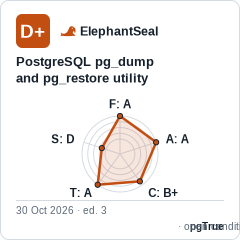
<a href="https://pgtrue.postgres.ai/shared/brief/8fd47705-dc09-4269-bb46-a56f84119630"><img src="https://pgtrue.postgres.ai/badge/8fd47705-dc09-4269-bb46-a56f84119630/radar.svg?v=13&amp;theme=light" alt="pgTrue fact-check" width="240" height="240" loading="lazy" decoding="async" style="display:inline-block;width:240px;height:240px"></a>
https://pgtrue.postgres.ai/badge/8fd47705-dc09-4269-bb46-a56f84119630/radar.svg?v=13&theme=light
.. image:: https://pgtrue.postgres.ai/badge/8fd47705-dc09-4269-bb46-a56f84119630/radar.svg?v=13&theme=light
   :target: https://pgtrue.postgres.ai/shared/brief/8fd47705-dc09-4269-bb46-a56f84119630
   :alt: pgTrue fact-check
   :width: 240
   :height: 240
[![pgTrue fact-check](https://pgtrue.postgres.ai/badge/8fd47705-dc09-4269-bb46-a56f84119630/radar.svg?v=13&theme=dark)](https://pgtrue.postgres.ai/shared/brief/8fd47705-dc09-4269-bb46-a56f84119630)
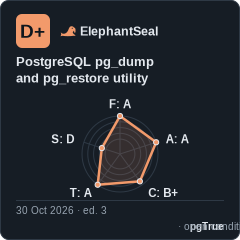
<a href="https://pgtrue.postgres.ai/shared/brief/8fd47705-dc09-4269-bb46-a56f84119630"><img src="https://pgtrue.postgres.ai/badge/8fd47705-dc09-4269-bb46-a56f84119630/radar.svg?v=13&amp;theme=dark" alt="pgTrue fact-check" width="240" height="240" loading="lazy" decoding="async" style="display:inline-block;width:240px;height:240px"></a>
https://pgtrue.postgres.ai/badge/8fd47705-dc09-4269-bb46-a56f84119630/radar.svg?v=13&theme=dark
.. image:: https://pgtrue.postgres.ai/badge/8fd47705-dc09-4269-bb46-a56f84119630/radar.svg?v=13&theme=dark
   :target: https://pgtrue.postgres.ai/shared/brief/8fd47705-dc09-4269-bb46-a56f84119630
   :alt: pgTrue fact-check
   :width: 240
   :height: 240
[![pgTrue fact-check](https://pgtrue.postgres.ai/badge/8fd47705-dc09-4269-bb46-a56f84119630/radar.svg?v=13)](https://pgtrue.postgres.ai/shared/brief/8fd47705-dc09-4269-bb46-a56f84119630)
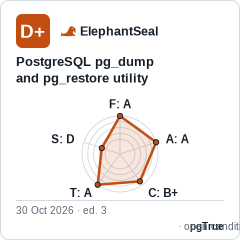
<a href="https://pgtrue.postgres.ai/shared/brief/8fd47705-dc09-4269-bb46-a56f84119630"><img src="https://pgtrue.postgres.ai/badge/8fd47705-dc09-4269-bb46-a56f84119630/radar.svg?v=13" alt="pgTrue fact-check" width="240" height="240" loading="lazy" decoding="async" style="display:inline-block;width:240px;height:240px"></a>
https://pgtrue.postgres.ai/badge/8fd47705-dc09-4269-bb46-a56f84119630/radar.svg?v=13
.. image:: https://pgtrue.postgres.ai/badge/8fd47705-dc09-4269-bb46-a56f84119630/radar.svg?v=13
   :target: https://pgtrue.postgres.ai/shared/brief/8fd47705-dc09-4269-bb46-a56f84119630
   :alt: pgTrue fact-check
   :width: 240
   :height: 240
[![pgTrue fact-check](https://pgtrue.postgres.ai/badge/8fd47705-dc09-4269-bb46-a56f84119630/wide.svg?v=13&theme=light)](https://pgtrue.postgres.ai/shared/brief/8fd47705-dc09-4269-bb46-a56f84119630)
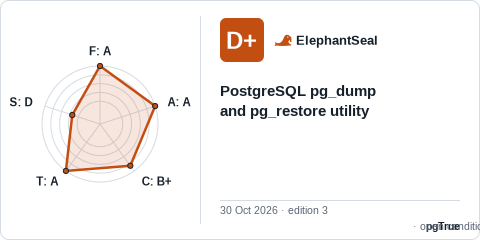
<a href="https://pgtrue.postgres.ai/shared/brief/8fd47705-dc09-4269-bb46-a56f84119630"><img src="https://pgtrue.postgres.ai/badge/8fd47705-dc09-4269-bb46-a56f84119630/wide.svg?v=13&amp;theme=light" alt="pgTrue fact-check" width="480" height="240" loading="lazy" decoding="async" style="display:inline-block;width:480px;height:240px"></a>
https://pgtrue.postgres.ai/badge/8fd47705-dc09-4269-bb46-a56f84119630/wide.svg?v=13&theme=light
.. image:: https://pgtrue.postgres.ai/badge/8fd47705-dc09-4269-bb46-a56f84119630/wide.svg?v=13&theme=light
   :target: https://pgtrue.postgres.ai/shared/brief/8fd47705-dc09-4269-bb46-a56f84119630
   :alt: pgTrue fact-check
   :width: 480
   :height: 240
[![pgTrue fact-check](https://pgtrue.postgres.ai/badge/8fd47705-dc09-4269-bb46-a56f84119630/wide.svg?v=13&theme=dark)](https://pgtrue.postgres.ai/shared/brief/8fd47705-dc09-4269-bb46-a56f84119630)
<a href="https://pgtrue.postgres.ai/shared/brief/8fd47705-dc09-4269-bb46-a56f84119630"><img src="https://pgtrue.postgres.ai/badge/8fd47705-dc09-4269-bb46-a56f84119630/wide.svg?v=13&amp;theme=dark" alt="pgTrue fact-check" width="480" height="240" loading="lazy" decoding="async" style="display:inline-block;width:480px;height:240px"></a>
https://pgtrue.postgres.ai/badge/8fd47705-dc09-4269-bb46-a56f84119630/wide.svg?v=13&theme=dark
.. image:: https://pgtrue.postgres.ai/badge/8fd47705-dc09-4269-bb46-a56f84119630/wide.svg?v=13&theme=dark
   :target: https://pgtrue.postgres.ai/shared/brief/8fd47705-dc09-4269-bb46-a56f84119630
   :alt: pgTrue fact-check
   :width: 480
   :height: 240
[![pgTrue fact-check](https://pgtrue.postgres.ai/badge/8fd47705-dc09-4269-bb46-a56f84119630/wide.svg?v=13)](https://pgtrue.postgres.ai/shared/brief/8fd47705-dc09-4269-bb46-a56f84119630)
<a href="https://pgtrue.postgres.ai/shared/brief/8fd47705-dc09-4269-bb46-a56f84119630"><img src="https://pgtrue.postgres.ai/badge/8fd47705-dc09-4269-bb46-a56f84119630/wide.svg?v=13" alt="pgTrue fact-check" width="480" height="240" loading="lazy" decoding="async" style="display:inline-block;width:480px;height:240px"></a>
https://pgtrue.postgres.ai/badge/8fd47705-dc09-4269-bb46-a56f84119630/wide.svg?v=13
.. image:: https://pgtrue.postgres.ai/badge/8fd47705-dc09-4269-bb46-a56f84119630/wide.svg?v=13
   :target: https://pgtrue.postgres.ai/shared/brief/8fd47705-dc09-4269-bb46-a56f84119630
   :alt: pgTrue fact-check
   :width: 480
   :height: 240

Click the snippet to select all of it, then copy. Where SVG is stripped, as in some email clients and feed readers, change .svg to .png. PNG uses the light theme for Auto. For Markdown PNG embeds, use the HTML snippet where supported to preserve the display size.

Optional colours: append &color=26798E or &labelColor=333C47 after a theme query (use ? for the first parameter). Use 3- or 6-digit hex.

For pages with a light background.

For pages with a dark background. The ElephantSeal gets a thin edge so it does not blend in.

Auto follows the reader's light or dark setting where the host supports it, and shows the light ElephantSeal where it does not.

On a light page
On a dark page

PostgreSQL pg_dump and pg_restore utility (opens in new tab)

docs.aws.amazon.com
Don't run its recipes as written: one can do harm. 2 claims are wrong in all.
0
inaccuracy
1
dangerous-recipe
1
misleading
0
imprecise
0
transcription
0
aged
0
withdrawn
10
verified-accurate

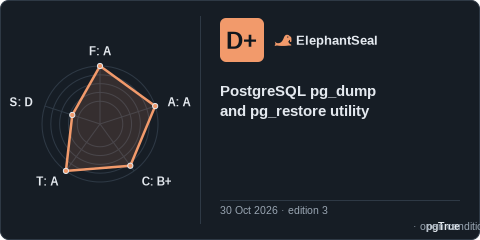
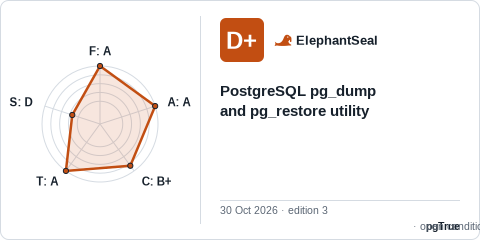
Factual A · Applicable A · Consistent B+ · Transparent A · Safe D

ReportTechnical fact-check, edition 3 pgTrue versionaudited with v1.0.16 (approx.) · regraded with v1.1.3 Issued EditionUpdated after review. Corrections are listed below. SubmittedSubmitted by the PostgresAI team. Author responseNo written reply from the author. See Revisions below. Policy: right-of-reply and corrections policy.

InaccuraciesNone in this edition.

Dangerous or recipe bugs

F2

Role migration omits the password assignment required for password authentication

INACCURATESafe · holds up after review

Claim ledger

Article says
…pg_dumpall -U <username> -h <hostname> -f <dumpfilelocation.sql> --no-role-passwords -g…
What is true
Newly restored roles cannot authenticate with passwords until someone assigns passwords. src/bin/pg_dump/pg_dumpall.c:978-982 omits PASSWORD when --no-role-passwords is set. doc/src/sgml/ref/pg_dumpall.sgml:466-468 documents the resulting null passwords. The migration recipe includes no password assignment before application cutover.
So what
Set passwords for newly restored login roles before switching applications to the target database.
Charitable reading
Omitting passwords can avoid restricted catalog access. Existing roles or non-password authentication can avoid a login failure.

Source

Source · REL_18_6 · src/bin/pg_dump/pg_dumpall.c:978-982if (!PQgetisnull(res, i, i_rolpassword) && !no_role_passwords) { appendPQExpBufferStr(buf, " PASSWORD "); appendStringLiteralConn(buf, PQgetvalue(res, i, i_rolpassword), conn); }
In the article

In the article

Article · exact quote · open in article ↗ (opens in new tab)…pg_dumpall -U <username> -h <hostname> -f <dumpfilelocation.sql> --no-role-passwords -g…
All sources and excerpts · 2
Evidence if (!PQgetisnull(res, i, i_rolpassword) && !no_role_passwords) { appendPQExpBufferStr(buf, " PASSWORD "); appendStringLiteralConn(buf, PQgetvalue(res, i, i_rolpassword), conn); }
Evidence Do not dump passwords for roles. When restored, roles will have a null password, and password authentication will always fail until the password is set.
How the review tested this

Review: We tested existing passwords and authentication without passwords as exceptions. F2 concerns newly created roles using password authentication. E-6 explicitly confirms authentication failure until password assignment. Assigning passwords before application cutover addresses the stated outage risk. We tested existing roles and authentication without passwords as counterexamples. F2 expressly concerns newly restored roles using password authentication. E-5 omits password output. E-6 confirms authentication fails until password assignment. Assigning passwords before switching application connections directly prevents that failure.

Misleading / imprecise

F1

Missing roles must precede the database restore

MISLEADINGConsistent · holds up after review

Claim ledger

Article says
(Optional) Migrate database roles and users.
What is true
Creating roles after pg_restore does not repair failed ownership changes or grants. doc/src/sgml/backup.sgml:135-138 requires referenced users before restoration. src/bin/pg_dump/pg_backup_archiver.c:4118-4120 emits ownership changes during restoration. The article's order requires additional repairs when source roles do not already exist.
So what
Create missing owner and grantee roles before running pg_restore. Repair ownership and grants if the restore already reported missing-role errors.
Charitable reading
Role migration can be optional when every referenced role already exists. The article also presents it after importing database objects.

Source

Source · REL_18_6 · doc/src/sgml/backup.sgml:135-138Before restoring an SQL dump, all the users who own objects or were granted permissions on objects in the dumped database must already exist. If they do not, the restore will fail to recreate the objects with the original ownership and/or permissions.
In the article

In the article

Article · exact quote · open in article ↗ (opens in new tab)(Optional) Migrate database roles and users.
All sources and excerpts · 2
Evidence Before restoring an SQL dump, all the users who own objects or were granted permissions on objects in the dumped database must already exist. If they do not, the restore will fail to recreate the objects with the original ownership and/or permissions.
Evidence if (temp.data[0]) ahprintf(AH, "ALTER %s OWNER TO %s;\n\n", temp.data, fmtId(te->owner));
How the review tested this

Review: We tested the existing-role exception. F1 already limits the defect to missing roles. E-2 confirms ownership and permission failures. Creating those roles afterward does not repeat failed restoration statements. We tested the reading that optional role migration assumes existing roles. F1 already limits the defect to missing roles. E-2 requires those roles before restoration. E-3 emits ownership changes during restoration. Creating roles afterward requires repairing failed changes. The concrete action and wasted-work consequence stand.

Verified accurate

F4

The custom archive supports pg_restore

ACCURATEFactual · holds up after review

Claim ledger

Article says
…-Fc: Sets the output as a custom-format archive…
What is true
-Fc creates a custom archive suitable for pg_restore. doc/src/sgml/ref/pg_dump.sgml:330-331 states this behavior. doc/src/sgml/ref/pg_restore.sgml:293-296 permits custom archives for parallel restoration from regular files.
Charitable reading
The .sql filename extension does not determine the archive format.

Source

Source · REL_18_6 · doc/src/sgml/ref/pg_dump.sgml:330-331Output a custom-format archive suitable for input into <application>pg_restore</application>.
In the article

In the article

Article · exact quote · open in article ↗ (opens in new tab)…-Fc: Sets the output as a custom-format archive…
All sources and excerpts · 2
Evidence Output a custom-format archive suitable for input into <application>pg_restore</application>.
Evidence Only the custom and directory archive formats are supported with this option. The input must be a regular file or directory (not, for example, a pipe or standard input).
How the review tested this

Review: We checked the parallel-restore restriction. E-11 permits custom archives from regular files, matching the example. The .sql suffix does not change the selected format. We checked whether the .sql suffix or parallel restore invalidated the claim. E-10 confirms custom-format compatibility. E-11 permits parallel restoration from a regular custom archive file. The filename suffix changes neither condition.

F5

pg_dumpall -g restricts the export to global objects

ACCURATEFactual · holds up after review

Claim ledger

Article says
…Dump only global objects…
What is true
pg_dumpall -g exports global objects without database dumps. doc/src/sgml/ref/pg_dumpall.sgml:143 gives the same description. The command can include tablespaces as well as roles.
Charitable reading
The parenthetical names global object categories rather than promising a role-only export.

Source

Source · REL_18_6 · doc/src/sgml/ref/pg_dumpall.sgml:143-143Dump only global objects (roles and tablespaces), no databases.
In the article

In the article

Article · exact quote · open in article ↗ (opens in new tab)…Dump only global objects…
All sources and excerpts · 1
Evidence Dump only global objects (roles and tablespaces), no databases.
How the review tested this

Review: We tested whether the description incorrectly promises a role-only export. E-13 includes tablespaces, and F5 preserves that distinction. We checked whether the finding incorrectly promised a role-only dump. It expressly includes tablespaces. E-13 confirms that -g exports global objects without databases.

F6

CREATE DATABASE creates the named destination

ACCURATEFactual · holds up after review

Claim ledger

Article says
…create database migrated_database;…
What is true
CREATE DATABASE migrated_database creates the named database when privileges and server conditions permit it. doc/src/sgml/ref/create_database.sgml:49-50 confirms the command's purpose.
Charitable reading
The migration requires a connection user with permission to create databases.

Source

Source · REL_18_6 · doc/src/sgml/ref/create_database.sgml:49-50<command>CREATE DATABASE</command> creates a new <productname>PostgreSQL</productname> database.
In the article

In the article

Article · exact quote · open in article ↗ (opens in new tab)…create database migrated_database;…
All sources and excerpts · 1
Evidence <command>CREATE DATABASE</command> creates a new <productname>PostgreSQL</productname> database.
How the review tested this

Review: We tested whether F6 guarantees success without privileges. Its explicit privilege and server-condition qualifications prevent that overstatement. E-15 confirms the command's purpose. We tested privilege and server-condition failures against the accuracy claim. F6 explicitly conditions success on both. E-15 confirms CREATE DATABASE creates a database.

F7

pg_dump -b requests large objects

ACCURATEFactual · holds up after review

Claim ledger

Article says
-b: Include large objects in the dump.
What is true
pg_dump -b enables large-object output. src/bin/pg_dump/pg_dump.c:575-577 sets outputLOs to true when parsing -b.
Charitable reading
The flag remains valid even though full database dumps already include large objects by default.

Source

Source · REL_18_6 · src/bin/pg_dump/pg_dump.c:575-577case 'b': /* Dump LOs */ dopt.outputLOs = true; break;
In the article

In the article

Article · exact quote · open in article ↗ (opens in new tab)-b: Include large objects in the dump.
All sources and excerpts · 2
Evidence case 'b': /* Dump LOs */ dopt.outputLOs = true; break;
Evidence printf(_(" -b, --large-objects include large objects in dump\n"));
How the review tested this

Review: We tested whether default inclusion makes -b incorrect. Redundancy does not invalidate the description. E-17 explicitly enables large-object output. We checked whether redundancy in a full dump invalidated the option description. E-17 sets outputLOs to true. E-25 describes large-object inclusion. F7 claims no additional benefit over the default.

F8

The standard installation includes the dump utilities

ACCURATEFactual · holds up after review

Claim ledger

Article says
You can find this utility as part of the database installation.
What is true
PostgreSQL installs pg_dump, pg_restore, and pg_dumpall. The install target lists all three in src/bin/pg_dump/Makefile:57.
Charitable reading
We read installation as the standard PostgreSQL installation, rather than every distribution package.

Source

Source · REL_18_6 · src/bin/pg_dump/Makefile:57-60install: all installdirs $(INSTALL_PROGRAM) pg_dump$(X) '$(DESTDIR)$(bindir)'/pg_dump$(X) $(INSTALL_PROGRAM) pg_restore$(X) '$(DESTDIR)$(bindir)'/pg_restore$(X) $(INSTALL_PROGRAM) pg_dumpall$(X) '$(DESTDIR)$(bindir)'/pg_dumpall$(X)
In the article

In the article

Article · exact quote · open in article ↗ (opens in new tab)You can find this utility as part of the database installation.
All sources and excerpts · 1
Evidenceinstall: all installdirs $(INSTALL_PROGRAM) pg_dump$(X) '$(DESTDIR)$(bindir)'/pg_dump$(X) $(INSTALL_PROGRAM) pg_restore$(X) '$(DESTDIR)$(bindir)'/pg_restore$(X) $(INSTALL_PROGRAM) pg_dumpall$(X) '$(DESTDIR)$(bindir)'/pg_dumpall$(X)
How the review tested this

Review: We tested whether F8 extends to every distribution package. Its standard-installation scope avoids that claim. E-19 installs all three utilities. We tested separate distribution packages against the installation claim. F8 limits its claim to the standard installation. E-19 installs pg_dump, pg_restore, and pg_dumpall.

F9

SQL dumps can reconstruct database definitions and contents

ACCURATEFactual · holds up after review

Claim ledger

Article says
…reproduce the original database object definitions and table data…
What is true
PostgreSQL supports SQL scripts that reconstruct the saved database state. doc/src/sgml/ref/pg_dump.sgml:58 distinguishes scripts from archives.
Charitable reading
We read SQL generation as a supported capability. The example separately identifies its custom archive format.

Source

Source · REL_18_6 · doc/src/sgml/ref/pg_dump.sgml:58-61Dumps can be output in script or archive file formats. Script dumps are plain-text files containing the SQL commands required to reconstruct the database to the state it was in at the time it was saved. To restore from such a script, feed it to <xref
In the article

In the article

Article · exact quote · open in article ↗ (opens in new tab)…reproduce the original database object definitions and table data…
All sources and excerpts · 1
Evidence Dumps can be output in script or archive file formats. Script dumps are plain-text files containing the SQL commands required to reconstruct the database to the state it was in at the time it was saved. To restore from such a script, feed it to <xref
How the review tested this

Review: We tested the apparent conflict between SQL output and the custom archive example. F9 describes supported SQL output. E-21 explicitly distinguishes script and archive formats. We tested the custom archive example against the opening SQL description. F9 verifies SQL output as a supported capability. E-21 distinguishes scripts from archives and confirms reconstruction from SQL scripts.

F10

Verified accurate: “…-Fc: Sets the output as a custom-format archive suitable for input into pg_restore.”

ACCURATEFactual · holds up after review

Claim ledger

Article says
…-Fc: Sets the output as a custom-format archive suitable for input into pg_restore.
What is true
The c format selects archCustom in src/bin/pg_dump/pg_dump.c:1583. pg_restore accepts that format in src/bin/pg_dump/pg_restore.c:542.

Source

Source · REL_18_6 · doc/src/sgml/ref/pg_dump.sgml:330-331Output a custom-format archive suitable for input into <application>pg_restore</application>.
In the article

In the article

Article · exact quote · open in article ↗ (opens in new tab)…-Fc: Sets the output as a custom-format archive suitable for input into pg_restore.
All sources and excerpts · 3
Evidence Output a custom-format archive suitable for input into <application>pg_restore</application>.
Evidence else if (pg_strcasecmp(format, "c") == 0) archiveFormat = archCustom;
Evidence printf(_(" -F, --format=c|d|t backup file format (should be automatic)\n"));
How the review tested this

Review: We checked whether E-24 demonstrates implementation behavior. It is help text, but E-23 selects archCustom. E-10 independently confirms pg_restore compatibility. We checked the format selection and whether E-24 supports acceptance. E-23 selects archCustom for c. E-24 lists c among pg_restore formats. E-10 independently confirms compatibility. No evidence supports treating the .sql suffix as a format override.

F11

The -v option enables verbose mode

ACCURATEFactual · holds up after review

Claim ledger

Article says
-v: Specifies verbose mode…
What is true
The -v branch sets g_verbose to true in src/bin/pg_dump/pg_dump.c:665.
Charitable reading
Verbose mode concerns diagnostic output, without changing the selected archive format.

Source

Source · REL_18_6 · src/bin/pg_dump/pg_dump.c:665-666case 'v': /* verbose */ g_verbose = true;
In the article

In the article

Article · exact quote · open in article ↗ (opens in new tab)-v: Specifies verbose mode…
All sources and excerpts · 1
Evidence case 'v': /* verbose */ g_verbose = true;
How the review tested this

Review: We checked the actual option branch rather than relying on its comment. E-27 sets g_verbose to true for -v. We checked whether F11 attributed any format or performance effect to verbose mode. It does neither. E-27 sets g_verbose to true for -v.

F12

The -g option exports global objects without database dumps

ACCURATEFactual · holds up after review

Claim ledger

Article says
-g: Dump only global objects (roles and tablespaces), no databases.
What is true
pg_dumpall exports roles and tablespaces in src/bin/pg_dump/pg_dumpall.c:650. The globals_only condition skips dumpDatabases at line 674.
Charitable reading
Roles and tablespaces identify the global object categories. The statement does not enumerate every associated privilege.

Source

Source · REL_18_6 · src/bin/pg_dump/pg_dumpall.c:650-665if (!tablespaces_only) { /* Dump roles (users) */ dumpRoles(conn); /* Dump role memberships */ dumpRoleMembership(conn); /* Dump role GUC privileges */ if (server_version >= 150000 && !skip_acls) dumpRoleGUCPrivs(conn); } /* Dump tablespaces */ if (!roles_only && !no_tablespaces) dumpTablespaces(conn);
In the article

In the article

Article · exact quote · open in article ↗ (opens in new tab)-g: Dump only global objects (roles and tablespaces), no databases.
All sources and excerpts · 3
Evidence if (!tablespaces_only) { /* Dump roles (users) */ dumpRoles(conn); /* Dump role memberships */ dumpRoleMembership(conn); /* Dump role GUC privileges */ if (server_version >= 150000 && !skip_acls) dumpRoleGUCPrivs(conn); } /* Dump tablespaces */ if (!roles_only && !no_tablespaces) dumpTablespaces(conn);
Evidence if (!globals_only && !roles_only && !tablespaces_only) dumpDatabases(conn);
Evidence printf(_(" -g, --globals-only dump only global objects, no databases\n"));
How the review tested this

Review: We checked whether associated privileges or memberships contradict the global-object description. E-29 includes them. E-30 excludes database dumps when globals_only is set. We checked whether globals_only also suppresses role or tablespace export. E-29 retains both exports. E-30 excludes database dumps. E-31 identifies -g as globals-only. The finding does not claim RDS accepts every exported object.

F13

Data volume, parallel jobs, and hardware affect migration duration

ACCURATEFactual · holds up after review

Claim ledger

Article says
This time depends on the following parameters.
What is true
PostgreSQL documents job-count and hardware effects in doc/src/sgml/ref/pg_restore.sgml:270. pg_dump copies table contents until COPY completes in src/bin/pg_dump/pg_dump.c:2390. These support the listed duration factors without establishing a numerical estimate.
Charitable reading
The article lists duration factors. It promises no fixed rate, linear scaling, or speedup from two jobs.

Source

Source · REL_18_6 · doc/src/sgml/ref/pg_restore.sgml:270-273concurrent sessions. This option can dramatically reduce the time to restore a large database to a server running on a multiprocessor machine. This option is ignored when emitting a script rather than connecting directly to a database server.
In the article

In the article

Article · exact quote · open in article ↗ (opens in new tab)This time depends on the following parameters.
All sources and excerpts · 3
Evidence concurrent sessions. This option can dramatically reduce the time to restore a large database to a server running on a multiprocessor machine. This option is ignored when emitting a script rather than connecting directly to a database server.
Evidence The optimal value for this option depends on the hardware setup of the server, of the client, and of the network.
Evidence for (;;) { ret = PQgetCopyData(conn, &copybuf, 0); if (ret < 0) break; /* done or error */ if (copybuf) { WriteData(fout, copybuf, ret); PQfreemem(copybuf); }
How the review tested this

Review: We tested whether F13 promises linear scaling or a measured speedup. It promises neither. E-33 and E-34 support job and hardware effects. E-35 supports data-volume dependence without quantifying it. We tested whether F13 inferred a numerical estimate or guaranteed parallel speedup. It expressly disclaims both. E-33 supports job-count effects. E-34 includes client and server hardware. E-35 processes COPY data until completion or error.

Notes

1 not graded: findings no reader would act on differently
F3

The role restore relies on psql's default database

NOTEholds up after review

Claim ledger

Article says
…psql -h <hostname> -U <username> -f <dumpfilelocation.sql>…
What is true
The role restore command omits -d. Without another database setting, psql defaults the database name to the connection user. doc/src/sgml/ref/psql-ref.sgml:662-664 documents that default. Specify an existing database when no database matches the selected user.
So what
Add -d postgres, or another existing database, when the default database does not exist.
Charitable reading
The command works when the default database exists and permits connection. PGDATABASE can also supply a valid database.

Source

Source · REL_18_6 · doc/src/sgml/ref/psql-ref.sgml:662-664to specify the port in most cases. The default database user name is your operating-system user name. Once the database user name is determined, it is used as the default database name.

Not graded: no reader would act differently on it.

In the article

In the article

Article · exact quote · open in article ↗ (opens in new tab)…psql -h <hostname> -U <username> -f <dumpfilelocation.sql>…
All sources and excerpts · 1
Evidence to specify the port in most cases. The default database user name is your operating-system user name. Once the database user name is determined, it is used as the default database name.
How the review tested this

Review: We tested an existing default database and a separate database setting. F3 acknowledges both exceptions. Its note severity avoids charging a valid command as universally broken. We tested a valid default database and PGDATABASE as counterexamples. F3 already allows other database settings and remains a note. E-8 confirms the username supplies the default database name.

More in this report

Section checks · 7 sections

Section checks

AspectGradeFindingsCoverage
OverviewA2 verified-accurate100% of claims (5 of 5)
Migration stepsB+1 misleading100% of claims (4 of 4)
ExportA3 verified-accurate100% of claims (8 of 8)
Create target databaseA1 verified-accurate100% of claims (5 of 5)
ImportA1 verified-accurate100% of claims (5 of 5)
Roles and usersD1 dangerous-recipe · 2 verified-accurate100% of claims (13 of 13)
Migration durationA1 verified-accurate100% of claims (4 of 4)
Coverage and assessment · Checked 46 of 46 Postgres claims across 8 sections

D+ — the findings address the article's main subject. What we did not check is listed below. The findings directly check pg_dump export, pg_restore compatibility, target creation, and role migration prerequisites.

We did not check everything in this article. What we did not check is listed below, in the words we recorded at the time. None of it moved the letter. We never charge our own limits to the article.

Part of this audit returned no findings, so our coverage of the article is thinner than usual.

What we did not check

  • We did not verify the 100 GB cutoff or the recommendation for databases with many tables.
  • We did not verify RDS privileges, reserved roles, or tablespace restrictions for the migration commands.
  • We could not match the article's commands to a publication-era PostgreSQL version.
  • We did not verify the linked sample database against a fixed repository revision.
  • We did not establish the article's publication date to assess changes since publication.
  • We could not compare five independent external sources. The article links to one external page.
  • We did not test the migration commands against an Amazon RDS instance.
  • Factual: we did not complete every applicable check.
Checked 46 of 46 Postgres claims across 8 sections
  • Overview: 5 of 5 Postgres claims checked; not counted: 1 not a claim
  • Suitability: 2 of 2 Postgres claims checked, plus 3 that need data we do not have
  • Migration steps: 4 of 4 Postgres claims checked; not counted: 2 not a claim
  • Export: 8 of 8 Postgres claims checked; not counted: 1 not a claim
  • Create target database: 5 of 5 Postgres claims checked; not counted: 2 not a claim
  • Import: 5 of 5 Postgres claims checked; not counted: 1 not a claim
  • Roles and users: 13 of 13 Postgres claims checked; not counted: 2 duplicate, 1 not a claim
  • Migration duration: 4 of 4 Postgres claims checked

Average of 5 axes: 3.26 · worst of factual, consistent, safe: D · result D+

Some explanatory text is not shown in this edition; the grade and findings are complete.

Scorecard · the five axes
FACTS scorecard Scorecard radar, 5 axes, bigger is better. Overall D+. Factual A · 0 wrong of 12 checked · 0 caveats. Applicable A · 0 wrong of 4 checked · 0 caveats. Consistent B+ · 1 wrong of 12 checked · 0 caveats. Transparent A · 0 wrong of 5 checked · 0 caveats. Safe D · 1 wrong of 12 checked · 0 caveats. A 0 wrong of 12 checked · 0 caveatsFactual A0 wrong of 120 caveats A 0 wrong of 4 checked · 0 caveatsApplicable A0 wrong of 40 caveats B+ 1 wrong of 12 checked · 0 caveatsConsistent B+1 wrong of 120 caveats A 0 wrong of 5 checked · 0 caveatsTransparent A0 wrong of 50 caveats D 1 wrong of 12 checked · 0 caveatsSafe D1 wrong of 120 caveats D+

By topic: Overview — 2 findings, 0 wrong · Migration steps — 1 finding, 1 wrong · Export — 3 findings, 0 wrong · Create target database — 1 finding, 0 wrong · Import — 1 finding, 0 wrong · Roles and users — 3 findings, 1 wrong · Migration duration — 1 finding, 0 wrong

Further out is better. Each axis has its own letter, from the wrong claims and caveats among the claims we checked of that kind.

Checked on the FACTS: Factual, Applicable, Consistent, Transparent, Safe. Clockwise: Factual (is it true?), Applicable (does it apply to my setup, today?), Consistent (does it agree with itself?), Transparent (can I check it myself?), Safe (can I run this on prod?).

We checked 12 claims.

AxisLetterWrongCaveatsCheckedCoverage
FactualA0012partly assessed: A · 0 wrong of 12 checked · 0 caveats · partly assessed
ApplicableA004assessed: A · 0 wrong of 4 checked · 0 caveats
ConsistentB+1012assessed: B+ · 1 wrong of 12 checked · 0 caveats
TransparentA005assessed: A · 0 wrong of 5 checked · 0 caveats
SafeD1012assessed: D · 1 wrong of 12 checked · 0 caveats
Topics · 7 topics

Topics

TopicFactualApplicableConsistentTransparentSafe
Overview0 issues 2 checked F8 F90 issues 1 checked0 issues 2 checked0 issues 1 checked
Migration steps0 issues 1 checked0 issues 1 checked1 issue 1 checked F1
Export0 issues 3 checked F7 F10 F110 issues 3 checked
Create target database0 issues 1 checked F60 issues 1 checked0 issues 1 checked
Import0 issues 1 checked F40 issues 1 checked0 issues 1 checked
Roles and users0 issues 3 checked F5 F120 issues 1 checked0 issues 3 checked0 issues 1 checked1 issue 1 checked F2
Migration duration0 issues 1 checked F130 issues 1 checked0 issues 1 checked0 issues 1 checked

Issues found among the claims checked, per topic and axis. Each link goes to the finding behind the count.

Revisions: 1 · D+

We audited this article 1 time. Each row is the final edition of one audit. Letters and findings of earlier revisions stay readable at their own address.

  1. Revision 1 · this page · 2026-10-20 03:40 UTC · D+ · audited with v1.0.16 (approx.) · regraded with v1.1.3

    Article as first submitted. 10 accurate · 2 wrong · 0 caveats.

    ElephantSeal: D+. Open: the production risk is not yet fixed or warned about.

    Changes: First audit. Open: F2 “Role migration omits the password assignment required for password authentication” (dangerous); F1 “Missing roles must precede the database restore” (misleading).

Questions and answers

Questions and answers

What is pgTrue?

pgTrue is an independent fact-check of technical Postgres articles, made by PostgresAI. It helps you check advice before you use it.

What does the letter grade mean?

The letter grade summarizes the claims we checked. Five axes show what we checked:

  • Factual: is it true?
  • Applicable: does it apply to my setup, today?
  • Consistent: does it agree with itself?
  • Transparent: can I check it myself?
  • Safe: can I run this in production?

What is the ElephantSeal?

The ElephantSeal is the mark an article earns. It always shows the latest edition. “Open:” lists what is still open.

Can an author reply?

Authors can ask us to correct a finding, reply to it, or withdraw it. Right-of-reply policy.

Paste into your AI assistant to fix the article, then ask for a re-review.

Show the text
Fix the article with this report, then ask pgTrue for a re-review.

# pgTrue report: PostgreSQL pg_dump and pg_restore utility

Article title: PostgreSQL pg_dump and pg_restore utility
Article URL: https://docs.aws.amazon.com/dms/latest/sbs/chap-manageddatabases.postgresql-rds-postgresql-full-load-pd_dump.html
Report URL: https://pgtrue.postgres.ai/shared/brief/8fd47705-dc09-4269-bb46-a56f84119630
Audited revision: 1 of 1, 2026-10-20 03:40:59 UTC
Overall letter: D+

## Axes

- Factual: A · 0 wrong · 12 checked · 0 caveats · partly assessed
- Applicable: A · 0 wrong · 4 checked · 0 caveats · assessed
- Consistent: B+ · 1 wrong · 12 checked · 0 caveats · assessed
- Transparent: A · 0 wrong · 5 checked · 0 caveats · assessed
- Safe: D · 1 wrong · 12 checked · 0 caveats · assessed

ElephantSeal: D+.
Open conditions: the production risk is not yet fixed or warned about.

## Report metadata

- Report: Technical fact-check, edition 3
- pgTrue version: audited with v1.0.16 (approx.) · regraded with v1.1.3
- Issued: 2026-10-20
- Edition: Updated after review. Corrections are listed below.
- Submitted: Submitted by the PostgresAI team.
- Author response: No written reply from the author. See Revisions below. Policy: [right-of-reply and corrections policy](/pgtrue/security).

## Findings needing a change (2)

### F2 · Inaccurate · Safe · Role migration omits the password assignment required for password authentication
Location: Article · exact quote · [open in article](https://docs.aws.amazon.com/dms/latest/sbs/chap-manageddatabases.postgresql-rds-postgresql-full-load-pd_dump.html#:~:text=pg_dumpall%20%2DU%20%3Cusername%3E%20%2Dh%20%3Chostname%3E%20%2Df%20%3Cdumpfilelocation.sql%3E%20%2D%2Dno%2Drole%2Dpasswords%20%2Dg)
Article says:
```text
…pg_dumpall -U <username> -h <hostname>  -f <dumpfilelocation.sql> --no-role-passwords -g…
```
What is true:
Newly restored roles cannot authenticate with passwords until someone assigns passwords. src/bin/pg_dump/pg_dumpall.c:978-982 omits PASSWORD when --no-role-passwords is set. doc/src/sgml/ref/pg_dumpall.sgml:466-468 documents the resulting null passwords. The migration recipe includes no password assignment before application cutover.
So what:
Set passwords for newly restored login roles before switching applications to the target database.
Charitable reading:
Omitting passwords can avoid restricted catalog access. Existing roles or non-password authentication can avoid a login failure.
Review: We tested existing passwords and authentication without passwords as exceptions. F2 concerns newly created roles using password authentication. E-6 explicitly confirms authentication failure until password assignment. Assigning passwords before application cutover addresses the stated outage risk. We tested existing roles and authentication without passwords as counterexamples. F2 expressly concerns newly restored roles using password authentication. E-5 omits password output. E-6 confirms authentication fails until password assignment. Assigning passwords before switching application connections directly prevents that failure.

Sources:
- [REL_18_6 · src/bin/pg_dump/pg_dumpall.c:978-982](https://github.com/postgres/postgres/blob/724edf9bde9d356724ad384a2e196edc3c9f80f7/src/bin/pg_dump/pg_dumpall.c#L978-L982)
  Excerpt:
  ```text
  if (!PQgetisnull(res, i, i_rolpassword) && !no_role_passwords)
		{
			appendPQExpBufferStr(buf, " PASSWORD ");
			appendStringLiteralConn(buf, PQgetvalue(res, i, i_rolpassword), conn);
		}
  ```
- [REL_18_6 · doc/src/sgml/ref/pg_dumpall.sgml:466-468](https://github.com/postgres/postgres/blob/724edf9bde9d356724ad384a2e196edc3c9f80f7/doc/src/sgml/ref/pg_dumpall.sgml#L466-L468)
  Excerpt:
  ```text
  Do not dump passwords for roles.  When restored, roles will have a
        null password, and password authentication will always fail until the
        password is set.
  ```

Finding URL: https://pgtrue.postgres.ai/shared/brief/8fd47705-dc09-4269-bb46-a56f84119630#F2

### F1 · Misleading · Consistent · Missing roles must precede the database restore
Location: Article · exact quote · [open in article](https://docs.aws.amazon.com/dms/latest/sbs/chap-manageddatabases.postgresql-rds-postgresql-full-load-pd_dump.html#:~:text=%28Optional%29%20Migrate%20database%20roles%20and%20users.)
Article says:
```text
(Optional) Migrate database roles and users.
```
What is true:
Creating roles after pg_restore does not repair failed ownership changes or grants. doc/src/sgml/backup.sgml:135-138 requires referenced users before restoration. src/bin/pg_dump/pg_backup_archiver.c:4118-4120 emits ownership changes during restoration. The article's order requires additional repairs when source roles do not already exist.
So what:
Create missing owner and grantee roles before running pg_restore. Repair ownership and grants if the restore already reported missing-role errors.
Charitable reading:
Role migration can be optional when every referenced role already exists. The article also presents it after importing database objects.
Review: We tested the existing-role exception. F1 already limits the defect to missing roles. E-2 confirms ownership and permission failures. Creating those roles afterward does not repeat failed restoration statements. We tested the reading that optional role migration assumes existing roles. F1 already limits the defect to missing roles. E-2 requires those roles before restoration. E-3 emits ownership changes during restoration. Creating roles afterward requires repairing failed changes. The concrete action and wasted-work consequence stand.

Sources:
- [REL_18_6 · doc/src/sgml/backup.sgml:135-138](https://github.com/postgres/postgres/blob/724edf9bde9d356724ad384a2e196edc3c9f80f7/doc/src/sgml/backup.sgml#L135-L138)
  Excerpt:
  ```text
  Before restoring an SQL dump, all the users who own objects or were
    granted permissions on objects in the dumped database must already
    exist. If they do not, the restore will fail to recreate the
    objects with the original ownership and/or permissions.
  ```
- [REL_18_6 · src/bin/pg_dump/pg_backup_archiver.c:4118-4120](https://github.com/postgres/postgres/blob/724edf9bde9d356724ad384a2e196edc3c9f80f7/src/bin/pg_dump/pg_backup_archiver.c#L4118-L4120)
  Excerpt:
  ```text
  if (temp.data[0])
				ahprintf(AH, "ALTER %s OWNER TO %s;\n\n",
						 temp.data, fmtId(te->owner));
  ```

Finding URL: https://pgtrue.postgres.ai/shared/brief/8fd47705-dc09-4269-bb46-a56f84119630#F1

## Verified accurate claims (10)

### F4 · Accurate · Factual · The custom archive supports pg_restore
Location: Article · exact quote · [open in article](https://docs.aws.amazon.com/dms/latest/sbs/chap-manageddatabases.postgresql-rds-postgresql-full-load-pd_dump.html#:~:text=%2DFc%3A%20Sets%20the%20output%20as%20a%20custom%2Dformat%20archive)
Article says:
```text
…-Fc: Sets the output as a custom-format archive…
```
What is true:
-Fc creates a custom archive suitable for pg_restore. doc/src/sgml/ref/pg_dump.sgml:330-331 states this behavior. doc/src/sgml/ref/pg_restore.sgml:293-296 permits custom archives for parallel restoration from regular files.
Charitable reading:
The .sql filename extension does not determine the archive format.
Review: We checked the parallel-restore restriction. E-11 permits custom archives from regular files, matching the example. The .sql suffix does not change the selected format. We checked whether the .sql suffix or parallel restore invalidated the claim. E-10 confirms custom-format compatibility. E-11 permits parallel restoration from a regular custom archive file. The filename suffix changes neither condition.

Sources:
- [REL_18_6 · doc/src/sgml/ref/pg_dump.sgml:330-331](https://github.com/postgres/postgres/blob/724edf9bde9d356724ad384a2e196edc3c9f80f7/doc/src/sgml/ref/pg_dump.sgml#L330-L331)
  Excerpt:
  ```text
  Output a custom-format archive suitable for input into
           <application>pg_restore</application>.
  ```
- [REL_18_6 · doc/src/sgml/ref/pg_restore.sgml:293-296](https://github.com/postgres/postgres/blob/724edf9bde9d356724ad384a2e196edc3c9f80f7/doc/src/sgml/ref/pg_restore.sgml#L293-L296)
  Excerpt:
  ```text
  Only the custom and directory archive formats are supported
        with this option.
        The input must be a regular file or directory (not, for example, a
        pipe or standard input).
  ```

Finding URL: https://pgtrue.postgres.ai/shared/brief/8fd47705-dc09-4269-bb46-a56f84119630#F4

### F5 · Accurate · Factual · pg_dumpall -g restricts the export to global objects
Location: Article · exact quote · [open in article](https://docs.aws.amazon.com/dms/latest/sbs/chap-manageddatabases.postgresql-rds-postgresql-full-load-pd_dump.html#:~:text=Dump%20only%20global%20objects)
Article says:
```text
…Dump only global objects…
```
What is true:
pg_dumpall -g exports global objects without database dumps. doc/src/sgml/ref/pg_dumpall.sgml:143 gives the same description. The command can include tablespaces as well as roles.
Charitable reading:
The parenthetical names global object categories rather than promising a role-only export.
Review: We tested whether the description incorrectly promises a role-only export. E-13 includes tablespaces, and F5 preserves that distinction. We checked whether the finding incorrectly promised a role-only dump. It expressly includes tablespaces. E-13 confirms that -g exports global objects without databases.

Sources:
- [REL_18_6 · doc/src/sgml/ref/pg_dumpall.sgml:143-143](https://github.com/postgres/postgres/blob/724edf9bde9d356724ad384a2e196edc3c9f80f7/doc/src/sgml/ref/pg_dumpall.sgml#L143-L143)
  Excerpt:
  ```text
  Dump only global objects (roles and tablespaces), no databases.
  ```

Finding URL: https://pgtrue.postgres.ai/shared/brief/8fd47705-dc09-4269-bb46-a56f84119630#F5

### F6 · Accurate · Factual · CREATE DATABASE creates the named destination
Location: Article · exact quote · [open in article](https://docs.aws.amazon.com/dms/latest/sbs/chap-manageddatabases.postgresql-rds-postgresql-full-load-pd_dump.html#:~:text=create%20database%20migrated_database%3B)
Article says:
```text
…create database migrated_database;…
```
What is true:
CREATE DATABASE migrated_database creates the named database when privileges and server conditions permit it. doc/src/sgml/ref/create_database.sgml:49-50 confirms the command's purpose.
Charitable reading:
The migration requires a connection user with permission to create databases.
Review: We tested whether F6 guarantees success without privileges. Its explicit privilege and server-condition qualifications prevent that overstatement. E-15 confirms the command's purpose. We tested privilege and server-condition failures against the accuracy claim. F6 explicitly conditions success on both. E-15 confirms CREATE DATABASE creates a database.

Sources:
- [REL_18_6 · doc/src/sgml/ref/create_database.sgml:49-50](https://github.com/postgres/postgres/blob/724edf9bde9d356724ad384a2e196edc3c9f80f7/doc/src/sgml/ref/create_database.sgml#L49-L50)
  Excerpt:
  ```text
  <command>CREATE DATABASE</command> creates a new
   <productname>PostgreSQL</productname> database.
  ```

Finding URL: https://pgtrue.postgres.ai/shared/brief/8fd47705-dc09-4269-bb46-a56f84119630#F6

### F7 · Accurate · Factual · pg_dump -b requests large objects
Location: Article · exact quote · [open in article](https://docs.aws.amazon.com/dms/latest/sbs/chap-manageddatabases.postgresql-rds-postgresql-full-load-pd_dump.html#:~:text=%2Db%3A%20Include%20large%20objects%20in%20the%20dump.)
Article says:
```text
-b: Include large objects in the dump.
```
What is true:
pg_dump -b enables large-object output. src/bin/pg_dump/pg_dump.c:575-577 sets outputLOs to true when parsing -b.
Charitable reading:
The flag remains valid even though full database dumps already include large objects by default.
Review: We tested whether default inclusion makes -b incorrect. Redundancy does not invalidate the description. E-17 explicitly enables large-object output. We checked whether redundancy in a full dump invalidated the option description. E-17 sets outputLOs to true. E-25 describes large-object inclusion. F7 claims no additional benefit over the default.

Sources:
- [REL_18_6 · src/bin/pg_dump/pg_dump.c:575-577](https://github.com/postgres/postgres/blob/724edf9bde9d356724ad384a2e196edc3c9f80f7/src/bin/pg_dump/pg_dump.c#L575-L577)
  Excerpt:
  ```text
  case 'b':			/* Dump LOs */
				dopt.outputLOs = true;
				break;
  ```
- [REL_18_6 · src/bin/pg_dump/pg_dump.c:1286-1286](https://github.com/postgres/postgres/blob/724edf9bde9d356724ad384a2e196edc3c9f80f7/src/bin/pg_dump/pg_dump.c#L1286-L1286)
  Excerpt:
  ```text
  printf(_("  -b, --large-objects          include large objects in dump\n"));
  ```

Finding URL: https://pgtrue.postgres.ai/shared/brief/8fd47705-dc09-4269-bb46-a56f84119630#F7

### F8 · Accurate · Factual · The standard installation includes the dump utilities
Location: Article · exact quote · [open in article](https://docs.aws.amazon.com/dms/latest/sbs/chap-manageddatabases.postgresql-rds-postgresql-full-load-pd_dump.html#:~:text=You%20can%20find%20this%20utility,part%20of%20the%20database%20installation.)
Article says:
```text
You can find this utility as part of the database installation.
```
What is true:
PostgreSQL installs pg_dump, pg_restore, and pg_dumpall. The install target lists all three in src/bin/pg_dump/Makefile:57.
Charitable reading:
We read installation as the standard PostgreSQL installation, rather than every distribution package.
Review: We tested whether F8 extends to every distribution package. Its standard-installation scope avoids that claim. E-19 installs all three utilities. We tested separate distribution packages against the installation claim. F8 limits its claim to the standard installation. E-19 installs pg_dump, pg_restore, and pg_dumpall.

Sources:
- [REL_18_6 · src/bin/pg_dump/Makefile:57-60](https://github.com/postgres/postgres/blob/724edf9bde9d356724ad384a2e196edc3c9f80f7/src/bin/pg_dump/Makefile#L57-L60)
  Excerpt:
  ```text
  install: all installdirs
	$(INSTALL_PROGRAM) pg_dump$(X) '$(DESTDIR)$(bindir)'/pg_dump$(X)
	$(INSTALL_PROGRAM) pg_restore$(X) '$(DESTDIR)$(bindir)'/pg_restore$(X)
	$(INSTALL_PROGRAM) pg_dumpall$(X) '$(DESTDIR)$(bindir)'/pg_dumpall$(X)
  ```

Finding URL: https://pgtrue.postgres.ai/shared/brief/8fd47705-dc09-4269-bb46-a56f84119630#F8

### F9 · Accurate · Factual · SQL dumps can reconstruct database definitions and contents
Location: Article · exact quote · [open in article](https://docs.aws.amazon.com/dms/latest/sbs/chap-manageddatabases.postgresql-rds-postgresql-full-load-pd_dump.html#:~:text=reproduce%20the%20original%20database%20object%20definitions%20and%20table%20data)
Article says:
```text
…reproduce the original database object definitions and table data…
```
What is true:
PostgreSQL supports SQL scripts that reconstruct the saved database state. doc/src/sgml/ref/pg_dump.sgml:58 distinguishes scripts from archives.
Charitable reading:
We read SQL generation as a supported capability. The example separately identifies its custom archive format.
Review: We tested the apparent conflict between SQL output and the custom archive example. F9 describes supported SQL output. E-21 explicitly distinguishes script and archive formats. We tested the custom archive example against the opening SQL description. F9 verifies SQL output as a supported capability. E-21 distinguishes scripts from archives and confirms reconstruction from SQL scripts.

Sources:
- [REL_18_6 · doc/src/sgml/ref/pg_dump.sgml:58-61](https://github.com/postgres/postgres/blob/724edf9bde9d356724ad384a2e196edc3c9f80f7/doc/src/sgml/ref/pg_dump.sgml#L58-L61)
  Excerpt:
  ```text
  Dumps can be output in script or archive file formats. Script
   dumps are plain-text files containing the SQL commands required
   to reconstruct the database to the state it was in at the time it was
   saved. To restore from such a script, feed it to <xref
  ```

Finding URL: https://pgtrue.postgres.ai/shared/brief/8fd47705-dc09-4269-bb46-a56f84119630#F9

### F10 · Accurate · Factual · Verified accurate: “…-Fc: Sets the output as a custom-format archive suitable for input into pg_restore.”
Location: Article · exact quote · [open in article](https://docs.aws.amazon.com/dms/latest/sbs/chap-manageddatabases.postgresql-rds-postgresql-full-load-pd_dump.html#:~:text=%2DFc%3A%20Sets%20the%20output%20as,suitable%20for%20input%20into%20pg_restore.)
Article says:
```text
…-Fc: Sets the output as a custom-format archive suitable for input into pg_restore.
```
What is true:
The c format selects archCustom in src/bin/pg_dump/pg_dump.c:1583. pg_restore accepts that format in src/bin/pg_dump/pg_restore.c:542.
Review: We checked whether E-24 demonstrates implementation behavior. It is help text, but E-23 selects archCustom. E-10 independently confirms pg_restore compatibility. We checked the format selection and whether E-24 supports acceptance. E-23 selects archCustom for c. E-24 lists c among pg_restore formats. E-10 independently confirms compatibility. No evidence supports treating the .sql suffix as a format override.

Sources:
- [REL_18_6 · doc/src/sgml/ref/pg_dump.sgml:330-331](https://github.com/postgres/postgres/blob/724edf9bde9d356724ad384a2e196edc3c9f80f7/doc/src/sgml/ref/pg_dump.sgml#L330-L331)
  Excerpt:
  ```text
  Output a custom-format archive suitable for input into
           <application>pg_restore</application>.
  ```
- [REL_18_6 · src/bin/pg_dump/pg_dump.c:1583-1584](https://github.com/postgres/postgres/blob/724edf9bde9d356724ad384a2e196edc3c9f80f7/src/bin/pg_dump/pg_dump.c#L1583-L1584)
  Excerpt:
  ```text
  else if (pg_strcasecmp(format, "c") == 0)
		archiveFormat = archCustom;
  ```
- [REL_18_6 · src/bin/pg_dump/pg_restore.c:542-542](https://github.com/postgres/postgres/blob/724edf9bde9d356724ad384a2e196edc3c9f80f7/src/bin/pg_dump/pg_restore.c#L542-L542)
  Excerpt:
  ```text
  printf(_("  -F, --format=c|d|t       backup file format (should be automatic)\n"));
  ```

Finding URL: https://pgtrue.postgres.ai/shared/brief/8fd47705-dc09-4269-bb46-a56f84119630#F10

### F11 · Accurate · Factual · The -v option enables verbose mode
Location: Article · exact quote · [open in article](https://docs.aws.amazon.com/dms/latest/sbs/chap-manageddatabases.postgresql-rds-postgresql-full-load-pd_dump.html#:~:text=%2Dv%3A%20Specifies%20verbose%20mode)
Article says:
```text
-v: Specifies verbose mode…
```
What is true:
The -v branch sets g_verbose to true in src/bin/pg_dump/pg_dump.c:665.
Charitable reading:
Verbose mode concerns diagnostic output, without changing the selected archive format.
Review: We checked the actual option branch rather than relying on its comment. E-27 sets g_verbose to true for -v. We checked whether F11 attributed any format or performance effect to verbose mode. It does neither. E-27 sets g_verbose to true for -v.

Sources:
- [REL_18_6 · src/bin/pg_dump/pg_dump.c:665-666](https://github.com/postgres/postgres/blob/724edf9bde9d356724ad384a2e196edc3c9f80f7/src/bin/pg_dump/pg_dump.c#L665-L666)
  Excerpt:
  ```text
  case 'v':			/* verbose */
				g_verbose = true;
  ```

Finding URL: https://pgtrue.postgres.ai/shared/brief/8fd47705-dc09-4269-bb46-a56f84119630#F11

### F12 · Accurate · Factual · The -g option exports global objects without database dumps
Location: Article · exact quote · [open in article](https://docs.aws.amazon.com/dms/latest/sbs/chap-manageddatabases.postgresql-rds-postgresql-full-load-pd_dump.html#:~:text=%2Dg%3A%20Dump%20only%20global%20objects%20%28roles%20and%20tablespaces%29%2C%20no%20databases.)
Article says:
```text
-g: Dump only global objects (roles and tablespaces), no databases.
```
What is true:
pg_dumpall exports roles and tablespaces in src/bin/pg_dump/pg_dumpall.c:650. The globals_only condition skips dumpDatabases at line 674.
Charitable reading:
Roles and tablespaces identify the global object categories. The statement does not enumerate every associated privilege.
Review: We checked whether associated privileges or memberships contradict the global-object description. E-29 includes them. E-30 excludes database dumps when globals_only is set. We checked whether globals_only also suppresses role or tablespace export. E-29 retains both exports. E-30 excludes database dumps. E-31 identifies -g as globals-only. The finding does not claim RDS accepts every exported object.

Sources:
- [REL_18_6 · src/bin/pg_dump/pg_dumpall.c:650-665](https://github.com/postgres/postgres/blob/724edf9bde9d356724ad384a2e196edc3c9f80f7/src/bin/pg_dump/pg_dumpall.c#L650-L665)
  Excerpt:
  ```text
  if (!tablespaces_only)
		{
			/* Dump roles (users) */
			dumpRoles(conn);

			/* Dump role memberships */
			dumpRoleMembership(conn);

			/* Dump role GUC privileges */
			if (server_version >= 150000 && !skip_acls)
				dumpRoleGUCPrivs(conn);
		}

		/* Dump tablespaces */
		if (!roles_only && !no_tablespaces)
			dumpTablespaces(conn);
  ```
- [REL_18_6 · src/bin/pg_dump/pg_dumpall.c:674-675](https://github.com/postgres/postgres/blob/724edf9bde9d356724ad384a2e196edc3c9f80f7/src/bin/pg_dump/pg_dumpall.c#L674-L675)
  Excerpt:
  ```text
  if (!globals_only && !roles_only && !tablespaces_only)
		dumpDatabases(conn);
  ```
- [REL_18_6 · src/bin/pg_dump/pg_dumpall.c:713-713](https://github.com/postgres/postgres/blob/724edf9bde9d356724ad384a2e196edc3c9f80f7/src/bin/pg_dump/pg_dumpall.c#L713-L713)
  Excerpt:
  ```text
  printf(_("  -g, --globals-only           dump only global objects, no databases\n"));
  ```

Finding URL: https://pgtrue.postgres.ai/shared/brief/8fd47705-dc09-4269-bb46-a56f84119630#F12

### F13 · Accurate · Factual · Data volume, parallel jobs, and hardware affect migration duration
Location: Article · exact quote · [open in article](https://docs.aws.amazon.com/dms/latest/sbs/chap-manageddatabases.postgresql-rds-postgresql-full-load-pd_dump.html#:~:text=This%20time%20depends%20on%20the%20following%20parameters.)
Article says:
```text
This time depends on the following parameters.
```
What is true:
PostgreSQL documents job-count and hardware effects in doc/src/sgml/ref/pg_restore.sgml:270. pg_dump copies table contents until COPY completes in src/bin/pg_dump/pg_dump.c:2390. These support the listed duration factors without establishing a numerical estimate.
Charitable reading:
The article lists duration factors. It promises no fixed rate, linear scaling, or speedup from two jobs.
Review: We tested whether F13 promises linear scaling or a measured speedup. It promises neither. E-33 and E-34 support job and hardware effects. E-35 supports data-volume dependence without quantifying it. We tested whether F13 inferred a numerical estimate or guaranteed parallel speedup. It expressly disclaims both. E-33 supports job-count effects. E-34 includes client and server hardware. E-35 processes COPY data until completion or error.

Sources:
- [REL_18_6 · doc/src/sgml/ref/pg_restore.sgml:270-273](https://github.com/postgres/postgres/blob/724edf9bde9d356724ad384a2e196edc3c9f80f7/doc/src/sgml/ref/pg_restore.sgml#L270-L273)
  Excerpt:
  ```text
  concurrent sessions.  This option can dramatically reduce the time
        to restore a large database to a server running on a
        multiprocessor machine.  This option is ignored when emitting a script
        rather than connecting directly to a database server.
  ```
- [REL_18_6 · doc/src/sgml/ref/pg_restore.sgml:283-285](https://github.com/postgres/postgres/blob/724edf9bde9d356724ad384a2e196edc3c9f80f7/doc/src/sgml/ref/pg_restore.sgml#L283-L285)
  Excerpt:
  ```text
  The optimal value for this option depends on the hardware
        setup of the server, of the client, and of the network.
  ```
- [REL_18_6 · src/bin/pg_dump/pg_dump.c:2390-2401](https://github.com/postgres/postgres/blob/724edf9bde9d356724ad384a2e196edc3c9f80f7/src/bin/pg_dump/pg_dump.c#L2390-L2401)
  Excerpt:
  ```text
  for (;;)
	{
		ret = PQgetCopyData(conn, &copybuf, 0);

		if (ret < 0)
			break;				/* done or error */

		if (copybuf)
		{
			WriteData(fout, copybuf, ret);
			PQfreemem(copybuf);
		}
  ```

Finding URL: https://pgtrue.postgres.ai/shared/brief/8fd47705-dc09-4269-bb46-a56f84119630#F13

## Notes (not graded) (1)

### F3 · Note ·  · The role restore relies on psql's default database
Location: Article · exact quote · [open in article](https://docs.aws.amazon.com/dms/latest/sbs/chap-manageddatabases.postgresql-rds-postgresql-full-load-pd_dump.html#:~:text=psql%20%2Dh%20%3Chostname%3E%20%2DU%20%3Cusername%3E%20%2Df%20%3Cdumpfilelocation.sql%3E)
Article says:
```text
…psql -h <hostname> -U <username> -f <dumpfilelocation.sql>…
```
What is true:
The role restore command omits -d. Without another database setting, psql defaults the database name to the connection user. doc/src/sgml/ref/psql-ref.sgml:662-664 documents that default. Specify an existing database when no database matches the selected user.
So what:
Add -d postgres, or another existing database, when the default database does not exist.
Charitable reading:
The command works when the default database exists and permits connection. PGDATABASE can also supply a valid database.
Explanation: Not graded: no reader would act differently on it.
Review: We tested an existing default database and a separate database setting. F3 acknowledges both exceptions. Its note severity avoids charging a valid command as universally broken. We tested a valid default database and PGDATABASE as counterexamples. F3 already allows other database settings and remains a note. E-8 confirms the username supplies the default database name.

Sources:
- [REL_18_6 · doc/src/sgml/ref/psql-ref.sgml:662-664](https://github.com/postgres/postgres/blob/724edf9bde9d356724ad384a2e196edc3c9f80f7/doc/src/sgml/ref/psql-ref.sgml#L662-L664)
  Excerpt:
  ```text
  to specify the port in most cases. The default database user name is your
    operating-system user name. Once the database user name is determined, it
    is used as the default database name.
  ```

Finding URL: https://pgtrue.postgres.ai/shared/brief/8fd47705-dc09-4269-bb46-a56f84119630#F3

## Withdrawn findings (0)

None.

## Section checks

- Overview · A · 2 verified-accurate · 100% of claims (5 of 5)
- Migration steps · B+ · 1 misleading · 100% of claims (4 of 4)
- Export · A · 3 verified-accurate · 100% of claims (8 of 8)
- Create target database · A · 1 verified-accurate · 100% of claims (5 of 5)
- Import · A · 1 verified-accurate · 100% of claims (5 of 5)
- Roles and users · D · 1 dangerous-recipe · 2 verified-accurate · 100% of claims (13 of 13)
- Migration duration · A · 1 verified-accurate · 100% of claims (4 of 4)

## Claim coverage

- Overview: 5 of 5 Postgres claims checked; not counted: 1 not a claim
- Suitability: 2 of 2 Postgres claims checked, plus 3 that need data we do not have
- Migration steps: 4 of 4 Postgres claims checked; not counted: 2 not a claim
- Export: 8 of 8 Postgres claims checked; not counted: 1 not a claim
- Create target database: 5 of 5 Postgres claims checked; not counted: 2 not a claim
- Import: 5 of 5 Postgres claims checked; not counted: 1 not a claim
- Roles and users: 13 of 13 Postgres claims checked; not counted: 2 duplicate, 1 not a claim
- Migration duration: 4 of 4 Postgres claims checked

## What we did not check

- We did not verify the 100 GB cutoff or the recommendation for databases with many tables.
- We did not verify RDS privileges, reserved roles, or tablespace restrictions for the migration commands.
- We could not match the article's commands to a publication-era PostgreSQL version.
- We did not verify the linked sample database against a fixed repository revision.
- We did not establish the article's publication date to assess changes since publication.
- We could not compare five independent external sources. The article links to one external page.
- We did not test the migration commands against an Amazon RDS instance.
- Factual: we did not complete every applicable check.

## Notes

- D+ — the findings address the article's main subject. What we did not check is listed below. The findings directly check pg_dump export, pg_restore compatibility, target creation, and role migration prerequisites.
- We did not check everything in this article. What we did not check is listed below, in the words we recorded at the time. None of it moved the letter. We never charge our own limits to the article.
- Part of this audit returned no findings, so our coverage of the article is thinner than usual.
- Average of 5 axes: 3.26 · worst of factual, consistent, safe: D · result D+
- Some explanatory text is not shown in this edition; the grade and findings are complete.
- Some checks did not happen for this edition, and each one we know of is listed above.
- Checked against: github.com/postgres/postgres REL_18_6 at commit 724edf9bde9d356724ad384a2e196edc3c9f80f7 (pinned target).
- Article captured 2026-10-20T03:40:59.157623Z · SHA-256 4ed578bc1efa52812d55a1c8b0b3832c07b75c5b78b11d2cbbe6bfad238b4439 · Text extracted from the article's HTML.
- Policy SHA-256 852a1939150b0b14f41b2e81de99d2d6281db079343714415f459d8e44841f76 · Grading rules SHA-256 6fb334e79d6b9e7ed81d3238cc10d9de602ff87ed65ff2fa781f53bac5798765.
- The article states no author or publication date. The publication date field is empty because we did not establish a date.
- We checked PostgreSQL REL_18_6. We could not identify the PostgreSQL version current when the article appeared.
- We could not distinguish errors present at publication from later changes.
- We did not verify the 100 GB cutoff or the recommendation for databases with many tables.
- We did not verify RDS privileges, reserved roles, or tablespace restrictions.
- We did not test the migration commands against an RDS instance.
- We did not verify the linked sample database against a fixed repository revision.
- We could not compare five independent external sources. The article links to one external page.
- One fetched page is not listed above, because our policy does not allow linking it.
- review: the findings were written by one model and reviewed independently by a different model.
- 2026-10-30: Regraded under the current grading rules: the letter is the average of the axis letters, with every cap stated under it.
- 6 passages in this edition fell short of our own plain-English rules.
- Built from the article text captured above and one pinned source tree.
- 13 survived · 0 weakened · 0 withdrawn.

## Revision history

- [Revision 1](https://pgtrue.postgres.ai/shared/brief/8fd47705-dc09-4269-bb46-a56f84119630?v=3) · this page · 2026-10-20 03:40 UTC · D+ · audited with v1.0.16 (approx.) · regraded with v1.1.3
  Article as first submitted. 10 accurate · 2 wrong · 0 caveats.
  ElephantSeal: D+. Open: the production risk is not yet fixed or warned about.
  Changes: First audit. Open: F2 “Role migration omits the password assignment required for password authentication” (dangerous); F1 “Missing roles must precede the database restore” (misleading).

Updated your article? Request a correction. A new edition appears at this address.