Limited beta · What is this?

pgTrue is under active development: reports may contain significant mistakes, inaccuracies, or bugs. Please report anything you find to pgtrue@postgres.ai.

pgTrue is an independent fact-check of technical Postgres articles. Read the questions and answers.

pgTrue fact-check

ElephantSeal B+Limited coverageOpen: the production risk is not yet fixed or warned about

Embed

The ElephantSeal always shows this report's latest edition and links here. Copies cached elsewhere may update later.

[![pgTrue fact-check](https://pgtrue.postgres.ai/badge/29aa4c7d-ee73-44fb-a278-a3a2bd920ca7.svg?v=13&theme=light)](https://pgtrue.postgres.ai/shared/brief/29aa4c7d-ee73-44fb-a278-a3a2bd920ca7)
<a href="https://pgtrue.postgres.ai/shared/brief/29aa4c7d-ee73-44fb-a278-a3a2bd920ca7"><img src="https://pgtrue.postgres.ai/badge/29aa4c7d-ee73-44fb-a278-a3a2bd920ca7.svg?v=13&amp;theme=light" alt="pgTrue fact-check" width="90" height="20" loading="lazy" decoding="async" style="display:inline-block;width:90px;height:20px"></a>
https://pgtrue.postgres.ai/badge/29aa4c7d-ee73-44fb-a278-a3a2bd920ca7.svg?v=13&theme=light
.. image:: https://pgtrue.postgres.ai/badge/29aa4c7d-ee73-44fb-a278-a3a2bd920ca7.svg?v=13&theme=light
   :target: https://pgtrue.postgres.ai/shared/brief/29aa4c7d-ee73-44fb-a278-a3a2bd920ca7
   :alt: pgTrue fact-check
   :width: 90
   :height: 20
[![pgTrue fact-check](https://pgtrue.postgres.ai/badge/29aa4c7d-ee73-44fb-a278-a3a2bd920ca7.svg?v=13&theme=dark)](https://pgtrue.postgres.ai/shared/brief/29aa4c7d-ee73-44fb-a278-a3a2bd920ca7)
<a href="https://pgtrue.postgres.ai/shared/brief/29aa4c7d-ee73-44fb-a278-a3a2bd920ca7"><img src="https://pgtrue.postgres.ai/badge/29aa4c7d-ee73-44fb-a278-a3a2bd920ca7.svg?v=13&amp;theme=dark" alt="pgTrue fact-check" width="90" height="20" loading="lazy" decoding="async" style="display:inline-block;width:90px;height:20px"></a>
https://pgtrue.postgres.ai/badge/29aa4c7d-ee73-44fb-a278-a3a2bd920ca7.svg?v=13&theme=dark
.. image:: https://pgtrue.postgres.ai/badge/29aa4c7d-ee73-44fb-a278-a3a2bd920ca7.svg?v=13&theme=dark
   :target: https://pgtrue.postgres.ai/shared/brief/29aa4c7d-ee73-44fb-a278-a3a2bd920ca7
   :alt: pgTrue fact-check
   :width: 90
   :height: 20
[![pgTrue fact-check](https://pgtrue.postgres.ai/badge/29aa4c7d-ee73-44fb-a278-a3a2bd920ca7.svg?v=13)](https://pgtrue.postgres.ai/shared/brief/29aa4c7d-ee73-44fb-a278-a3a2bd920ca7)
<a href="https://pgtrue.postgres.ai/shared/brief/29aa4c7d-ee73-44fb-a278-a3a2bd920ca7"><img src="https://pgtrue.postgres.ai/badge/29aa4c7d-ee73-44fb-a278-a3a2bd920ca7.svg?v=13" alt="pgTrue fact-check" width="90" height="20" loading="lazy" decoding="async" style="display:inline-block;width:90px;height:20px"></a>
https://pgtrue.postgres.ai/badge/29aa4c7d-ee73-44fb-a278-a3a2bd920ca7.svg?v=13
.. image:: https://pgtrue.postgres.ai/badge/29aa4c7d-ee73-44fb-a278-a3a2bd920ca7.svg?v=13
   :target: https://pgtrue.postgres.ai/shared/brief/29aa4c7d-ee73-44fb-a278-a3a2bd920ca7
   :alt: pgTrue fact-check
   :width: 90
   :height: 20
[![pgTrue fact-check](https://pgtrue.postgres.ai/badge/29aa4c7d-ee73-44fb-a278-a3a2bd920ca7/radar.svg?v=13&theme=light)](https://pgtrue.postgres.ai/shared/brief/29aa4c7d-ee73-44fb-a278-a3a2bd920ca7)
<a href="https://pgtrue.postgres.ai/shared/brief/29aa4c7d-ee73-44fb-a278-a3a2bd920ca7"><img src="https://pgtrue.postgres.ai/badge/29aa4c7d-ee73-44fb-a278-a3a2bd920ca7/radar.svg?v=13&amp;theme=light" alt="pgTrue fact-check" width="240" height="240" loading="lazy" decoding="async" style="display:inline-block;width:240px;height:240px"></a>
https://pgtrue.postgres.ai/badge/29aa4c7d-ee73-44fb-a278-a3a2bd920ca7/radar.svg?v=13&theme=light
.. image:: https://pgtrue.postgres.ai/badge/29aa4c7d-ee73-44fb-a278-a3a2bd920ca7/radar.svg?v=13&theme=light
   :target: https://pgtrue.postgres.ai/shared/brief/29aa4c7d-ee73-44fb-a278-a3a2bd920ca7
   :alt: pgTrue fact-check
   :width: 240
   :height: 240
[![pgTrue fact-check](https://pgtrue.postgres.ai/badge/29aa4c7d-ee73-44fb-a278-a3a2bd920ca7/radar.svg?v=13&theme=dark)](https://pgtrue.postgres.ai/shared/brief/29aa4c7d-ee73-44fb-a278-a3a2bd920ca7)
<a href="https://pgtrue.postgres.ai/shared/brief/29aa4c7d-ee73-44fb-a278-a3a2bd920ca7"><img src="https://pgtrue.postgres.ai/badge/29aa4c7d-ee73-44fb-a278-a3a2bd920ca7/radar.svg?v=13&amp;theme=dark" alt="pgTrue fact-check" width="240" height="240" loading="lazy" decoding="async" style="display:inline-block;width:240px;height:240px"></a>
https://pgtrue.postgres.ai/badge/29aa4c7d-ee73-44fb-a278-a3a2bd920ca7/radar.svg?v=13&theme=dark
.. image:: https://pgtrue.postgres.ai/badge/29aa4c7d-ee73-44fb-a278-a3a2bd920ca7/radar.svg?v=13&theme=dark
   :target: https://pgtrue.postgres.ai/shared/brief/29aa4c7d-ee73-44fb-a278-a3a2bd920ca7
   :alt: pgTrue fact-check
   :width: 240
   :height: 240
[![pgTrue fact-check](https://pgtrue.postgres.ai/badge/29aa4c7d-ee73-44fb-a278-a3a2bd920ca7/radar.svg?v=13)](https://pgtrue.postgres.ai/shared/brief/29aa4c7d-ee73-44fb-a278-a3a2bd920ca7)
<a href="https://pgtrue.postgres.ai/shared/brief/29aa4c7d-ee73-44fb-a278-a3a2bd920ca7"><img src="https://pgtrue.postgres.ai/badge/29aa4c7d-ee73-44fb-a278-a3a2bd920ca7/radar.svg?v=13" alt="pgTrue fact-check" width="240" height="240" loading="lazy" decoding="async" style="display:inline-block;width:240px;height:240px"></a>
https://pgtrue.postgres.ai/badge/29aa4c7d-ee73-44fb-a278-a3a2bd920ca7/radar.svg?v=13
.. image:: https://pgtrue.postgres.ai/badge/29aa4c7d-ee73-44fb-a278-a3a2bd920ca7/radar.svg?v=13
   :target: https://pgtrue.postgres.ai/shared/brief/29aa4c7d-ee73-44fb-a278-a3a2bd920ca7
   :alt: pgTrue fact-check
   :width: 240
   :height: 240
[![pgTrue fact-check](https://pgtrue.postgres.ai/badge/29aa4c7d-ee73-44fb-a278-a3a2bd920ca7/wide.svg?v=13&theme=light)](https://pgtrue.postgres.ai/shared/brief/29aa4c7d-ee73-44fb-a278-a3a2bd920ca7)
<a href="https://pgtrue.postgres.ai/shared/brief/29aa4c7d-ee73-44fb-a278-a3a2bd920ca7"><img src="https://pgtrue.postgres.ai/badge/29aa4c7d-ee73-44fb-a278-a3a2bd920ca7/wide.svg?v=13&amp;theme=light" alt="pgTrue fact-check" width="480" height="240" loading="lazy" decoding="async" style="display:inline-block;width:480px;height:240px"></a>
https://pgtrue.postgres.ai/badge/29aa4c7d-ee73-44fb-a278-a3a2bd920ca7/wide.svg?v=13&theme=light
.. image:: https://pgtrue.postgres.ai/badge/29aa4c7d-ee73-44fb-a278-a3a2bd920ca7/wide.svg?v=13&theme=light
   :target: https://pgtrue.postgres.ai/shared/brief/29aa4c7d-ee73-44fb-a278-a3a2bd920ca7
   :alt: pgTrue fact-check
   :width: 480
   :height: 240
[![pgTrue fact-check](https://pgtrue.postgres.ai/badge/29aa4c7d-ee73-44fb-a278-a3a2bd920ca7/wide.svg?v=13&theme=dark)](https://pgtrue.postgres.ai/shared/brief/29aa4c7d-ee73-44fb-a278-a3a2bd920ca7)
<a href="https://pgtrue.postgres.ai/shared/brief/29aa4c7d-ee73-44fb-a278-a3a2bd920ca7"><img src="https://pgtrue.postgres.ai/badge/29aa4c7d-ee73-44fb-a278-a3a2bd920ca7/wide.svg?v=13&amp;theme=dark" alt="pgTrue fact-check" width="480" height="240" loading="lazy" decoding="async" style="display:inline-block;width:480px;height:240px"></a>
https://pgtrue.postgres.ai/badge/29aa4c7d-ee73-44fb-a278-a3a2bd920ca7/wide.svg?v=13&theme=dark
.. image:: https://pgtrue.postgres.ai/badge/29aa4c7d-ee73-44fb-a278-a3a2bd920ca7/wide.svg?v=13&theme=dark
   :target: https://pgtrue.postgres.ai/shared/brief/29aa4c7d-ee73-44fb-a278-a3a2bd920ca7
   :alt: pgTrue fact-check
   :width: 480
   :height: 240
[![pgTrue fact-check](https://pgtrue.postgres.ai/badge/29aa4c7d-ee73-44fb-a278-a3a2bd920ca7/wide.svg?v=13)](https://pgtrue.postgres.ai/shared/brief/29aa4c7d-ee73-44fb-a278-a3a2bd920ca7)
<a href="https://pgtrue.postgres.ai/shared/brief/29aa4c7d-ee73-44fb-a278-a3a2bd920ca7"><img src="https://pgtrue.postgres.ai/badge/29aa4c7d-ee73-44fb-a278-a3a2bd920ca7/wide.svg?v=13" alt="pgTrue fact-check" width="480" height="240" loading="lazy" decoding="async" style="display:inline-block;width:480px;height:240px"></a>
https://pgtrue.postgres.ai/badge/29aa4c7d-ee73-44fb-a278-a3a2bd920ca7/wide.svg?v=13
.. image:: https://pgtrue.postgres.ai/badge/29aa4c7d-ee73-44fb-a278-a3a2bd920ca7/wide.svg?v=13
   :target: https://pgtrue.postgres.ai/shared/brief/29aa4c7d-ee73-44fb-a278-a3a2bd920ca7
   :alt: pgTrue fact-check
   :width: 480
   :height: 240

Click the snippet to select all of it, then copy. Where SVG is stripped, as in some email clients and feed readers, change .svg to .png. PNG uses the light theme for Auto. For Markdown PNG embeds, use the HTML snippet where supported to preserve the display size.

Optional colours: append &color=26798E or &labelColor=333C47 after a theme query (use ? for the first parameter). Use 3- or 6-digit hex.

For pages with a light background.

For pages with a dark background. The ElephantSeal gets a thin edge so it does not blend in.

Auto follows the reader's light or dark setting where the host supports it, and shows the light ElephantSeal where it does not.

On a light page
On a dark page

Introducing: Postgres Best Practices (opens in new tab)

supabase.com
Don't run its recipes as written: one can do harm.
0
inaccuracy
1
dangerous-recipe
0
misleading
0
imprecise
0
transcription
0
aged
0
withdrawn
12
verified-accurate

Central claim not verified: installing PostgreSQL guidance for coding agents and combining it with database execution tools. We could not verify this, and the article gives no method to reproduce it.

Factual A · Applicable A · Consistent A · Transparent A · Safe D

ReportTechnical fact-check, edition 3 pgTrue versionaudited with v1.0.17 (approx.) · regraded with v1.1.3 Issued EditionUpdated after review. Corrections are listed below. SubmittedSubmitted by the PostgresAI team. Author responseNo written reply from the author. The article changed 1 time after our first audit; we re-audited each version. See Revisions below. Policy: right-of-reply and corrections policy.

InaccuraciesNone in this edition.

Dangerous or recipe bugs

F1

The custom user setting does not authenticate tenants

INACCURATESafe · holds up after review

Claim ledger

Article says
…Database-enforced tenant isolation, prevent data leaks…
What is true
app.current_user_id is caller-writable. guc.c:1196 assigns custom placeholders PGC_USERSET, and guc.c:3606 accepts those assignments. A tenant executing SQL can select another tenant's identity. The policy provides isolation only when trusted code controls SQL and the identity setting.
So what
When tenants can execute SQL, use separate database roles and policies keyed to current_user. Restrict this custom-setting pattern to trusted application connections.
Charitable reading
Trusted application code can safely supply this context when tenants cannot control SQL. The article does not state that trust requirement.

Source

Source · REL_18_6 · src/backend/utils/misc/guc.c:1196-1200gen->context = PGC_USERSET; gen->group = CUSTOM_OPTIONS; gen->short_desc = "GUC placeholder variable"; gen->flags = GUC_NO_SHOW_ALL | GUC_NOT_IN_SAMPLE | GUC_CUSTOM_PLACEHOLDER; gen->vartype = PGC_STRING;
In the article

In the article

Article · exact quote · open in article ↗ (opens in new tab)…Database-enforced tenant isolation, prevent data leaks…
All sources and excerpts · 4
Evidence gen->context = PGC_USERSET; gen->group = CUSTOM_OPTIONS; gen->short_desc = "GUC placeholder variable"; gen->flags = GUC_NO_SHOW_ALL | GUC_NOT_IN_SAMPLE | GUC_CUSTOM_PLACEHOLDER; gen->vartype = PGC_STRING;
Evidence case PGC_USERSET: /* always okay */ break;
Evidence gen->context = PGC_USERSET;

Version note: The publication-era release has the same custom-setting permission.

Evidence * USERSET options can be set by anyone any time.
How the review tested this

Review: We tested the trusted-application reading and publication-era permissions. F1 already preserves that exception. Both releases permit caller-written identity settings. The concrete role-policy recommendation addresses unauthorized row access when tenants can execute SQL. We tested the trusted-application reading. F1 preserves that valid use. USERSET permissions support the conditional impersonation risk. The proposed role-based alternative names a concrete decision.

Misleading / impreciseNone in this edition.

Verified accurate

F2

ENABLE ROW LEVEL SECURITY activates table row security

ACCURATEFactual · holds up after review

Claim ledger

Article says
…enable row level security;…
What is true
ALTER TABLE orders ENABLE ROW LEVEL SECURITY sets the table's relrowsecurity flag. tablecmds.c:18667 performs that catalog update.
Charitable reading
The command enables RLS. The separately displayed policy supplies its row predicate.

Source

Source · REL_18_6 · src/backend/commands/tablecmds.c:18667-18667((Form_pg_class) GETSTRUCT(tuple))->relrowsecurity = rls;
In the article

In the article

Article · exact quote · open in article ↗ (opens in new tab)…enable row level security;…
All sources and excerpts · 1
Evidence ((Form_pg_class) GETSTRUCT(tuple))->relrowsecurity = rls;
How the review tested this

Review: We checked whether ENABLE alone establishes the claimed isolation. F2 claims only the relrowsecurity catalog update, which tablecmds.c confirms. We checked whether F2 confuses enabling RLS with defining a policy. It claims only the relrowsecurity update shown in E-7.

F3

FOR ALL also checks inserted and updated rows

ACCURATEFactual · holds up after review

Claim ledger

Article says
…for all using ( user_id = current_setting('app.current_user_id')::bigint );…
What is true
The policy checks existing rows with USING. PostgreSQL also reuses that predicate for new rows when WITH CHECK is absent. create_policy.sgml:86-92 documents this behavior. rowsecurity.c:810-811 implements the fallback.
Charitable reading
We checked the policy's mechanics separately from whether its identity source deserves trust.

Source

Source · REL_18_6 · src/backend/rewrite/rowsecurity.c:810-811(policy)->with_check_qual != NULL ? \ (policy)->with_check_qual : (policy)->qual )
In the article

In the article

Article · exact quote · open in article ↗ (opens in new tab)…for all using ( user_id = current_setting('app.current_user_id')::bigint );…
All sources and excerpts · 2
Evidence (policy)->with_check_qual != NULL ? \ (policy)->with_check_qual : (policy)->qual )
Evidence For policies that can have both <literal>USING</literal> and <literal>WITH CHECK</literal> expressions (<literal>ALL</literal> and <literal>UPDATE</literal>), if no <literal>WITH CHECK</literal> expression is defined, then the <literal>USING</literal> expression will be used both to determine which rows are visible (normal <literal>USING</literal> case) and which new rows will be allowed to be added (<literal>WITH CHECK</literal> case).
How the review tested this

Review: We tested whether omitted WITH CHECK leaves writes unchecked. The documentation and QUAL_FOR_WCO fallback confirm reuse of USING. We tested whether omitting WITH CHECK leaves writes unchecked. E-9 explicitly documents the USING fallback for ALL policies. E-10 matches it.

F4

FORCE applies RLS to ordinary table owners

ACCURATEFactual · holds up after review

Claim ledger

Article says
…Force RLS even for table owners…
What is true
FORCE removes the ordinary table-owner exemption. rls.c:116-117 checks that flag. Superusers and BYPASSRLS roles still bypass policies, as ddl.sgml:2666-2670 states.
Charitable reading
Table owners means ordinary owners subject to RLS, rather than superusers or roles with BYPASSRLS.

Source

Source · REL_18_6 · src/backend/utils/misc/rls.c:116-117if (!relforcerowsecurity || InNoForceRLSOperation()) return RLS_NONE_ENV;
In the article

In the article

Article · exact quote · open in article ↗ (opens in new tab)…Force RLS even for table owners…
All sources and excerpts · 2
Evidence if (!relforcerowsecurity || InNoForceRLSOperation()) return RLS_NONE_ENV;
Evidence Superusers and roles with the <literal>BYPASSRLS</literal> attribute always bypass the row security system when accessing a table. Table owners normally bypass row security as well, though a table owner can choose to be subject to row security with <link linkend="sql-altertable">ALTER TABLE ... FORCE ROW LEVEL SECURITY</link>.
How the review tested this

Review: We checked privileged bypass and the internal referential-integrity exception. Neither defeats F4's qualified statement about ordinary owners. We tested superuser and BYPASSRLS exceptions. F4 expressly preserves both. E-13 supports FORCE for ordinary table owners.

F5

current_setting retrieves the configured comparison value

ACCURATEFactual · holds up after review

Claim ledger

Article says
…current_setting('app.current_user_id')::bigint…
What is true
current_setting reads the named setting and returns text. guc_funcs.c:813-816 performs that lookup. The displayed bigint cast converts the value before comparing user_id.
Charitable reading
The expression retrieves a configured identifier. It does not claim the function authenticates that identifier.

Source

Source · REL_18_6 · src/backend/utils/misc/guc_funcs.c:813-816varval = GetConfigOptionByName(varname, NULL, false); /* Convert to text */ PG_RETURN_TEXT_P(cstring_to_text(varval));
In the article

In the article

Article · exact quote · open in article ↗ (opens in new tab)…current_setting('app.current_user_id')::bigint…
All sources and excerpts · 2
Evidence varval = GetConfigOptionByName(varname, NULL, false); /* Convert to text */ PG_RETURN_TEXT_P(cstring_to_text(varval));
Evidence gen->context = PGC_USERSET; gen->group = CUSTOM_OPTIONS; gen->short_desc = "GUC placeholder variable"; gen->flags = GUC_NO_SHOW_ALL | GUC_NOT_IN_SAMPLE | GUC_CUSTOM_PLACEHOLDER; gen->vartype = PGC_STRING;
How the review tested this

Review: We checked missing-setting behavior and authentication implications. F5 correctly limits current_setting to retrieving text. The example supplies its setting before SELECT. We checked missing-setting and authentication objections. The article sets the value before querying. F5 claims retrieval and conversion, not authentication.

F6

Verified accurate: “…to authenticated…”

ACCURATEFactual · partly holds after review

Claim ledger

Article says
…to authenticated…
What is true
TO authenticated selects policy applicability by database-role privileges. src/backend/rewrite/rowsecurity.c:927 checks has_privs_of_role(user_id, roles[i]).

Source

Source · REL_18_6 · src/backend/rewrite/rowsecurity.c:926-928{ if (has_privs_of_role(user_id, roles[i])) return true;
In the article

In the article

Article · exact quote · open in article ↗ (opens in new tab)…to authenticated…
All sources and excerpts · 1
Evidence { if (has_privs_of_role(user_id, roles[i])) return true;
How the review tested this

Review: E-17 checks database-role privileges. Its 3 lines do not establish inherited-membership semantics or session authentication behavior. We retain the supported applicability claim.

F7

Indexes can add write overhead

ACCURATEFactual · holds up after review

Claim ledger

Article says
…an index that makes writes slower…
What is true
PostgreSQL maintains indexes when table data changes. indices.sgml:130-147 documents that maintenance overhead and its effect on heap-only tuples.
Charitable reading
The article says an index can slow writes. It does not say every index makes every workload slower.

Source

Source · REL_18_6 · doc/src/sgml/indices.sgml:130-147After an index is created, the system has to keep it synchronized with the table. This adds overhead to data manipulation operations. Indexes can also prevent the creation of <link linkend="storage-hot">heap-only tuples</link>.
In the article

In the article

Article · exact quote · open in article ↗ (opens in new tab)…an index that makes writes slower…
All sources and excerpts · 1
Evidence After an index is created, the system has to keep it synchronized with the table. This adds overhead to data manipulation operations. Indexes can also prevent the creation of <link linkend="storage-hot">heap-only tuples</link>.
How the review tested this

Review: We tested whether faster row lookup contradicts the write-overhead claim. F7 asserts a possibility, and indices.sgml documents maintenance overhead. We tested whether faster indexed lookups contradict F7. They do not negate maintenance overhead. F7 preserves the article's conditional wording.

F8

Ordinary index creation blocks concurrent writes

ACCURATEFactual · holds up after review

Claim ledger

Article says
…creating an index that locks your table…
What is true
Ordinary CREATE INDEX permits concurrent reads but blocks INSERT, UPDATE, and DELETE during the build. indices.sgml:124-130 documents that behavior.
Charitable reading
The article describes an index build that locks the table. It does not claim concurrent builds have identical locking.

Source

Source · REL_18_6 · doc/src/sgml/indices.sgml:124-130Creating an index on a large table can take a long time. By default, <productname>PostgreSQL</productname> allows reads (<command>SELECT</command> statements) to occur on the table in parallel with index creation, but writes (<command>INSERT</command>, <command>UPDATE</command>, <command>DELETE</command>) are blocked until the index build is finished.
In the article

In the article

Article · exact quote · open in article ↗ (opens in new tab)…creating an index that locks your table…
All sources and excerpts · 1
Evidence Creating an index on a large table can take a long time. By default, <productname>PostgreSQL</productname> allows reads (<command>SELECT</command> statements) to occur on the table in parallel with index creation, but writes (<command>INSERT</command>, <command>UPDATE</command>, <command>DELETE</command>) are blocked until the index build is finished.
How the review tested this

Review: We checked concurrent builds and continued reads. F8 explicitly concerns ordinary CREATE INDEX and identifies only writes as blocked. We tested concurrent builds and read availability. F8 concerns ordinary CREATE INDEX and explicitly permits reads. E-21 supports blocked writes.

F9

PostgreSQL development spans decades

ACCURATEFactual · holds up after review

Claim ledger

Article says
…decades of features…
What is true
PostgreSQL's history records its renaming in 1996. REL_18_6 doc/src/sgml/history.sgml:195–197 supports the article's historical description.
Charitable reading
The phrase describes PostgreSQL's development history rather than a precise feature count.

Source

Source · REL_18_6 · doc/src/sgml/history.sgml:195-197By 1996, it became clear that the name <quote>Postgres95</quote> would not stand the test of time. We chose a new name, <productname>PostgreSQL</productname>, to reflect the relationship
In the article

In the article

Article · exact quote · open in article ↗ (opens in new tab)…decades of features…
All sources and excerpts · 1
Evidence By 1996, it became clear that the name <quote>Postgres95</quote> would not stand the test of time. We chose a new name, <productname>PostgreSQL</productname>, to reflect the relationship
How the review tested this

Review: We checked whether the historical citation establishes only a name change. Its 1996 date supports decades of history by 2026. We checked the historical arithmetic. The 1996 renaming predates publication by about 30 years. F9 claims duration, not a feature count.

F10

The installation command matches current documentation

ACCURATEFactual · holds up after review

Claim ledger

Article says
…npx skills add supabase/agent-skills…
What is true
The installation documentation specifies `npx skills add supabase/agent-skills`. The article reproduces that command exactly.
Charitable reading
The command opens repository installation rather than selecting one specific skill automatically.

Source

Source · https://supabase.com/docs/guides/ai-tools/ai-skillsnpx skills add supabase/agent-skills
In the article

In the article

Article · exact quote · open in article ↗ (opens in new tab)…npx skills add supabase/agent-skills…
All sources and excerpts · 1
Evidencenpx skills add supabase/agent-skills
How the review tested this

Review: We checked repository installation versus selecting one skill. The command matches current documentation exactly. F10 does not claim successful execution. We compared the command bytes and tested whether F10 promises successful installation. It claims only agreement with current documentation.

F11

Verified accurate: “…an open standard for giving agents domain expertise…”

ACCURATEFactual · partly holds after review

Claim ledger

Article says
…an open standard for giving agents domain expertise…
What is true
The Agent Skills overview describes an open format for extending agent capabilities with specialized knowledge and workflows.

Source

Source · https://agentskills.io/Agent Skills are a lightweight, open format for extending AI agent capabilities with specialized knowledge and workflows.
In the article

In the article

Article · exact quote · open in article ↗ (opens in new tab)…an open standard for giving agents domain expertise…
All sources and excerpts · 1
EvidenceAgent Skills are a lightweight, open format for extending AI agent capabilities with specialized knowledge and workflows.
How the review tested this

Review: E-28 establishes the open format. Its recorded quotation does not mention SKILL.md. The full page supports that detail, but the finding's citation omits it.

F12

The standard loads instructions when a task matches

ACCURATEFactual · holds up after review

Claim ledger

Article says
The agent reads the skill when it needs guidance…
What is true
The Agent Skills overview specifies activation when a task matches a skill's description. Activation loads the full `SKILL.md` instructions.
Charitable reading
The sentence summarizes the standard's activation process rather than promising flawless activation in every client.

Source

Source · https://agentskills.io/When a task matches a skill’s description, the agent reads the full SKILL.md instructions into context.
In the article

In the article

Article · exact quote · open in article ↗ (opens in new tab)The agent reads the skill when it needs guidance…
All sources and excerpts · 1
EvidenceWhen a task matches a skill’s description, the agent reads the full SKILL.md instructions into context.
How the review tested this

Review: We tested specification versus implementation guarantees. F12 describes the specified activation process and makes no universal client guarantee. We tested whether F12 guarantees activation in every client. It describes the standard's specified process. E-30 supports that narrower claim.

F13

The MCP database tools support migrations and SQL

ACCURATEFactual · holds up after review

Claim ledger

Article says
Agents can create tables, run queries, manage schemas…
What is true
The MCP documentation lists `apply_migration` and `execute_sql`. Those tools support schema changes and queries when connection permissions allow them.
Charitable reading
The capability claim assumes an authorized connection with database tools enabled and write access where required.

Source

Source · https://supabase.com/docs/guides/ai-tools/mcp- `apply_migration` - Apply a database migration - `execute_sql` - Execute SQL queries
In the article

In the article

Article · exact quote · open in article ↗ (opens in new tab)Agents can create tables, run queries, manage schemas…
All sources and excerpts · 1
Evidence- `apply_migration` - Apply a database migration - `execute_sql` - Execute SQL queries
How the review tested this

Review: We checked read-only mode and disabled database tools. F13 already conditions the documented migration and SQL capabilities on connection permissions. We tested read-only connections and restricted permissions. F13 explicitly conditions execution on permissions. E-32 lists both migration and SQL tools.

More in this report

Section checks · 5 sections

Section checks

AspectGradeFindingsCoverage
IntroductionA2 verified-accurate100% of claims (2 of 2, plus 1 that need data we do not have)
RLS exampleD1 dangerous-recipe · 5 verified-accurate100% of claims (22 of 22, plus 5 that need data we do not have)
Agent usageA2 verified-accurateno checkable claims
MCP integrationA2 verified-accurate100% of claims (1 of 1)
InstallationA1 verified-accurateno checkable claims
Coverage and assessment · Checked 27 of 28 Postgres claims across 8 sections; 1 section below half

Central claim not verified. We checked installation and the RLS example, but not the 30 rules or their promised improvements to generated SQL.

We did not check everything in this article. What we did not check is listed below, in the words we recorded at the time. None of it moved the letter. We never charge our own limits to the article.

Part of this audit returned no findings, so our coverage of the article is thinner than usual.

What we did not check

  • We did not verify auth.uid() or the application placeholder $current_user_id.
  • We did not verify whether installing the skills makes generated SQL correct.
  • We did not check the article's query-planning, ORM, or connection-pool examples.
  • We did not check migration locking beyond index creation.
  • We did not verify the 30-rule count, contribution template, or plugin installation against the repository's publication version.
  • We did not verify compatibility with every named client or coverage of 40 additional services.
  • We did not check the linked RLS documentation or the skills npm package page.
  • We did not verify the promised automatic index warnings, RLS suggestions, or query performance improvements.
  • We did not verify the project-count or support-history claims.
  • We did not verify the article's RLS, indexing, locking, connection-pool, or query-plan claims against primary evidence.
  • We did not verify the release-time counts of 30 rules and 44 services.
  • We did not execute the RLS examples.
  • Factual: we did not complete every applicable check.
  • Section “Repository contents”: we checked 0 of 1 checkable claims.
  • Section “MCP integration”: our checked-claim count (2) exceeds our extracted total (1); the count needs review.
Checked 27 of 28 Postgres claims across 8 sections; 1 section below half
  • Introduction: 2 of 2 Postgres claims checked, plus 1 that need data we do not have; not counted: 5 product or opinion, 2 duplicate, 4 not a claim
  • Repository contents: 0 of 1 Postgres claims checked; not counted: 11 product or opinion, 1 not a claim; not checked: 1 for other reasons
  • RLS example: 22 of 22 Postgres claims checked, plus 5 that need data we do not have; not counted: 1 product or opinion, 1 duplicate, 3 not a claim
  • Agent usage: no checkable claims; not counted: 19 product or opinion, 2 duplicate, 1 not a claim
  • Motivation: 2 of 2 Postgres claims checked, plus 3 that need data we do not have; not counted: 3 product or opinion, 1 duplicate, 1 not a claim
  • MCP integration: 1 of 1 Postgres claims checked; not counted: 10 product or opinion, 6 duplicate, 1 not a claim
  • Contributing: no checkable claims; not counted: 7 product or opinion, 2 not a claim
  • Installation: no checkable claims; not counted: 6 product or opinion, 2 not a claim

Average of 5 axes: 3.4 · result B+

Some explanatory text is not shown in this edition; the grade and findings are complete.

Scorecard · the five axes
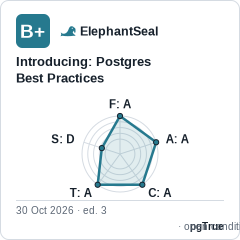
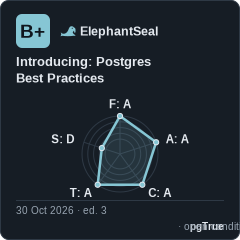
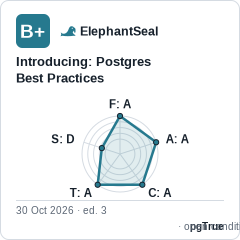
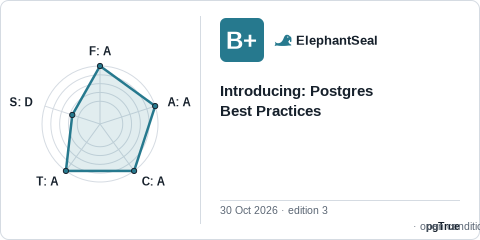
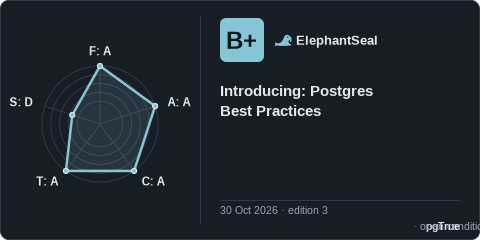
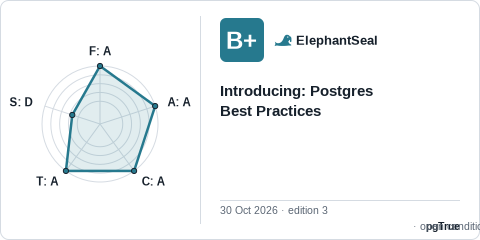
FACTS scorecard Scorecard radar, 5 axes, bigger is better. Overall B+. Factual A · 0 wrong of 13 checked · 0 caveats. Applicable A · 0 wrong of 4 checked · 0 caveats. Consistent A · 0 wrong of 13 checked · 0 caveats. Transparent A · 0 wrong of 7 checked · 0 caveats. Safe D · 1 wrong of 1 checked · 0 caveats. A 0 wrong of 13 checked · 0 caveatsFactual A0 wrong of 130 caveats A 0 wrong of 4 checked · 0 caveatsApplicable A0 wrong of 40 caveats A 0 wrong of 13 checked · 0 caveatsConsistent A0 wrong of 130 caveats A 0 wrong of 7 checked · 0 caveatsTransparent A0 wrong of 70 caveats D 1 wrong of 1 checked · 0 caveatsSafe D1 wrong of 10 caveats B+

By topic: Introduction — 2 findings, 0 wrong · RLS example — 6 findings, 1 wrong · Agent usage — 2 findings, 0 wrong · MCP integration — 2 findings, 0 wrong · Installation — 1 finding, 0 wrong

Further out is better. Each axis has its own letter, from the wrong claims and caveats among the claims we checked of that kind.

Checked on the FACTS: Factual, Applicable, Consistent, Transparent, Safe. Clockwise: Factual (is it true?), Applicable (does it apply to my setup, today?), Consistent (does it agree with itself?), Transparent (can I check it myself?), Safe (can I run this on prod?).

We checked 13 claims.

AxisLetterWrongCaveatsCheckedCoverage
FactualA0013partly assessed: A · 0 wrong of 13 checked · 0 caveats · partly assessed
ApplicableA004assessed: A · 0 wrong of 4 checked · 0 caveats
ConsistentA0013assessed: A · 0 wrong of 13 checked · 0 caveats
TransparentA007assessed: A · 0 wrong of 7 checked · 0 caveats
SafeD101assessed: D · 1 wrong of 1 checked · 0 caveats
Topics · 5 topics

Topics

TopicFactualApplicableConsistentTransparentSafe
Introduction0 issues 2 checked F7 F90 issues 2 checked0 issues 2 checked
RLS example0 issues 6 checked F2 F3 F4 F5 F60 issues 3 checked0 issues 6 checked1 issue 1 checked F1
Agent usage0 issues 2 checked F11 F120 issues 2 checked0 issues 2 checked
MCP integration0 issues 2 checked F8 F130 issues 1 checked0 issues 2 checked0 issues 2 checked
Installation0 issues 1 checked F100 issues 1 checked0 issues 1 checked

Issues found among the claims checked, per topic and axis. Each link goes to the finding behind the count.

Revisions: 5 · A -> Not assessed -> B+ -> B+ -> B+

We audited this article 5 times. Each row is the final edition of one audit. Letters and findings of earlier revisions stay readable at their own address.

  1. Revision 1 · 2026-10-16 12:30 UTC · A · audited with v1.0.8 (approx.)

    Article as first submitted. 5 accurate · 0 wrong · 1 caveat.

    ElephantSeal: A.

    Changes: First audit. Open: F1 “…Correct (database-enforced RLS)…” (mostly accurate).

  2. Revision 2 · 2026-10-18 17:55 UTC · Not assessed · audited with v1.0.11 (approx.)

    Article text changed. 3 accurate · 0 wrong · 1 caveat.

    ElephantSeal: Not assessed.

    Changes: No longer reported: “…Correct (database-enforced RLS)…”. New: F1 “…Database-enforced tenant isolation, prevent data leaks…” (mostly accurate).

  3. Revision 3 · 2026-10-18 21:51 UTC · B+ · audited with v1.0.12 (approx.)

    Same article text, re-audited. 10 accurate · 1 wrong · 0 caveats.

    ElephantSeal: B+. Open: the production risk is not yet fixed or warned about.

    Changes: No longer reported: “…Database-enforced tenant isolation, prevent data leaks…”. New: F1 “The tenant identifier remains writable by the querying user” (dangerous).

  4. Revision 4 · 2026-10-19 21:31 UTC · B+ · audited with v1.0.16 (approx.)

    Same article text, re-audited. 17 accurate · 1 wrong · 0 caveats.

    ElephantSeal: B+. Open: the production risk is not yet fixed or warned about.

    Changes: No longer reported: “The tenant identifier remains writable by the querying user”. New: F1 “The RLS recipe trusts a user-writable identity setting” (dangerous).

  5. Revision 5 · this page · 2026-10-21 03:56 UTC · B+ · audited with v1.0.17 (approx.) · regraded with v1.1.3

    Same article text, re-audited. 12 accurate · 1 wrong · 0 caveats.

    ElephantSeal: B+. Open: the production risk is not yet fixed or warned about.

    Changes: No longer reported: “The RLS recipe trusts a user-writable identity setting”. New: F1 “The custom user setting does not authenticate tenants” (dangerous).

Questions and answers

Questions and answers

What is pgTrue?

pgTrue is an independent fact-check of technical Postgres articles, made by PostgresAI. It helps you check advice before you use it.

What does the letter grade mean?

The letter grade summarizes the claims we checked. Five axes show what we checked:

  • Factual: is it true?
  • Applicable: does it apply to my setup, today?
  • Consistent: does it agree with itself?
  • Transparent: can I check it myself?
  • Safe: can I run this in production?

What is the ElephantSeal?

The ElephantSeal is the mark an article earns. It always shows the latest edition. “Open:” lists what is still open.

Can an author reply?

Authors can ask us to correct a finding, reply to it, or withdraw it. Right-of-reply policy.

Paste into your AI assistant to fix the article, then ask for a re-review.

Show the text
Fix the article with this report, then ask pgTrue for a re-review.

# pgTrue report: Introducing: Postgres Best Practices

Article title: Introducing: Postgres Best Practices
Article URL: https://supabase.com/blog/postgres-best-practices-for-ai-agents
Report URL: https://pgtrue.postgres.ai/shared/brief/29aa4c7d-ee73-44fb-a278-a3a2bd920ca7
Audited revision: 5 of 5, 2026-10-21 03:56:26 UTC
Overall letter: B+

## Axes

- Factual: A · 0 wrong · 13 checked · 0 caveats · partly assessed
- Applicable: A · 0 wrong · 4 checked · 0 caveats · assessed
- Consistent: A · 0 wrong · 13 checked · 0 caveats · assessed
- Transparent: A · 0 wrong · 7 checked · 0 caveats · assessed
- Safe: D · 1 wrong · 1 checked · 0 caveats · assessed

ElephantSeal: B+.
Open conditions: the production risk is not yet fixed or warned about.

## Report metadata

- Report: Technical fact-check, edition 3
- pgTrue version: audited with v1.0.17 (approx.) · regraded with v1.1.3
- Issued: 2026-10-21
- Edition: Updated after review. Corrections are listed below.
- Submitted: Submitted by the PostgresAI team.
- Author response: No written reply from the author. The article changed 1 time after our first audit; we re-audited each version. See Revisions below. Policy: [right-of-reply and corrections policy](/pgtrue/security).

## Findings needing a change (1)

### F1 · Inaccurate · Safe · The custom user setting does not authenticate tenants
Location: Article · exact quote · [open in article](https://supabase.com/blog/postgres-best-practices-for-ai-agents#:~:text=Database%2Denforced%20tenant%20isolation%2C%20prevent%20data%20leaks)
Article says:
```text
…Database-enforced tenant isolation, prevent data leaks…
```
What is true:
app.current_user_id is caller-writable. guc.c:1196 assigns custom placeholders PGC_USERSET, and guc.c:3606 accepts those assignments. A tenant executing SQL can select another tenant's identity. The policy provides isolation only when trusted code controls SQL and the identity setting.
So what:
When tenants can execute SQL, use separate database roles and policies keyed to current_user. Restrict this custom-setting pattern to trusted application connections.
Charitable reading:
Trusted application code can safely supply this context when tenants cannot control SQL. The article does not state that trust requirement.
Review: We tested the trusted-application reading and publication-era permissions. F1 already preserves that exception. Both releases permit caller-written identity settings. The concrete role-policy recommendation addresses unauthorized row access when tenants can execute SQL. We tested the trusted-application reading. F1 preserves that valid use. USERSET permissions support the conditional impersonation risk. The proposed role-based alternative names a concrete decision.

Sources:
- [REL_18_6 · src/backend/utils/misc/guc.c:1196-1200](https://github.com/postgres/postgres/blob/724edf9bde9d356724ad384a2e196edc3c9f80f7/src/backend/utils/misc/guc.c#L1196-L1200)
  Excerpt:
  ```text
  gen->context = PGC_USERSET;
	gen->group = CUSTOM_OPTIONS;
	gen->short_desc = "GUC placeholder variable";
	gen->flags = GUC_NO_SHOW_ALL | GUC_NOT_IN_SAMPLE | GUC_CUSTOM_PLACEHOLDER;
	gen->vartype = PGC_STRING;
  ```
- [REL_18_6 · src/backend/utils/misc/guc.c:3606-3608](https://github.com/postgres/postgres/blob/724edf9bde9d356724ad384a2e196edc3c9f80f7/src/backend/utils/misc/guc.c#L3606-L3608)
  Excerpt:
  ```text
  case PGC_USERSET:
			/* always okay */
			break;
  ```
- [REL_18_1 · src/backend/utils/misc/guc.c:1196-1196](https://github.com/postgres/postgres/blob/4b324845ba5d24682b9b3708a769f00d160afbd7/src/backend/utils/misc/guc.c#L1196-L1196)
  Qualification: Version note: The publication-era release has the same custom-setting permission.
  Excerpt:
  ```text
  gen->context = PGC_USERSET;
  ```
- [REL_18_1 · src/include/utils/guc.h:69-69](https://github.com/postgres/postgres/blob/4b324845ba5d24682b9b3708a769f00d160afbd7/src/include/utils/guc.h#L69-L69)
  Excerpt:
  ```text
  * USERSET options can be set by anyone any time.
  ```

Finding URL: https://pgtrue.postgres.ai/shared/brief/29aa4c7d-ee73-44fb-a278-a3a2bd920ca7#F1

## Verified accurate claims (12)

### F2 · Accurate · Factual · ENABLE ROW LEVEL SECURITY activates table row security
Location: Article · exact quote · [open in article](https://supabase.com/blog/postgres-best-practices-for-ai-agents#:~:text=enable%20row%20level%20security%3B)
Article says:
```text
…enable row level security;…
```
What is true:
ALTER TABLE orders ENABLE ROW LEVEL SECURITY sets the table's relrowsecurity flag. tablecmds.c:18667 performs that catalog update.
Charitable reading:
The command enables RLS. The separately displayed policy supplies its row predicate.
Review: We checked whether ENABLE alone establishes the claimed isolation. F2 claims only the relrowsecurity catalog update, which tablecmds.c confirms. We checked whether F2 confuses enabling RLS with defining a policy. It claims only the relrowsecurity update shown in E-7.

Sources:
- [REL_18_6 · src/backend/commands/tablecmds.c:18667-18667](https://github.com/postgres/postgres/blob/724edf9bde9d356724ad384a2e196edc3c9f80f7/src/backend/commands/tablecmds.c#L18667-L18667)
  Excerpt:
  ```text
  ((Form_pg_class) GETSTRUCT(tuple))->relrowsecurity = rls;
  ```

Finding URL: https://pgtrue.postgres.ai/shared/brief/29aa4c7d-ee73-44fb-a278-a3a2bd920ca7#F2

### F3 · Accurate · Factual · FOR ALL also checks inserted and updated rows
Location: Article · exact quote · [open in article](https://supabase.com/blog/postgres-best-practices-for-ai-agents#:~:text=for%20all%20using%20%28%20user_id%20%3D%20current_setting%28%27app.current_user_id%27%29%3A%3Abigint%20%29%3B)
Article says:
```text
…for all
  using (
    user_id = current_setting('app.current_user_id')::bigint
  );…
```
What is true:
The policy checks existing rows with USING. PostgreSQL also reuses that predicate for new rows when WITH CHECK is absent. create_policy.sgml:86-92 documents this behavior. rowsecurity.c:810-811 implements the fallback.
Charitable reading:
We checked the policy's mechanics separately from whether its identity source deserves trust.
Review: We tested whether omitted WITH CHECK leaves writes unchecked. The documentation and QUAL_FOR_WCO fallback confirm reuse of USING. We tested whether omitting WITH CHECK leaves writes unchecked. E-9 explicitly documents the USING fallback for ALL policies. E-10 matches it.

Sources:
- [REL_18_6 · src/backend/rewrite/rowsecurity.c:810-811](https://github.com/postgres/postgres/blob/724edf9bde9d356724ad384a2e196edc3c9f80f7/src/backend/rewrite/rowsecurity.c#L810-L811)
  Excerpt:
  ```text
  (policy)->with_check_qual != NULL ? \
	  (policy)->with_check_qual : (policy)->qual )
  ```
- [REL_18_6 · doc/src/sgml/ref/create_policy.sgml:86-92](https://github.com/postgres/postgres/blob/724edf9bde9d356724ad384a2e196edc3c9f80f7/doc/src/sgml/ref/create_policy.sgml#L86-L92)
  Excerpt:
  ```text
  For policies that can have both <literal>USING</literal>
   and <literal>WITH CHECK</literal> expressions (<literal>ALL</literal>
   and <literal>UPDATE</literal>), if no <literal>WITH CHECK</literal>
   expression is defined, then the <literal>USING</literal> expression will be
   used both to determine which rows are visible (normal
   <literal>USING</literal> case) and which new rows will be allowed to be
   added (<literal>WITH CHECK</literal> case).
  ```

Finding URL: https://pgtrue.postgres.ai/shared/brief/29aa4c7d-ee73-44fb-a278-a3a2bd920ca7#F3

### F4 · Accurate · Factual · FORCE applies RLS to ordinary table owners
Location: Article · exact quote · [open in article](https://supabase.com/blog/postgres-best-practices-for-ai-agents#:~:text=Force%20RLS%20even%20for%20table%20owners)
Article says:
```text
…Force RLS even for table owners…
```
What is true:
FORCE removes the ordinary table-owner exemption. rls.c:116-117 checks that flag. Superusers and BYPASSRLS roles still bypass policies, as ddl.sgml:2666-2670 states.
Charitable reading:
Table owners means ordinary owners subject to RLS, rather than superusers or roles with BYPASSRLS.
Review: We checked privileged bypass and the internal referential-integrity exception. Neither defeats F4's qualified statement about ordinary owners. We tested superuser and BYPASSRLS exceptions. F4 expressly preserves both. E-13 supports FORCE for ordinary table owners.

Sources:
- [REL_18_6 · src/backend/utils/misc/rls.c:116-117](https://github.com/postgres/postgres/blob/724edf9bde9d356724ad384a2e196edc3c9f80f7/src/backend/utils/misc/rls.c#L116-L117)
  Excerpt:
  ```text
  if (!relforcerowsecurity || InNoForceRLSOperation())
			return RLS_NONE_ENV;
  ```
- [REL_18_6 · doc/src/sgml/ddl.sgml:2666-2670](https://github.com/postgres/postgres/blob/724edf9bde9d356724ad384a2e196edc3c9f80f7/doc/src/sgml/ddl.sgml#L2666-L2670)
  Excerpt:
  ```text
  Superusers and roles with the <literal>BYPASSRLS</literal> attribute always
   bypass the row security system when accessing a table.  Table owners
   normally bypass row security as well, though a table owner can choose to
   be subject to row security with <link linkend="sql-altertable">ALTER
   TABLE ... FORCE ROW LEVEL SECURITY</link>.
  ```

Finding URL: https://pgtrue.postgres.ai/shared/brief/29aa4c7d-ee73-44fb-a278-a3a2bd920ca7#F4

### F5 · Accurate · Factual · current_setting retrieves the configured comparison value
Location: Article · exact quote · [open in article](https://supabase.com/blog/postgres-best-practices-for-ai-agents#:~:text=current_setting%28%27app.current_user_id%27%29%3A%3Abigint)
Article says:
```text
…current_setting('app.current_user_id')::bigint…
```
What is true:
current_setting reads the named setting and returns text. guc_funcs.c:813-816 performs that lookup. The displayed bigint cast converts the value before comparing user_id.
Charitable reading:
The expression retrieves a configured identifier. It does not claim the function authenticates that identifier.
Review: We checked missing-setting behavior and authentication implications. F5 correctly limits current_setting to retrieving text. The example supplies its setting before SELECT. We checked missing-setting and authentication objections. The article sets the value before querying. F5 claims retrieval and conversion, not authentication.

Sources:
- [REL_18_6 · src/backend/utils/misc/guc_funcs.c:813-816](https://github.com/postgres/postgres/blob/724edf9bde9d356724ad384a2e196edc3c9f80f7/src/backend/utils/misc/guc_funcs.c#L813-L816)
  Excerpt:
  ```text
  varval = GetConfigOptionByName(varname, NULL, false);

	/* Convert to text */
	PG_RETURN_TEXT_P(cstring_to_text(varval));
  ```
- [REL_18_6 · src/backend/utils/misc/guc.c:1196-1200](https://github.com/postgres/postgres/blob/724edf9bde9d356724ad384a2e196edc3c9f80f7/src/backend/utils/misc/guc.c#L1196-L1200)
  Excerpt:
  ```text
  gen->context = PGC_USERSET;
	gen->group = CUSTOM_OPTIONS;
	gen->short_desc = "GUC placeholder variable";
	gen->flags = GUC_NO_SHOW_ALL | GUC_NOT_IN_SAMPLE | GUC_CUSTOM_PLACEHOLDER;
	gen->vartype = PGC_STRING;
  ```

Finding URL: https://pgtrue.postgres.ai/shared/brief/29aa4c7d-ee73-44fb-a278-a3a2bd920ca7#F5

### F6 · Accurate · Factual · Verified accurate: “…to authenticated…”
Location: Article · exact quote · [open in article](https://supabase.com/blog/postgres-best-practices-for-ai-agents#:~:text=to%20authenticated)
Article says:
```text
…to authenticated…
```
What is true:
TO authenticated selects policy applicability by database-role privileges. src/backend/rewrite/rowsecurity.c:927 checks has_privs_of_role(user_id, roles\[i\]).
Review: E-17 checks database-role privileges. Its 3 lines do not establish inherited-membership semantics or session authentication behavior. We retain the supported applicability claim.

Sources:
- [REL_18_6 · src/backend/rewrite/rowsecurity.c:926-928](https://github.com/postgres/postgres/blob/724edf9bde9d356724ad384a2e196edc3c9f80f7/src/backend/rewrite/rowsecurity.c#L926-L928)
  Excerpt:
  ```text
  {
		if (has_privs_of_role(user_id, roles[i]))
			return true;
  ```

Finding URL: https://pgtrue.postgres.ai/shared/brief/29aa4c7d-ee73-44fb-a278-a3a2bd920ca7#F6

### F7 · Accurate · Factual · Indexes can add write overhead
Location: Article · exact quote · [open in article](https://supabase.com/blog/postgres-best-practices-for-ai-agents#:~:text=an%20index%20that%20makes%20writes%20slower)
Article says:
```text
…an index that makes writes slower…
```
What is true:
PostgreSQL maintains indexes when table data changes. indices.sgml:130-147 documents that maintenance overhead and its effect on heap-only tuples.
Charitable reading:
The article says an index can slow writes. It does not say every index makes every workload slower.
Review: We tested whether faster row lookup contradicts the write-overhead claim. F7 asserts a possibility, and indices.sgml documents maintenance overhead. We tested whether faster indexed lookups contradict F7. They do not negate maintenance overhead. F7 preserves the article's conditional wording.

Sources:
- [REL_18_6 · doc/src/sgml/indices.sgml:130-147](https://github.com/postgres/postgres/blob/724edf9bde9d356724ad384a2e196edc3c9f80f7/doc/src/sgml/indices.sgml#L130-L147)
  Excerpt:
  ```text
  After an index is created, the system has to keep it synchronized with the
   table.  This adds overhead to data manipulation operations.  Indexes can
   also prevent the creation of <link linkend="storage-hot">heap-only
   tuples</link>.
  ```

Finding URL: https://pgtrue.postgres.ai/shared/brief/29aa4c7d-ee73-44fb-a278-a3a2bd920ca7#F7

### F8 · Accurate · Factual · Ordinary index creation blocks concurrent writes
Location: Article · exact quote · [open in article](https://supabase.com/blog/postgres-best-practices-for-ai-agents#:~:text=creating%20an%20index%20that%20locks%20your%20table)
Article says:
```text
…creating an index that locks your table…
```
What is true:
Ordinary CREATE INDEX permits concurrent reads but blocks INSERT, UPDATE, and DELETE during the build. indices.sgml:124-130 documents that behavior.
Charitable reading:
The article describes an index build that locks the table. It does not claim concurrent builds have identical locking.
Review: We checked concurrent builds and continued reads. F8 explicitly concerns ordinary CREATE INDEX and identifies only writes as blocked. We tested concurrent builds and read availability. F8 concerns ordinary CREATE INDEX and explicitly permits reads. E-21 supports blocked writes.

Sources:
- [REL_18_6 · doc/src/sgml/indices.sgml:124-130](https://github.com/postgres/postgres/blob/724edf9bde9d356724ad384a2e196edc3c9f80f7/doc/src/sgml/indices.sgml#L124-L130)
  Excerpt:
  ```text
  Creating an index on a large table can take a long time.  By default,
   <productname>PostgreSQL</productname> allows reads (<command>SELECT</command> statements) to occur
   on the table in parallel with index creation, but writes (<command>INSERT</command>,
   <command>UPDATE</command>, <command>DELETE</command>) are blocked until the index build is finished.
  ```

Finding URL: https://pgtrue.postgres.ai/shared/brief/29aa4c7d-ee73-44fb-a278-a3a2bd920ca7#F8

### F9 · Accurate · Factual · PostgreSQL development spans decades
Location: Article · exact quote · [open in article](https://supabase.com/blog/postgres-best-practices-for-ai-agents#:~:text=decades%20of%20features)
Article says:
```text
…decades of features…
```
What is true:
PostgreSQL's history records its renaming in 1996. REL_18_6 doc/src/sgml/history.sgml:195–197 supports the article's historical description.
Charitable reading:
The phrase describes PostgreSQL's development history rather than a precise feature count.
Review: We checked whether the historical citation establishes only a name change. Its 1996 date supports decades of history by 2026. We checked the historical arithmetic. The 1996 renaming predates publication by about 30 years. F9 claims duration, not a feature count.

Sources:
- [REL_18_6 · doc/src/sgml/history.sgml:195-197](https://github.com/postgres/postgres/blob/724edf9bde9d356724ad384a2e196edc3c9f80f7/doc/src/sgml/history.sgml#L195-L197)
  Excerpt:
  ```text
  By 1996, it became clear that the name <quote>Postgres95</quote>
   would not stand the test of time. We chose a new name,
   <productname>PostgreSQL</productname>, to reflect the relationship
  ```

Finding URL: https://pgtrue.postgres.ai/shared/brief/29aa4c7d-ee73-44fb-a278-a3a2bd920ca7#F9

### F10 · Accurate · Factual · The installation command matches current documentation
Location: Article · exact quote · [open in article](https://supabase.com/blog/postgres-best-practices-for-ai-agents#:~:text=npx%20skills%20add%20supabase%2Fagent%2Dskills)
Article says:
```text
…npx skills add supabase/agent-skills…
```
What is true:
The installation documentation specifies \`npx skills add supabase/agent-skills\`. The article reproduces that command exactly.
Charitable reading:
The command opens repository installation rather than selecting one specific skill automatically.
Review: We checked repository installation versus selecting one skill. The command matches current documentation exactly. F10 does not claim successful execution. We compared the command bytes and tested whether F10 promises successful installation. It claims only agreement with current documentation.

Sources:
- [https://supabase.com/docs/guides/ai-tools/ai-skills](https://supabase.com/docs/guides/ai-tools/ai-skills)
  Excerpt:
  ```text
  npx skills add supabase/agent-skills
  ```

Finding URL: https://pgtrue.postgres.ai/shared/brief/29aa4c7d-ee73-44fb-a278-a3a2bd920ca7#F10

### F11 · Accurate · Factual · Verified accurate: “…an open standard for giving agents domain expertise…”
Location: Article · exact quote · [open in article](https://supabase.com/blog/postgres-best-practices-for-ai-agents#:~:text=an%20open%20standard%20for%20giving%20agents%20domain%20expertise)
Article says:
```text
…an open standard for giving agents domain expertise…
```
What is true:
The Agent Skills overview describes an open format for extending agent capabilities with specialized knowledge and workflows.
Review: E-28 establishes the open format. Its recorded quotation does not mention SKILL.md. The full page supports that detail, but the finding's citation omits it.

Sources:
- [https://agentskills.io/](https://agentskills.io/)
  Excerpt:
  ```text
  Agent Skills are a lightweight, open format for extending AI agent capabilities with specialized knowledge and workflows.
  ```

Finding URL: https://pgtrue.postgres.ai/shared/brief/29aa4c7d-ee73-44fb-a278-a3a2bd920ca7#F11

### F12 · Accurate · Factual · The standard loads instructions when a task matches
Location: Article · exact quote · [open in article](https://supabase.com/blog/postgres-best-practices-for-ai-agents#:~:text=The%20agent%20reads%20the%20skill%20when%20it%20needs%20guidance)
Article says:
```text
The agent reads the skill when it needs guidance…
```
What is true:
The Agent Skills overview specifies activation when a task matches a skill's description. Activation loads the full \`SKILL.md\` instructions.
Charitable reading:
The sentence summarizes the standard's activation process rather than promising flawless activation in every client.
Review: We tested specification versus implementation guarantees. F12 describes the specified activation process and makes no universal client guarantee. We tested whether F12 guarantees activation in every client. It describes the standard's specified process. E-30 supports that narrower claim.

Sources:
- [https://agentskills.io/](https://agentskills.io/)
  Excerpt:
  ```text
  When a task matches a skill’s description, the agent reads the full SKILL.md instructions into context.
  ```

Finding URL: https://pgtrue.postgres.ai/shared/brief/29aa4c7d-ee73-44fb-a278-a3a2bd920ca7#F12

### F13 · Accurate · Factual · The MCP database tools support migrations and SQL
Location: Article · exact quote · [open in article](https://supabase.com/blog/postgres-best-practices-for-ai-agents#:~:text=Agents%20can%20create%20tables%2C%20run%20queries%2C%20manage%20schemas)
Article says:
```text
Agents can create tables, run queries, manage schemas…
```
What is true:
The MCP documentation lists \`apply_migration\` and \`execute_sql\`. Those tools support schema changes and queries when connection permissions allow them.
Charitable reading:
The capability claim assumes an authorized connection with database tools enabled and write access where required.
Review: We checked read-only mode and disabled database tools. F13 already conditions the documented migration and SQL capabilities on connection permissions. We tested read-only connections and restricted permissions. F13 explicitly conditions execution on permissions. E-32 lists both migration and SQL tools.

Sources:
- [https://supabase.com/docs/guides/ai-tools/mcp](https://supabase.com/docs/guides/ai-tools/mcp)
  Excerpt:
  ```text
  - `apply_migration` - Apply a database migration
- `execute_sql` - Execute SQL queries
  ```

Finding URL: https://pgtrue.postgres.ai/shared/brief/29aa4c7d-ee73-44fb-a278-a3a2bd920ca7#F13

## Notes (not graded) (0)

None.

## Withdrawn findings (0)

None.

## Section checks

- Introduction · A · 2 verified-accurate · 100% of claims (2 of 2, plus 1 that need data we do not have)
- RLS example · D · 1 dangerous-recipe · 5 verified-accurate · 100% of claims (22 of 22, plus 5 that need data we do not have)
- Agent usage · A · 2 verified-accurate · no checkable claims
- MCP integration · A · 2 verified-accurate · 100% of claims (1 of 1)
- Installation · A · 1 verified-accurate · no checkable claims

## Claim coverage

- Introduction: 2 of 2 Postgres claims checked, plus 1 that need data we do not have; not counted: 5 product or opinion, 2 duplicate, 4 not a claim
- Repository contents: 0 of 1 Postgres claims checked; not counted: 11 product or opinion, 1 not a claim; not checked: 1 for other reasons
- RLS example: 22 of 22 Postgres claims checked, plus 5 that need data we do not have; not counted: 1 product or opinion, 1 duplicate, 3 not a claim
- Agent usage: no checkable claims; not counted: 19 product or opinion, 2 duplicate, 1 not a claim
- Motivation: 2 of 2 Postgres claims checked, plus 3 that need data we do not have; not counted: 3 product or opinion, 1 duplicate, 1 not a claim
- MCP integration: 1 of 1 Postgres claims checked; not counted: 10 product or opinion, 6 duplicate, 1 not a claim
- Contributing: no checkable claims; not counted: 7 product or opinion, 2 not a claim
- Installation: no checkable claims; not counted: 6 product or opinion, 2 not a claim

## What we did not check

- We did not verify auth.uid() or the application placeholder $current_user_id.
- We did not verify whether installing the skills makes generated SQL correct.
- We did not check the article's query-planning, ORM, or connection-pool examples.
- We did not check migration locking beyond index creation.
- We did not verify the 30-rule count, contribution template, or plugin installation against the repository's publication version.
- We did not verify compatibility with every named client or coverage of 40 additional services.
- We did not check the linked RLS documentation or the skills npm package page.
- We did not verify the promised automatic index warnings, RLS suggestions, or query performance improvements.
- We did not verify the project-count or support-history claims.
- We did not verify the article's RLS, indexing, locking, connection-pool, or query-plan claims against primary evidence.
- We did not verify the release-time counts of 30 rules and 44 services.
- We did not execute the RLS examples.
- Factual: we did not complete every applicable check.
- Section “Repository contents”: we checked 0 of 1 checkable claims.
- Section “MCP integration”: our checked-claim count (2) exceeds our extracted total (1); the count needs review.

## Notes

- Central claim not verified. We checked installation and the RLS example, but not the 30 rules or their promised improvements to generated SQL.
- We did not check everything in this article. What we did not check is listed below, in the words we recorded at the time. None of it moved the letter. We never charge our own limits to the article.
- Part of this audit returned no findings, so our coverage of the article is thinner than usual.
- Average of 5 axes: 3.4 · result B+
- Some explanatory text is not shown in this edition; the grade and findings are complete.
- Some checks did not happen for this edition, and each one we know of is listed above.
- Checked against: github.com/postgres/postgres REL_18_6 at commit 724edf9bde9d356724ad384a2e196edc3c9f80f7 (pinned target); https://agentskills.io/ (fetched 2026-10-21T03:56:44.179517Z); https://supabase.com/docs/guides/ai-tools/ai-skills (fetched 2026-10-21T03:56:40.741515Z); https://supabase.com/docs/guides/ai-tools/mcp (fetched 2026-10-21T03:56:49.118581Z); https://vercel.com/blog/introducing-react-best-practices (fetched 2026-10-21T03:56:46.810488Z).
- Article captured 2026-10-21T03:56:26.442109Z · SHA-256 27fb164ae4bd4526d5921cdd29ad987af4625b72377984678cf1cfc4446bd712 · Text extracted from the article's HTML.
- Policy SHA-256 f24923335456ed2b284e149136deeeaf5799545274de1492f890acdba9477345 · Grading rules SHA-256 6fb334e79d6b9e7ed81d3238cc10d9de602ff87ed65ff2fa781f53bac5798765.
- We did not verify whether installing the skills improves generated SQL.
- We did not verify the 30-rule count, contribution template, or plugin installation against the repository's publication version.
- We did not verify auth.uid() or the application placeholder $current_user_id.
- We did not execute the RLS examples.
- We did not check query-planning, ORM, or connection-pool claims, or migration locking beyond index creation.
- We did not verify compatibility with every named client or the additional service count.
- We did not verify automatic index warnings, RLS suggestions, or query performance improvements.
- We did not check the linked RLS documentation. We could not retrieve the npm package page.
- We did not verify the project-count or support-history claims.
- The article gives a publication date without a time. We list that date at midnight UTC.
- 3 fetched pages are not listed above, because our policy does not allow linking them.
- review: the findings were written by one model and reviewed independently by a different model.
- 2026-10-30: Regraded under the current grading rules: the letter is the average of the axis letters, with every cap stated under it.
- 3 passages in this edition fell short of our own plain-English rules.
- Built from the article text captured above, one pinned source tree, and 4 fetched pages.
- 11 survived · 2 weakened · 0 withdrawn.

## Revision history

- [Revision 1](https://pgtrue.postgres.ai/shared/brief/29aa4c7d-ee73-44fb-a278-a3a2bd920ca7?v=2) · 2026-10-16 12:30 UTC · A · audited with v1.0.8 (approx.)
  Article as first submitted. 5 accurate · 0 wrong · 1 caveat.
  ElephantSeal: A.
  Changes: First audit. Open: F1 “…Correct (database-enforced RLS)…” (mostly accurate).
- [Revision 2](https://pgtrue.postgres.ai/shared/brief/29aa4c7d-ee73-44fb-a278-a3a2bd920ca7?v=4) · 2026-10-18 17:55 UTC · Not assessed · audited with v1.0.11 (approx.)
  Article text changed. 3 accurate · 0 wrong · 1 caveat.
  ElephantSeal: Not assessed.
  Changes: No longer reported: “…Correct (database-enforced RLS)…”. New: F1 “…Database-enforced tenant isolation, prevent data leaks…” (mostly accurate).
- [Revision 3](https://pgtrue.postgres.ai/shared/brief/29aa4c7d-ee73-44fb-a278-a3a2bd920ca7?v=6) · 2026-10-18 21:51 UTC · B+ · audited with v1.0.12 (approx.)
  Same article text, re-audited. 10 accurate · 1 wrong · 0 caveats.
  ElephantSeal: B+. Open: the production risk is not yet fixed or warned about.
  Changes: No longer reported: “…Database-enforced tenant isolation, prevent data leaks…”. New: F1 “The tenant identifier remains writable by the querying user” (dangerous).
- [Revision 4](https://pgtrue.postgres.ai/shared/brief/29aa4c7d-ee73-44fb-a278-a3a2bd920ca7?v=8) · 2026-10-19 21:31 UTC · B+ · audited with v1.0.16 (approx.)
  Same article text, re-audited. 17 accurate · 1 wrong · 0 caveats.
  ElephantSeal: B+. Open: the production risk is not yet fixed or warned about.
  Changes: No longer reported: “The tenant identifier remains writable by the querying user”. New: F1 “The RLS recipe trusts a user-writable identity setting” (dangerous).
- [Revision 5](https://pgtrue.postgres.ai/shared/brief/29aa4c7d-ee73-44fb-a278-a3a2bd920ca7?v=11) · this page · 2026-10-21 03:56 UTC · B+ · audited with v1.0.17 (approx.) · regraded with v1.1.3
  Same article text, re-audited. 12 accurate · 1 wrong · 0 caveats.
  ElephantSeal: B+. Open: the production risk is not yet fixed or warned about.
  Changes: No longer reported: “The RLS recipe trusts a user-writable identity setting”. New: F1 “The custom user setting does not authenticate tenants” (dangerous).

Updated your article? Request a correction. A new edition appears at this address.