Limited beta · What is this?

pgTrue is under active development: reports may contain significant mistakes, inaccuracies, or bugs. Please report anything you find to pgtrue@postgres.ai.

pgTrue is an independent fact-check of technical Postgres articles. Read the questions and answers.

pgTrue fact-check

ElephantSeal A-Limited coverage

Embed

The ElephantSeal always shows this report's latest edition and links here. Copies cached elsewhere may update later.

[![pgTrue fact-check](https://pgtrue.postgres.ai/badge/0d0e683a-933a-4fa8-8f33-c34a94589f04.svg?v=13&theme=light)](https://pgtrue.postgres.ai/shared/brief/0d0e683a-933a-4fa8-8f33-c34a94589f04)
<a href="https://pgtrue.postgres.ai/shared/brief/0d0e683a-933a-4fa8-8f33-c34a94589f04"><img src="https://pgtrue.postgres.ai/badge/0d0e683a-933a-4fa8-8f33-c34a94589f04.svg?v=13&amp;theme=light" alt="pgTrue fact-check" width="90" height="20" loading="lazy" decoding="async" style="display:inline-block;width:90px;height:20px"></a>
https://pgtrue.postgres.ai/badge/0d0e683a-933a-4fa8-8f33-c34a94589f04.svg?v=13&theme=light
.. image:: https://pgtrue.postgres.ai/badge/0d0e683a-933a-4fa8-8f33-c34a94589f04.svg?v=13&theme=light
   :target: https://pgtrue.postgres.ai/shared/brief/0d0e683a-933a-4fa8-8f33-c34a94589f04
   :alt: pgTrue fact-check
   :width: 90
   :height: 20
[![pgTrue fact-check](https://pgtrue.postgres.ai/badge/0d0e683a-933a-4fa8-8f33-c34a94589f04.svg?v=13&theme=dark)](https://pgtrue.postgres.ai/shared/brief/0d0e683a-933a-4fa8-8f33-c34a94589f04)
<a href="https://pgtrue.postgres.ai/shared/brief/0d0e683a-933a-4fa8-8f33-c34a94589f04"><img src="https://pgtrue.postgres.ai/badge/0d0e683a-933a-4fa8-8f33-c34a94589f04.svg?v=13&amp;theme=dark" alt="pgTrue fact-check" width="90" height="20" loading="lazy" decoding="async" style="display:inline-block;width:90px;height:20px"></a>
https://pgtrue.postgres.ai/badge/0d0e683a-933a-4fa8-8f33-c34a94589f04.svg?v=13&theme=dark
.. image:: https://pgtrue.postgres.ai/badge/0d0e683a-933a-4fa8-8f33-c34a94589f04.svg?v=13&theme=dark
   :target: https://pgtrue.postgres.ai/shared/brief/0d0e683a-933a-4fa8-8f33-c34a94589f04
   :alt: pgTrue fact-check
   :width: 90
   :height: 20
[![pgTrue fact-check](https://pgtrue.postgres.ai/badge/0d0e683a-933a-4fa8-8f33-c34a94589f04.svg?v=13)](https://pgtrue.postgres.ai/shared/brief/0d0e683a-933a-4fa8-8f33-c34a94589f04)
<a href="https://pgtrue.postgres.ai/shared/brief/0d0e683a-933a-4fa8-8f33-c34a94589f04"><img src="https://pgtrue.postgres.ai/badge/0d0e683a-933a-4fa8-8f33-c34a94589f04.svg?v=13" alt="pgTrue fact-check" width="90" height="20" loading="lazy" decoding="async" style="display:inline-block;width:90px;height:20px"></a>
https://pgtrue.postgres.ai/badge/0d0e683a-933a-4fa8-8f33-c34a94589f04.svg?v=13
.. image:: https://pgtrue.postgres.ai/badge/0d0e683a-933a-4fa8-8f33-c34a94589f04.svg?v=13
   :target: https://pgtrue.postgres.ai/shared/brief/0d0e683a-933a-4fa8-8f33-c34a94589f04
   :alt: pgTrue fact-check
   :width: 90
   :height: 20
[![pgTrue fact-check](https://pgtrue.postgres.ai/badge/0d0e683a-933a-4fa8-8f33-c34a94589f04/radar.svg?v=13&theme=light)](https://pgtrue.postgres.ai/shared/brief/0d0e683a-933a-4fa8-8f33-c34a94589f04)
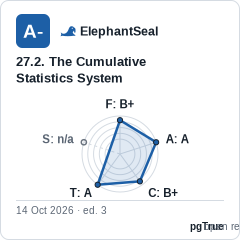
<a href="https://pgtrue.postgres.ai/shared/brief/0d0e683a-933a-4fa8-8f33-c34a94589f04"><img src="https://pgtrue.postgres.ai/badge/0d0e683a-933a-4fa8-8f33-c34a94589f04/radar.svg?v=13&amp;theme=light" alt="pgTrue fact-check" width="240" height="240" loading="lazy" decoding="async" style="display:inline-block;width:240px;height:240px"></a>
https://pgtrue.postgres.ai/badge/0d0e683a-933a-4fa8-8f33-c34a94589f04/radar.svg?v=13&theme=light
.. image:: https://pgtrue.postgres.ai/badge/0d0e683a-933a-4fa8-8f33-c34a94589f04/radar.svg?v=13&theme=light
   :target: https://pgtrue.postgres.ai/shared/brief/0d0e683a-933a-4fa8-8f33-c34a94589f04
   :alt: pgTrue fact-check
   :width: 240
   :height: 240
[![pgTrue fact-check](https://pgtrue.postgres.ai/badge/0d0e683a-933a-4fa8-8f33-c34a94589f04/radar.svg?v=13&theme=dark)](https://pgtrue.postgres.ai/shared/brief/0d0e683a-933a-4fa8-8f33-c34a94589f04)
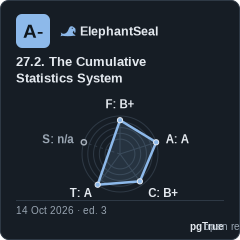
<a href="https://pgtrue.postgres.ai/shared/brief/0d0e683a-933a-4fa8-8f33-c34a94589f04"><img src="https://pgtrue.postgres.ai/badge/0d0e683a-933a-4fa8-8f33-c34a94589f04/radar.svg?v=13&amp;theme=dark" alt="pgTrue fact-check" width="240" height="240" loading="lazy" decoding="async" style="display:inline-block;width:240px;height:240px"></a>
https://pgtrue.postgres.ai/badge/0d0e683a-933a-4fa8-8f33-c34a94589f04/radar.svg?v=13&theme=dark
.. image:: https://pgtrue.postgres.ai/badge/0d0e683a-933a-4fa8-8f33-c34a94589f04/radar.svg?v=13&theme=dark
   :target: https://pgtrue.postgres.ai/shared/brief/0d0e683a-933a-4fa8-8f33-c34a94589f04
   :alt: pgTrue fact-check
   :width: 240
   :height: 240
[![pgTrue fact-check](https://pgtrue.postgres.ai/badge/0d0e683a-933a-4fa8-8f33-c34a94589f04/radar.svg?v=13)](https://pgtrue.postgres.ai/shared/brief/0d0e683a-933a-4fa8-8f33-c34a94589f04)
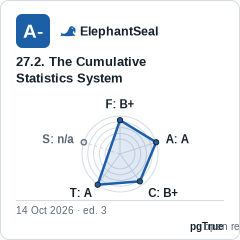
<a href="https://pgtrue.postgres.ai/shared/brief/0d0e683a-933a-4fa8-8f33-c34a94589f04"><img src="https://pgtrue.postgres.ai/badge/0d0e683a-933a-4fa8-8f33-c34a94589f04/radar.svg?v=13" alt="pgTrue fact-check" width="240" height="240" loading="lazy" decoding="async" style="display:inline-block;width:240px;height:240px"></a>
https://pgtrue.postgres.ai/badge/0d0e683a-933a-4fa8-8f33-c34a94589f04/radar.svg?v=13
.. image:: https://pgtrue.postgres.ai/badge/0d0e683a-933a-4fa8-8f33-c34a94589f04/radar.svg?v=13
   :target: https://pgtrue.postgres.ai/shared/brief/0d0e683a-933a-4fa8-8f33-c34a94589f04
   :alt: pgTrue fact-check
   :width: 240
   :height: 240
[![pgTrue fact-check](https://pgtrue.postgres.ai/badge/0d0e683a-933a-4fa8-8f33-c34a94589f04/wide.svg?v=13&theme=light)](https://pgtrue.postgres.ai/shared/brief/0d0e683a-933a-4fa8-8f33-c34a94589f04)
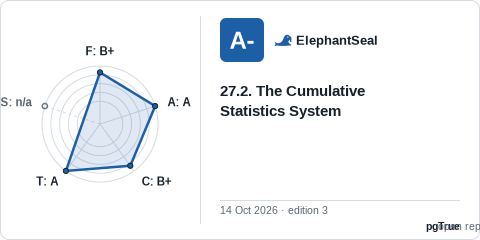
<a href="https://pgtrue.postgres.ai/shared/brief/0d0e683a-933a-4fa8-8f33-c34a94589f04"><img src="https://pgtrue.postgres.ai/badge/0d0e683a-933a-4fa8-8f33-c34a94589f04/wide.svg?v=13&amp;theme=light" alt="pgTrue fact-check" width="480" height="240" loading="lazy" decoding="async" style="display:inline-block;width:480px;height:240px"></a>
https://pgtrue.postgres.ai/badge/0d0e683a-933a-4fa8-8f33-c34a94589f04/wide.svg?v=13&theme=light
.. image:: https://pgtrue.postgres.ai/badge/0d0e683a-933a-4fa8-8f33-c34a94589f04/wide.svg?v=13&theme=light
   :target: https://pgtrue.postgres.ai/shared/brief/0d0e683a-933a-4fa8-8f33-c34a94589f04
   :alt: pgTrue fact-check
   :width: 480
   :height: 240
[![pgTrue fact-check](https://pgtrue.postgres.ai/badge/0d0e683a-933a-4fa8-8f33-c34a94589f04/wide.svg?v=13&theme=dark)](https://pgtrue.postgres.ai/shared/brief/0d0e683a-933a-4fa8-8f33-c34a94589f04)
<a href="https://pgtrue.postgres.ai/shared/brief/0d0e683a-933a-4fa8-8f33-c34a94589f04"><img src="https://pgtrue.postgres.ai/badge/0d0e683a-933a-4fa8-8f33-c34a94589f04/wide.svg?v=13&amp;theme=dark" alt="pgTrue fact-check" width="480" height="240" loading="lazy" decoding="async" style="display:inline-block;width:480px;height:240px"></a>
https://pgtrue.postgres.ai/badge/0d0e683a-933a-4fa8-8f33-c34a94589f04/wide.svg?v=13&theme=dark
.. image:: https://pgtrue.postgres.ai/badge/0d0e683a-933a-4fa8-8f33-c34a94589f04/wide.svg?v=13&theme=dark
   :target: https://pgtrue.postgres.ai/shared/brief/0d0e683a-933a-4fa8-8f33-c34a94589f04
   :alt: pgTrue fact-check
   :width: 480
   :height: 240
[![pgTrue fact-check](https://pgtrue.postgres.ai/badge/0d0e683a-933a-4fa8-8f33-c34a94589f04/wide.svg?v=13)](https://pgtrue.postgres.ai/shared/brief/0d0e683a-933a-4fa8-8f33-c34a94589f04)
<a href="https://pgtrue.postgres.ai/shared/brief/0d0e683a-933a-4fa8-8f33-c34a94589f04"><img src="https://pgtrue.postgres.ai/badge/0d0e683a-933a-4fa8-8f33-c34a94589f04/wide.svg?v=13" alt="pgTrue fact-check" width="480" height="240" loading="lazy" decoding="async" style="display:inline-block;width:480px;height:240px"></a>
https://pgtrue.postgres.ai/badge/0d0e683a-933a-4fa8-8f33-c34a94589f04/wide.svg?v=13
.. image:: https://pgtrue.postgres.ai/badge/0d0e683a-933a-4fa8-8f33-c34a94589f04/wide.svg?v=13
   :target: https://pgtrue.postgres.ai/shared/brief/0d0e683a-933a-4fa8-8f33-c34a94589f04
   :alt: pgTrue fact-check
   :width: 480
   :height: 240

Click the snippet to select all of it, then copy. Where SVG is stripped, as in some email clients and feed readers, change .svg to .png. PNG uses the light theme for Auto. For Markdown PNG embeds, use the HTML snippet where supported to preserve the display size.

Optional colours: append &color=26798E or &labelColor=333C47 after a theme query (use ? for the first parameter). Use 3- or 6-digit hex.

For pages with a light background.

For pages with a dark background. The ElephantSeal gets a thin edge so it does not blend in.

Auto follows the reader's light or dark setting where the host supports it, and shows the light ElephantSeal where it does not.

On a light page
On a dark page

27.2. The Cumulative Statistics System (opens in new tab)

postgresql.org
Check before you follow it: 1 claim is wrong.
1
inaccuracy
0
dangerous-recipe
1
misleading
2
imprecise
0
transcription
0
aged
0
withdrawn
8
verified-accurate

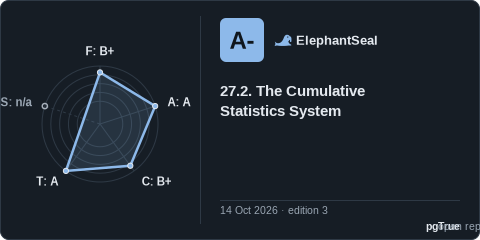
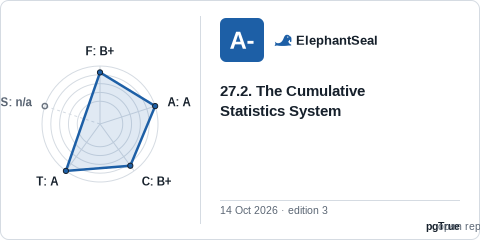
Factual B+ · Applicable A · Consistent B+ · Transparent A · Safe —

ReportTechnical fact-check, edition 3 Issued EditionUpdated after review. Corrections are listed below. SubmittedSubmitted by an anonymous third party. Author responseNo written reply from the author. See Revisions below. Policy: right-of-reply and corrections policy. pgTrue versionaudit version not recorded

Inaccuracies

F2

Inaccuracy: “…I/O operations performed outside of shared buffers while vacuuming and analyzing…”

INACCURATEFactual · partly holds after review
Article · exact quote · open in article ↗ (opens in new tab)…I/O operations performed outside of shared buffers while vacuuming and analyzing permanent relations.
Source · REL_19_STABLE@f89a5c086f · src/backend/storage/buffer/freelist.c:70-70* Private (non-shared) state for managing a ring of shared buffers to re-use.

PostgreSQL 18 freelist.c:68 describes a ring of shared buffers with private bookkeeping. PostgreSQL 19 vacuum.c:459 selects BAS_VACUUM. Private bookkeeping does not place those buffers outside shared buffers. PostgreSQL 18 monitoring.sgml:2703 repeats the article's incorrect wording.

All sources and excerpts · 4
Evidence * Private (non-shared) state for managing a ring of shared buffers to re-use.

Version note: PostgreSQL 18 also uses rings of shared buffers.

Evidence bstrategy = GetAccessStrategyWithSize(BAS_VACUUM, ring_size);
Evidence <literal>vacuum</literal>: I/O operations performed outside of shared buffers while vacuuming and analyzing permanent relations. Temporary

Version note: The incorrect description also appears in the version-matched official documentation.

How the review tested this

Review: We tested whether private ring state means private buffers. E-7 explicitly describes shared buffers. E-8 selects BAS_VACUUM. These excerpts do not establish the classification of every vacuum-context I/O operation.

Dangerous or recipe bugsNone in this edition.

Misleading / imprecise

F13

Misleading: “…Columns tracking I/O wait time will only be non-zero when track_io_timing is enabled.”

MISLEADINGConsistent · partly holds after review
Article · exact quote · open in article ↗ (opens in new tab)…Columns tracking I/O wait time will only be non-zero when track_io_timing is enabled.
Source · https://www.postgresql.org/docs/19/monitoring-stats.htmlif track_wal_io_timing is enabled and object is wal , otherwise zero

Table 27.23 specifies track_wal_io_timing for WAL read_time. The note instead requires track_io_timing for every I/O timing column. These statements disagree. PostgreSQL 19 repeats the WAL-read definition. Enable track_wal_io_timing to collect WAL-read timing.

All sources and excerpts · 1
Evidenceif track_wal_io_timing is enabled and object is wal , otherwise zero
How the review tested this

Review: We tested a relation-only reading of the note. E-30 states no such restriction. The contradiction survives, but E-31 and E-32 specifically describe read_time. They do not establish every WAL timing column.

F1

Parameter SET privileges provide a non-superuser exception

IMPRECISEApplicable · holds up after review
Article · exact quote · open in article ↗ (opens in new tab)…only superusers are allowed to change these parameters with SET…
Source · REL_19_STABLE@f89a5c086f · src/backend/utils/misc/guc.c:3506-3507aclresult = pg_parameter_aclcheck(record->name, srole, ACL_SET); if (aclresult != ACLCHECK_OK)

Non-superusers can change restricted monitoring parameters when granted SET privileges. PostgreSQL 18 guc.c:3594 checks ACL_SET. The article repeats official documentation wording. Check parameter grants before treating monitoring controls as exclusively superuser-controlled.

Charitable reading: The sentence describes default permissions correctly. Its categorical wording omits explicitly granted parameter SET privileges.

All sources and excerpts · 3
Evidence aclresult = pg_parameter_aclcheck(record->name, srole, ACL_SET); if (aclresult != ACLCHECK_OK)

Version note: PGC_SUSET processing checks parameter SET privileges.

Evidence aclresult = pg_parameter_aclcheck(record->name, srole, ACL_SET); if (aclresult != ACLCHECK_OK)

Version note: The same privilege check exists in PostgreSQL 18.

Evidence only superusers are allowed to change these parameters with

Version note: The article reproduces this official documentation wording.

How the review tested this

Review: We tested the default-permissions reading. PostgreSQL 18 guc.c permits explicitly granted SET privileges. The imprecision finding already acknowledges official wording. We tried reading the restriction as default permissions. PostgreSQL 18 guc.c:3594 admits ACL_SET grants. The imprecision finding preserves that qualification and the official-documentation caveat.

F14

The wait-event example disagrees with the listed event spelling

IMPRECISEConsistent · holds up after review
Article · exact quote · open in article ↗ (opens in new tab)…wait_event | WALInitSync…
Source · https://www.postgresql.org/docs/16/monitoring-stats.htmlWALInitSync Waiting for a newly initialized WAL file to reach durable storage.

The example prints WALInitSync. Table 27.9 lists WalInitSync. PostgreSQL 16 documents the example's older spelling. Check the server's pg_wait_events names before copying this value into a filter.

Charitable reading: The example may show an older release. PostgreSQL 16 documents its uppercase spelling, but the article labels PostgreSQL 18.

All sources and excerpts · 1
EvidenceWALInitSync Waiting for a newly initialized WAL file to reach durable storage.
How the review tested this

Review: We tested whether PostgreSQL 16 explains the example. It explains the older spelling but leaves the PostgreSQL 18 page internally inconsistent. We considered an example retained from PostgreSQL 16. E-35 supports that explanation. E-33 and E-34 still disagree within the PostgreSQL 18 page. F14 charges only spelling imprecision, without claiming an impossible execution.

Verified accurate

F8

PostgreSQL 19 Beta 4 announcement date matches

ACCURATEFactual · holds up after review
Article · exact quote · open in article ↗ (opens in new tab)…September 24, 2026: PostgreSQL 19 Beta 4 Released!
Source · https://www.postgresql.org/about/news/postgresql-19-beta-4-released-3386/PostgreSQL 19 Beta 4 Released! Posted on 2026-09-24

PostgreSQL announced version 19 Beta 4 on September 24, 2026. The linked release announcement confirms the banner's date.

Charitable reading: The banner records a release announcement date, not the documentation's publication date.

All sources and excerpts · 1
EvidencePostgreSQL 19 Beta 4 Released! Posted on 2026-09-24
How the review tested this

Review: We distinguished the announcement date from the manual's publication date. E-21 confirms September 24, 2026 for Beta 4. We checked whether the banner date describes the manual's publication. F8 confines its claim to the release announcement. E-21 confirms PostgreSQL 19 Beta 4 and September 24, 2026.

F9

The manual identifies PostgreSQL 18

ACCURATEFactual · holds up after review
Article · exact quote · open in article ↗ (opens in new tab)Documentation → PostgreSQL 18…
Source · https://www.postgresql.org/docs/18/index.htmlPostgreSQL 18.6 Documentation

The article identifies PostgreSQL 18 as its documentation version. The version-specific manual identifies PostgreSQL 18.6.

Charitable reading: The PostgreSQL 19 news banner does not change the manual's explicit PostgreSQL 18 scope.

All sources and excerpts · 1
EvidencePostgreSQL 18.6 Documentation
How the review tested this

Review: We tested whether the PostgreSQL 19 banner changes the manual's scope. The article identifies 18, and E-23 identifies 18.6. We tested whether the PostgreSQL 19 banner changes the manual's scope. E-22 explicitly identifies PostgreSQL 18. E-23 identifies its manual as PostgreSQL 18.6.

F10

PostgreSQL 18 remains the current documentation version

ACCURATEFactual · holds up after review
Article · exact quote · open in article ↗ (opens in new tab)…Current ( 18 )…
Source · https://www.postgresql.org/docs/18 / Current

The documentation directory labels PostgreSQL 18 as Current on October 13, 2026. We found no forward drift in this label.

Charitable reading: Current refers to the documentation site's stable version on October 13, 2026.

All sources and excerpts · 1
Evidence18 / Current
How the review tested this

Review: We checked the dated directory record rather than inferring release status. E-25 labels PostgreSQL 18 as Current. We checked the dated documentation directory rather than inferring status from the release number. E-25 labels PostgreSQL 18 Current. F10 confines the result to October 13, 2026.

F11

PostgreSQL 19 has development status

ACCURATEFactual · holds up after review
Article · exact quote · open in article ↗ (opens in new tab)…Development Versions: 19 / devel…
Source · https://www.postgresql.org/about/news/postgresql-19-beta-4-released-3386/PostgreSQL 19 Beta 4 Released! Posted on 2026-09-24

The documentation directory lists PostgreSQL 19 as beta on October 13, 2026. The article's development label matches that status.

Charitable reading: Development includes beta releases and the development manual.

All sources and excerpts · 2
EvidencePostgreSQL 19 Beta 4 Released! Posted on 2026-09-24
Evidence19 beta
How the review tested this

Review: We tested whether beta status conflicts with the development label. E-27 lists PostgreSQL 19 as beta, consistent with E-26. We tested whether beta status conflicts with the development label. E-27 lists PostgreSQL 19 as beta. E-21 describes features still subject to change. The development label fits both.

F12

PostgreSQL 13 has unsupported status

ACCURATEFactual · holds up after review
Article · exact quote · open in article ↗ (opens in new tab)…Unsupported versions: 13…
Source · https://www.postgresql.org/docs/13/monitoring-stats.htmlThis documentation is for an unsupported version of PostgreSQL.

The PostgreSQL 13 manual explicitly warns that version 13 is unsupported. The article's navigation label matches that warning.

Charitable reading: Unsupported describes the release's maintenance status, not the availability of its archived manual.

All sources and excerpts · 1
EvidenceThis documentation is for an unsupported version of PostgreSQL.
How the review tested this

Review: We distinguished documentation availability from maintenance status. The PostgreSQL 13 page explicitly identifies that version as unsupported. We distinguished archived documentation access from release support. E-29 explicitly calls PostgreSQL 13 unsupported. The article's navigation label states the same status.

F15

The first wait-event example correctly reports two rows

ACCURATEFactual · holds up after review
Article · exact quote · open in article ↗ (opens in new tab)…2540 | Lock | relation 6644 | LWLock | ProcArray…
Source · https://www.postgresql.org/docs/19/monitoring-stats.html2540 | Lock | relation 6644 | LWLock | ProcArray

The first result contains 2 rows, for PIDs 2540 and 6644. Its footer reports 2 rows. Both wait-event names are nonnull. PostgreSQL 19 documentation contains the same example.

Charitable reading: Separate activity queries can show different processes. The examples impose no shared observation time.

All sources and excerpts · 1
Evidence2540 | Lock | relation 6644 | LWLock | ProcArray
How the review tested this

Review: We counted both displayed rows and checked the predicate. Both wait events are nonnull, and the footer correctly reports 2 rows. We counted the displayed rows and checked the query's filter and ordering. Both rows have nonnull wait events. The query specifies no ordering. The footer correctly reports 2 rows. Separate examples need not show identical processes.

F16

The query-text default uses the documented byte unit

ACCURATEFactual · holds up after review
Article · exact quote · open in article ↗ (opens in new tab)By default the query text is truncated at 1024 bytes…
Source · https://www.postgresql.org/docs/19/monitoring-stats.htmlBy default the query text is truncated at 1024 bytes

The article states a 1,024-byte default for query text. PostgreSQL 19 documents the same value and unit. The article identifies track_activity_query_size as configurable.

Charitable reading: The article describes a default and explicitly allows track_activity_query_size to change it.

All sources and excerpts · 1
EvidenceBy default the query text is truncated at 1024 bytes
How the review tested this

Review: We checked bytes versus characters and default versus fixed limit. Both passages document 1,024 bytes and identify track_activity_query_size as configurable. We checked bytes versus characters and default versus fixed limits. E-39 specifies a configurable 1,024-byte default. E-40 uses identical wording. F16 establishes documentation agreement and does not claim a measured maximum text length.

F17

Function total_time correctly includes called functions in milliseconds

ACCURATEFactual · holds up after review
Article · exact quote · open in article ↗ (opens in new tab)…total_time double precision Total time spent in this function and all other functions called by it, in milliseconds…
Source · https://www.postgresql.org/docs/19/monitoring-stats.htmltotal_time double precision Total time spent in this function and all other functions called by it, in milliseconds

Table 27.34 describes total_time as inclusive function time in milliseconds. PostgreSQL 19 documents the same population and unit.

Charitable reading: The total includes called functions. It does not describe exclusive execution time.

All sources and excerpts · 1
Evidencetotal_time double precision Total time spent in this function and all other functions called by it, in milliseconds
How the review tested this

Review: We checked total_time against neighboring self_time. Both cited descriptions include called functions and express total_time in milliseconds. We tested inclusive versus exclusive function time and milliseconds versus seconds. E-41 includes called functions and specifies milliseconds. E-42 confirms both. F17 accurately describes the documented total_time field.

More in this report

Section checks · 6 sections

Section checks

AspectGradeFindings
Statistics configuration and cachingA1 imprecise
I/O statisticsB1 inaccuracy · 1 misleading
Version labels and release bannerA5 verified-accurate
Wait-event examplesA1 imprecise · 1 verified-accurate
Activity query textA1 verified-accurate
Function statisticsA1 verified-accurate
Coverage and assessment

A- — the findings address the article's main subject. What we did not check is listed below. We checked collection permissions, transaction caching, pg_stat_io interpretation, replication lag, index counters, and maintenance resets.

We could not check everything in this article. What we did not check is listed below, in the words we recorded at the time. None of it moved the letter. We never charge our own limits to the article.

We held back some findings this audit's coverage rested on, because we could not stand behind their sources. The letter rests on the findings that remain.

What we did not check

  • We did not check every wait-event description or every statistics-view column.
  • We did not reproduce the SQL examples or check every database-tuning recommendation.
  • We did not independently verify the database mechanisms described in sections 27.2.1 through 27.2.26.
  • We could not reach the community page, account page, or development documentation.
  • We did not reproduce the article's query results.
  • We could not check the per-backend query's output because the article displays no result.

Average of 4 axes: 3.65 · result A-

Some explanatory text is not shown in this edition; the grade and findings are complete.

Scorecard · the five axes
FACTS scorecard Scorecard radar, 5 axes, bigger is better. Overall A-. Factual B+ · 1 wrong of 12 checked · 1 wrong · 0 caveats. Applicable A · 0 wrong of 4 checked · 0 wrong · 1 caveat. Consistent B+ · 1 wrong of 12 checked · 1 wrong · 1 caveat. Transparent A · 0 wrong of 7 checked · 0 wrong · 0 caveats. Safe not applicable (n/a). Factual B+1 wrong of 120 caveats Applicable A0 wrong of 41 caveat Consistent B+1 wrong of 121 caveat Transparent A0 wrong of 70 caveats Safe n/anothingto check

By topic: Statistics configuration and caching — 1 finding, 0 wrong · I/O statistics — 2 findings, 2 wrong · Version labels and release banner — 5 findings, 0 wrong · Wait-event examples — 2 findings, 0 wrong · Activity query text — 1 finding, 0 wrong · Function statistics — 1 finding, 0 wrong

Further out is better. Each axis has its own letter, from the wrong claims and caveats among the claims we checked of that kind.

Checked on the FACTS: Factual, Applicable, Consistent, Transparent, Safe. Clockwise: Factual (is it true?), Applicable (does it apply to my setup, today?), Consistent (does it agree with itself?), Transparent (can I check it myself?), Safe (can I run this on prod?).

We checked 12 claims, 3 commands scanned.

AxisLetterWrongCaveatsCheckedCoverage
FactualB+
1 wrong of 12 checked
1012partly assessed: B+ · 1 wrong of 12 checked · 1 wrong · 0 caveats · partly assessed
ApplicableA
0 wrong of 4 checked
014assessed: A · 0 wrong of 4 checked · 0 wrong · 1 caveat
ConsistentB+
1 wrong of 12 checked
1112assessed: B+ · 1 wrong of 12 checked · 1 wrong · 1 caveat
TransparentA
0 wrong of 7 checked
007assessed: A · 0 wrong of 7 checked · 0 wrong · 0 caveats
Safe—000assessed
Topics · 6 topics

Topics

TopicFactualApplicableConsistentTransparentSafe
Statistics configuration and caching0 issues 1 checked1 issue 1 checked F10 issues 1 checked
I/O statistics1 issue 2 checked F21 issue 2 checked F13
Version labels and release banner0 issues 5 checked F8 F9 F10 F11 F120 issues 5 checked0 issues 5 checked
Wait-event examples0 issues 2 checked F150 issues 2 checked1 issue 2 checked F14
Activity query text0 issues 1 checked F160 issues 1 checked0 issues 1 checked0 issues 1 checked
Function statistics0 issues 1 checked F170 issues 1 checked0 issues 1 checked

Issues found among the claims checked, per topic and axis. Each link goes to the finding behind the count.

Revisions: 1 · A-

We audited this article 1 time. Each row is the final edition of one audit. Letters and findings of earlier revisions stay readable at their own address.

  1. Revision 1 · 2026-10-13 18:16 UTC · A- · audit version not recorded · regrade version not recorded

    Article as first submitted. 8 accurate · 2 wrong · 2 caveats.

    ElephantSeal: A-.

    Changes: First audit. Open: F2 “…I/O operations performed outside of shared buffers while vacuuming and analyzing permanent relations.” (false); F13 “…Columns tracking I/O wait time will only be non-zero when track_io_timing is enabled.” (misleading); F1 “Parameter SET privileges provide a non-superuser exception” (mostly accurate); F14 “The wait-event example disagrees with the listed event spelling” (mostly accurate).

First impression
Questions and answers

Questions and answers

What is pgTrue?

pgTrue is an independent fact-check of technical Postgres articles, made by PostgresAI. It helps you check advice before you use it.

What does the letter grade mean?

The letter grade summarizes the claims we checked. Five axes show what we checked:

  • Factual: is it true?
  • Applicable: does it apply to my setup, today?
  • Consistent: does it agree with itself?
  • Transparent: can I check it myself?
  • Safe: can I run this in production?

What is the ElephantSeal?

The ElephantSeal is the mark an article earns. It always shows the latest edition. “Open:” lists what is still open.

Can an author reply?

Authors can ask us to correct a finding, reply to it, or withdraw it. Right-of-reply policy.

Paste into your AI assistant to fix the article, then ask for a re-review.

Show the text
Fix the article with this report, then ask pgTrue for a re-review.

# pgTrue report: 27.2. The Cumulative Statistics System

Article title: 27.2. The Cumulative Statistics System
Article URL: https://www.postgresql.org/docs/18/monitoring-stats.html
Report URL: https://pgtrue.postgres.ai/shared/brief/0d0e683a-933a-4fa8-8f33-c34a94589f04
Audited: 2026-10-13 18:16:49 UTC
Overall letter: A-

## Axes

- Factual: B+ · 1 wrong · 12 checked · 0 caveats · partly assessed
- Applicable: A · 0 wrong · 4 checked · 1 caveats · assessed
- Consistent: B+ · 1 wrong · 12 checked · 1 caveats · assessed
- Transparent: A · 0 wrong · 7 checked · 0 caveats · assessed
- Safe: — · 0 wrong · 0 checked · 0 caveats · assessed

ElephantSeal: A-.

## Report metadata

- Report: Technical fact-check, edition 3
- Issued: 2026-10-13
- Edition: Updated after review. Corrections are listed below.
- Submitted: Submitted by an anonymous third party.
- Author response: No written reply from the author. See Revisions below. Policy: [right-of-reply and corrections policy](/pgtrue/security).
- pgTrue version: audit version not recorded

## Findings needing a change (4)

### F2 · Inaccurate · Factual · Inaccuracy: “…I/O operations performed outside of shared buffers while vacuuming and analyzing…”
Location: Article · exact quote · [open in article](https://www.postgresql.org/docs/18/monitoring-stats.html#:~:text=I%2FO%20operations%20performed%20outside%20of,vacuuming%20and%20analyzing%20permanent%20relations.)
Article says:
```text
…I/O operations performed outside of shared buffers while vacuuming and analyzing permanent relations.
```
Explanation: PostgreSQL 18 freelist.c:68 describes a ring of shared buffers with private bookkeeping. PostgreSQL 19 vacuum.c:459 selects BAS_VACUUM. Private bookkeeping does not place those buffers outside shared buffers. PostgreSQL 18 monitoring.sgml:2703 repeats the article's incorrect wording.
Review: We tested whether private ring state means private buffers. E-7 explicitly describes shared buffers. E-8 selects BAS_VACUUM. These excerpts do not establish the classification of every vacuum-context I/O operation.

Sources:
- [REL_19_STABLE@f89a5c086f · src/backend/storage/buffer/freelist.c:70-70](https://github.com/postgres/postgres/blob/f89a5c086f8a2837ee122b3e3631f0b41a3a7865/src/backend/storage/buffer/freelist.c#L70-L70)
  Excerpt:
  ```text
  * Private (non-shared) state for managing a ring of shared buffers to re-use.
  ```
- [REL_18_6 · src/backend/storage/buffer/freelist.c:68-68](https://github.com/postgres/postgres/blob/724edf9bde9d356724ad384a2e196edc3c9f80f7/src/backend/storage/buffer/freelist.c#L68-L68)
  Qualification: Version note: PostgreSQL 18 also uses rings of shared buffers.
  Excerpt:
  ```text
  * Private (non-shared) state for managing a ring of shared buffers to re-use.
  ```
- [REL_19_STABLE@f89a5c086f · src/backend/commands/vacuum.c:459-459](https://github.com/postgres/postgres/blob/f89a5c086f8a2837ee122b3e3631f0b41a3a7865/src/backend/commands/vacuum.c#L459-L459)
  Excerpt:
  ```text
  bstrategy = GetAccessStrategyWithSize(BAS_VACUUM, ring_size);
  ```
- [REL_18_6 · doc/src/sgml/monitoring.sgml:2703-2704](https://github.com/postgres/postgres/blob/724edf9bde9d356724ad384a2e196edc3c9f80f7/doc/src/sgml/monitoring.sgml#L2703-L2704)
  Qualification: Version note: The incorrect description also appears in the version-matched official documentation.
  Excerpt:
  ```text
  <literal>vacuum</literal>: I/O operations performed outside of shared
          buffers while vacuuming and analyzing permanent relations. Temporary
  ```

Finding URL: https://pgtrue.postgres.ai/shared/brief/0d0e683a-933a-4fa8-8f33-c34a94589f04#F2

### F13 · Misleading · Consistent · Misleading: “…Columns tracking I/O wait time will only be non-zero when track_io_timing is enabled.”
Location: Article · exact quote · [open in article](https://www.postgresql.org/docs/18/monitoring-stats.html#:~:text=Columns%20tracking%20I%2FO%20wait%20time,non%2Dzero%20when%20track_io_timing%20is%20enabled.)
Article says:
```text
…Columns tracking I/O wait time will only be non-zero when track_io_timing is enabled.
```
Explanation: Table 27.23 specifies track_wal_io_timing for WAL read_time. The note instead requires track_io_timing for every I/O timing column. These statements disagree. PostgreSQL 19 repeats the WAL-read definition. Enable track_wal_io_timing to collect WAL-read timing.
Review: We tested a relation-only reading of the note. E-30 states no such restriction. The contradiction survives, but E-31 and E-32 specifically describe read_time. They do not establish every WAL timing column.

Sources:
- [https://www.postgresql.org/docs/19/monitoring-stats.html](https://www.postgresql.org/docs/19/monitoring-stats.html)
  Excerpt:
  ```text
  if track_wal_io_timing is enabled and object is wal , otherwise zero
  ```

Finding URL: https://pgtrue.postgres.ai/shared/brief/0d0e683a-933a-4fa8-8f33-c34a94589f04#F13

### F1 · Imprecise · Applicable · Parameter SET privileges provide a non-superuser exception
Location: Article · exact quote · [open in article](https://www.postgresql.org/docs/18/monitoring-stats.html#:~:text=only%20superusers%20are%20allowed%20to%20change%20these%20parameters%20with%20SET)
Article says:
```text
…only superusers are allowed to change these parameters with SET…
```
Explanation: Non-superusers can change restricted monitoring parameters when granted SET privileges. PostgreSQL 18 guc.c:3594 checks ACL_SET. The article repeats official documentation wording. Check parameter grants before treating monitoring controls as exclusively superuser-controlled.
Explanation: Charitable reading: The sentence describes default permissions correctly. Its categorical wording omits explicitly granted parameter SET privileges.
Review: We tested the default-permissions reading. PostgreSQL 18 guc.c permits explicitly granted SET privileges. The imprecision finding already acknowledges official wording. We tried reading the restriction as default permissions. PostgreSQL 18 guc.c:3594 admits ACL_SET grants. The imprecision finding preserves that qualification and the official-documentation caveat.

Sources:
- [REL_19_STABLE@f89a5c086f · src/backend/utils/misc/guc.c:3506-3507](https://github.com/postgres/postgres/blob/f89a5c086f8a2837ee122b3e3631f0b41a3a7865/src/backend/utils/misc/guc.c#L3506-L3507)
  Qualification: Version note: PGC_SUSET processing checks parameter SET privileges.
  Excerpt:
  ```text
  aclresult = pg_parameter_aclcheck(record->name, srole, ACL_SET);
				if (aclresult != ACLCHECK_OK)
  ```
- [REL_18_6 · src/backend/utils/misc/guc.c:3594-3595](https://github.com/postgres/postgres/blob/724edf9bde9d356724ad384a2e196edc3c9f80f7/src/backend/utils/misc/guc.c#L3594-L3595)
  Qualification: Version note: The same privilege check exists in PostgreSQL 18.
  Excerpt:
  ```text
  aclresult = pg_parameter_aclcheck(record->name, srole, ACL_SET);
				if (aclresult != ACLCHECK_OK)
  ```
- [REL_18_6 · doc/src/sgml/monitoring.sgml:202-202](https://github.com/postgres/postgres/blob/724edf9bde9d356724ad384a2e196edc3c9f80f7/doc/src/sgml/monitoring.sgml#L202-L202)
  Qualification: Version note: The article reproduces this official documentation wording.
  Excerpt:
  ```text
  only superusers are allowed to change these parameters with
  ```

Finding URL: https://pgtrue.postgres.ai/shared/brief/0d0e683a-933a-4fa8-8f33-c34a94589f04#F1

### F14 · Imprecise · Consistent · The wait-event example disagrees with the listed event spelling
Location: Article · exact quote · [open in article](https://www.postgresql.org/docs/18/monitoring-stats.html#:~:text=wait_event%20%7C%20WALInitSync)
Article says:
```text
…wait_event  | WALInitSync…
```
Explanation: The example prints WALInitSync. Table 27.9 lists WalInitSync. PostgreSQL 16 documents the example's older spelling. Check the server's pg_wait_events names before copying this value into a filter.
Explanation: Charitable reading: The example may show an older release. PostgreSQL 16 documents its uppercase spelling, but the article labels PostgreSQL 18.
Review: We tested whether PostgreSQL 16 explains the example. It explains the older spelling but leaves the PostgreSQL 18 page internally inconsistent. We considered an example retained from PostgreSQL 16. E-35 supports that explanation. E-33 and E-34 still disagree within the PostgreSQL 18 page. F14 charges only spelling imprecision, without claiming an impossible execution.

Sources:
- [https://www.postgresql.org/docs/16/monitoring-stats.html](https://www.postgresql.org/docs/16/monitoring-stats.html)
  Excerpt:
  ```text
  WALInitSync Waiting for a newly initialized WAL file to reach durable storage.
  ```

Finding URL: https://pgtrue.postgres.ai/shared/brief/0d0e683a-933a-4fa8-8f33-c34a94589f04#F14

## Verified accurate claims (8)

### F8 · Accurate · Factual · PostgreSQL 19 Beta 4 announcement date matches
Location: Article · exact quote · [open in article](https://www.postgresql.org/docs/18/monitoring-stats.html#:~:text=September%2024%2C%202026%3A%20PostgreSQL%2019%20Beta%204%20Released%21)
Article says:
```text
…September 24, 2026: PostgreSQL 19 Beta 4 Released!
```
Explanation: PostgreSQL announced version 19 Beta 4 on September 24, 2026. The linked release announcement confirms the banner's date.
Explanation: Charitable reading: The banner records a release announcement date, not the documentation's publication date.
Review: We distinguished the announcement date from the manual's publication date. E-21 confirms September 24, 2026 for Beta 4. We checked whether the banner date describes the manual's publication. F8 confines its claim to the release announcement. E-21 confirms PostgreSQL 19 Beta 4 and September 24, 2026.

Sources:
- [https://www.postgresql.org/about/news/postgresql-19-beta-4-released-3386/](https://www.postgresql.org/about/news/postgresql-19-beta-4-released-3386/)
  Excerpt:
  ```text
  PostgreSQL 19 Beta 4 Released! Posted on 2026-09-24
  ```

Finding URL: https://pgtrue.postgres.ai/shared/brief/0d0e683a-933a-4fa8-8f33-c34a94589f04#F8

### F9 · Accurate · Factual · The manual identifies PostgreSQL 18
Location: Article · exact quote · [open in article](https://www.postgresql.org/docs/18/monitoring-stats.html#:~:text=Documentation%20%E2%86%92%20PostgreSQL%2018)
Article says:
```text
Documentation → PostgreSQL 18…
```
Explanation: The article identifies PostgreSQL 18 as its documentation version. The version-specific manual identifies PostgreSQL 18.6.
Explanation: Charitable reading: The PostgreSQL 19 news banner does not change the manual's explicit PostgreSQL 18 scope.
Review: We tested whether the PostgreSQL 19 banner changes the manual's scope. The article identifies 18, and E-23 identifies 18.6. We tested whether the PostgreSQL 19 banner changes the manual's scope. E-22 explicitly identifies PostgreSQL 18. E-23 identifies its manual as PostgreSQL 18.6.

Sources:
- [https://www.postgresql.org/docs/18/index.html](https://www.postgresql.org/docs/18/index.html)
  Excerpt:
  ```text
  PostgreSQL 18.6 Documentation
  ```

Finding URL: https://pgtrue.postgres.ai/shared/brief/0d0e683a-933a-4fa8-8f33-c34a94589f04#F9

### F10 · Accurate · Factual · PostgreSQL 18 remains the current documentation version
Location: Article · exact quote · [open in article](https://www.postgresql.org/docs/18/monitoring-stats.html#:~:text=Current%20%28%2018%20%29)
Article says:
```text
…Current ( 18 )…
```
Explanation: The documentation directory labels PostgreSQL 18 as Current on October 13, 2026. We found no forward drift in this label.
Explanation: Charitable reading: Current refers to the documentation site's stable version on October 13, 2026.
Review: We checked the dated directory record rather than inferring release status. E-25 labels PostgreSQL 18 as Current. We checked the dated documentation directory rather than inferring status from the release number. E-25 labels PostgreSQL 18 Current. F10 confines the result to October 13, 2026.

Sources:
- [https://www.postgresql.org/docs/](https://www.postgresql.org/docs/)
  Excerpt:
  ```text
  18 / Current
  ```

Finding URL: https://pgtrue.postgres.ai/shared/brief/0d0e683a-933a-4fa8-8f33-c34a94589f04#F10

### F11 · Accurate · Factual · PostgreSQL 19 has development status
Location: Article · exact quote · [open in article](https://www.postgresql.org/docs/18/monitoring-stats.html#:~:text=Development%20Versions%3A%2019%20%2F%20devel)
Article says:
```text
…Development Versions: 19 / devel…
```
Explanation: The documentation directory lists PostgreSQL 19 as beta on October 13, 2026. The article's development label matches that status.
Explanation: Charitable reading: Development includes beta releases and the development manual.
Review: We tested whether beta status conflicts with the development label. E-27 lists PostgreSQL 19 as beta, consistent with E-26. We tested whether beta status conflicts with the development label. E-27 lists PostgreSQL 19 as beta. E-21 describes features still subject to change. The development label fits both.

Sources:
- [https://www.postgresql.org/about/news/postgresql-19-beta-4-released-3386/](https://www.postgresql.org/about/news/postgresql-19-beta-4-released-3386/)
  Excerpt:
  ```text
  PostgreSQL 19 Beta 4 Released! Posted on 2026-09-24
  ```
- [https://www.postgresql.org/docs/](https://www.postgresql.org/docs/)
  Excerpt:
  ```text
  19 beta
  ```

Finding URL: https://pgtrue.postgres.ai/shared/brief/0d0e683a-933a-4fa8-8f33-c34a94589f04#F11

### F12 · Accurate · Factual · PostgreSQL 13 has unsupported status
Location: Article · exact quote · [open in article](https://www.postgresql.org/docs/18/monitoring-stats.html#:~:text=Unsupported%20versions%3A%2013)
Article says:
```text
…Unsupported versions: 13…
```
Explanation: The PostgreSQL 13 manual explicitly warns that version 13 is unsupported. The article's navigation label matches that warning.
Explanation: Charitable reading: Unsupported describes the release's maintenance status, not the availability of its archived manual.
Review: We distinguished documentation availability from maintenance status. The PostgreSQL 13 page explicitly identifies that version as unsupported. We distinguished archived documentation access from release support. E-29 explicitly calls PostgreSQL 13 unsupported. The article's navigation label states the same status.

Sources:
- [https://www.postgresql.org/docs/13/monitoring-stats.html](https://www.postgresql.org/docs/13/monitoring-stats.html)
  Excerpt:
  ```text
  This documentation is for an unsupported version of PostgreSQL.
  ```

Finding URL: https://pgtrue.postgres.ai/shared/brief/0d0e683a-933a-4fa8-8f33-c34a94589f04#F12

### F15 · Accurate · Factual · The first wait-event example correctly reports two rows
Location: Article · exact quote · [open in article](https://www.postgresql.org/docs/18/monitoring-stats.html#:~:text=2540%20%7C%20Lock%20%7C%20relation%206644%20%7C%20LWLock%20%7C%20ProcArray)
Article says:
```text
…2540 | Lock            | relation
 6644 | LWLock          | ProcArray…
```
Explanation: The first result contains 2 rows, for PIDs 2540 and 6644. Its footer reports 2 rows. Both wait-event names are nonnull. PostgreSQL 19 documentation contains the same example.
Explanation: Charitable reading: Separate activity queries can show different processes. The examples impose no shared observation time.
Review: We counted both displayed rows and checked the predicate. Both wait events are nonnull, and the footer correctly reports 2 rows. We counted the displayed rows and checked the query's filter and ordering. Both rows have nonnull wait events. The query specifies no ordering. The footer correctly reports 2 rows. Separate examples need not show identical processes.

Sources:
- [https://www.postgresql.org/docs/19/monitoring-stats.html](https://www.postgresql.org/docs/19/monitoring-stats.html)
  Excerpt:
  ```text
  2540 | Lock            | relation
 6644 | LWLock          | ProcArray
  ```

Finding URL: https://pgtrue.postgres.ai/shared/brief/0d0e683a-933a-4fa8-8f33-c34a94589f04#F15

### F16 · Accurate · Factual · The query-text default uses the documented byte unit
Location: Article · exact quote · [open in article](https://www.postgresql.org/docs/18/monitoring-stats.html#:~:text=By%20default%20the%20query%20text%20is%20truncated%20at%201024%20bytes)
Article says:
```text
By default the query text is truncated at 1024 bytes…
```
Explanation: The article states a 1,024-byte default for query text. PostgreSQL 19 documents the same value and unit. The article identifies track_activity_query_size as configurable.
Explanation: Charitable reading: The article describes a default and explicitly allows track_activity_query_size to change it.
Review: We checked bytes versus characters and default versus fixed limit. Both passages document 1,024 bytes and identify track_activity_query_size as configurable. We checked bytes versus characters and default versus fixed limits. E-39 specifies a configurable 1,024-byte default. E-40 uses identical wording. F16 establishes documentation agreement and does not claim a measured maximum text length.

Sources:
- [https://www.postgresql.org/docs/19/monitoring-stats.html](https://www.postgresql.org/docs/19/monitoring-stats.html)
  Excerpt:
  ```text
  By default the query text is truncated at 1024 bytes
  ```

Finding URL: https://pgtrue.postgres.ai/shared/brief/0d0e683a-933a-4fa8-8f33-c34a94589f04#F16

### F17 · Accurate · Factual · Function total_time correctly includes called functions in milliseconds
Location: Article · exact quote · [open in article](https://www.postgresql.org/docs/18/monitoring-stats.html#:~:text=total_time%20double%20precision%20Total%20time,called%20by%20it%2C%20in%20milliseconds)
Article says:
```text
…total_time double precision Total time spent in this function and all other functions called by it, in milliseconds…
```
Explanation: Table 27.34 describes total_time as inclusive function time in milliseconds. PostgreSQL 19 documents the same population and unit.
Explanation: Charitable reading: The total includes called functions. It does not describe exclusive execution time.
Review: We checked total_time against neighboring self_time. Both cited descriptions include called functions and express total_time in milliseconds. We tested inclusive versus exclusive function time and milliseconds versus seconds. E-41 includes called functions and specifies milliseconds. E-42 confirms both. F17 accurately describes the documented total_time field.

Sources:
- [https://www.postgresql.org/docs/19/monitoring-stats.html](https://www.postgresql.org/docs/19/monitoring-stats.html)
  Excerpt:
  ```text
  total_time double precision Total time spent in this function and all other functions called by it, in milliseconds
  ```

Finding URL: https://pgtrue.postgres.ai/shared/brief/0d0e683a-933a-4fa8-8f33-c34a94589f04#F17

## Notes (not graded) (0)

None.

## Withdrawn findings (0)

None.

## Section checks

- Statistics configuration and caching · A · 1 imprecise
- I/O statistics · B · 1 inaccuracy · 1 misleading
- Version labels and release banner · A · 5 verified-accurate
- Wait-event examples · A · 1 imprecise · 1 verified-accurate
- Activity query text · A · 1 verified-accurate
- Function statistics · A · 1 verified-accurate

## What we did not check

- We did not check every wait-event description or every statistics-view column.
- We did not reproduce the SQL examples or check every database-tuning recommendation.
- We did not independently verify the database mechanisms described in sections 27.2.1 through 27.2.26.
- We could not reach the community page, account page, or development documentation.
- We did not reproduce the article's query results.
- We could not check the per-backend query's output because the article displays no result.

## Notes

- A- — the findings address the article's main subject. What we did not check is listed below. We checked collection permissions, transaction caching, pg_stat_io interpretation, replication lag, index counters, and maintenance resets.
- We could not check everything in this article. What we did not check is listed below, in the words we recorded at the time. None of it moved the letter. We never charge our own limits to the article.
- We held back some findings this audit's coverage rested on, because we could not stand behind their sources. The letter rests on the findings that remain.
- Average of 4 axes: 3.65 · result A-
- Some explanatory text is not shown in this edition; the grade and findings are complete.
- Some checks did not happen for this edition, and each one we know of is listed above.
- Checked against: github.com/postgres/postgres REL_19_STABLE@f89a5c086f at commit f89a5c086f8a2837ee122b3e3631f0b41a3a7865 (pinned target); https://www.postgresql.org/ (fetched 2026-10-13T18:17:13.819554Z); https://www.postgresql.org/about/ (fetched 2026-10-13T18:17:14.586132Z); https://www.postgresql.org/about/donate/ (fetched 2026-10-13T18:17:19.920052Z); https://www.postgresql.org/about/news/postgresql-19-beta-4-released-3386/ (fetched 2026-10-13T18:17:21.143637Z); https://www.postgresql.org/developer/ (fetched 2026-10-13T18:17:18.312015Z); https://www.postgresql.org/docs/ (fetched 2026-10-13T18:17:16.077997Z); https://www.postgresql.org/docs/10/monitoring-stats.html (fetched 2026-10-13T18:17:31.672744Z); https://www.postgresql.org/docs/11/monitoring-stats.html (fetched 2026-10-13T18:17:30.788831Z); https://www.postgresql.org/docs/12/monitoring-stats.html (fetched 2026-10-13T18:17:29.905736Z); https://www.postgresql.org/docs/13/monitoring-stats.html (fetched 2026-10-13T18:17:29.014541Z); https://www.postgresql.org/docs/14/monitoring-stats.html (fetched 2026-10-13T18:17:26.680994Z); https://www.postgresql.org/docs/15/monitoring-stats.html (fetched 2026-10-13T18:17:25.782523Z); https://www.postgresql.org/docs/16/monitoring-stats.html (fetched 2026-10-13T18:17:24.921831Z); https://www.postgresql.org/docs/17/monitoring-stats.html (fetched 2026-10-13T18:17:23.994396Z); https://www.postgresql.org/docs/18/index.html (fetched 2026-10-13T18:17:21.958403Z); https://www.postgresql.org/docs/19/monitoring-stats.html (fetched 2026-10-13T18:17:27.663619Z); https://www.postgresql.org/docs/8.4/monitoring-stats.html (fetched 2026-10-13T18:17:38.650656Z); https://www.postgresql.org/docs/9.0/monitoring-stats.html (fetched 2026-10-13T18:17:37.791996Z); https://www.postgresql.org/docs/9.1/monitoring-stats.html (fetched 2026-10-13T18:17:36.925779Z); https://www.postgresql.org/docs/9.2/monitoring-stats.html (fetched 2026-10-13T18:17:36.099417Z); https://www.postgresql.org/docs/9.3/monitoring-stats.html (fetched 2026-10-13T18:17:35.221292Z); https://www.postgresql.org/docs/9.4/monitoring-stats.html (fetched 2026-10-13T18:17:34.334079Z); https://www.postgresql.org/docs/9.5/monitoring-stats.html (fetched 2026-10-13T18:17:33.444480Z); https://www.postgresql.org/docs/9.6/monitoring-stats.html (fetched 2026-10-13T18:17:32.561223Z); https://www.postgresql.org/docs/current/monitoring-stats.html (fetched 2026-10-13T18:17:22.994786Z); https://www.postgresql.org/download/ (fetched 2026-10-13T18:17:15.336860Z); https://www.postgresql.org/support/ (fetched 2026-10-13T18:17:19.098826Z).
- Article captured 2026-10-13T18:16:49.904115Z · SHA-256 7c5a2416668e662767872c5851258feca22b790cdd79588b5bf4dd0dfb2988aa · Text extracted from the article's HTML.
- Policy SHA-256 7067be230777168e2771cfd69fca8ba08e4f1d49d904623e4e300dd76c058f92 · Grading rules SHA-256 185df34dda1162369273ac08f8d957b8e3caffd0e240f3c4e4a54c5e141afc50.
- gate: proceeded with reason codes COST_REVIEW
- The article states no publication date. September 24, 2026 dates the PostgreSQL 19 Beta 4 announcement, so we leave the publication date blank.
- The article names no individual author. We use its copyright attribution to the PostgreSQL Global Development Group.
- We did not check every wait-event description or every statistics-view column.
- We did not reproduce the SQL examples or check every database-tuning recommendation.
- We could not check the per-backend query's output because the article displays no result.
- We could not reach the community page, account page, or development documentation.
- The page identifies PostgreSQL 18. Version-matched PostgreSQL 18 source supports the permission and vacuum findings alongside PostgreSQL 19 source.
- The permission restriction and vacuum-buffer description repeat official PostgreSQL 18 documentation wording.
- article target version: bound to the most-cited major; also named 18 (1×)
- withheld: F3 — this finding failed a check this edition requires.
- withheld: F4 — this finding failed a check this edition requires.
- withheld: F5 — this finding failed a check this edition requires.
- withheld: F6 — this finding failed a check this edition requires.
- withheld: F7 — this finding failed a check this edition requires.
- review: the findings were written by one model and reviewed independently by a different model.
- 2026-10-14: Regraded under grading v3: the letter is the average of the axis letters, with every cap stated under it..
- 6 passages in this edition fell short of our own plain-English rules.
- Built from the article text captured above, one pinned source tree, and 27 fetched pages.
- 10 survived · 2 weakened · 0 withdrawn.

## Revision history

- [Revision 1](https://pgtrue.postgres.ai/shared/brief/0d0e683a-933a-4fa8-8f33-c34a94589f04?v=5) · 2026-10-13 18:16 UTC · A- · audit version not recorded · regrade version not recorded
  Article as first submitted. 8 accurate · 2 wrong · 2 caveats.
  ElephantSeal: A-.
  Changes: First audit. Open: F2 “…I/O operations performed outside of shared buffers while vacuuming and analyzing permanent relations.” (false); F13 “…Columns tracking I/O wait time will only be non-zero when track_io_timing is enabled.” (misleading); F1 “Parameter SET privileges provide a non-superuser exception” (mostly accurate); F14 “The wait-event example disagrees with the listed event spelling” (mostly accurate).

Updated your article? Request a correction. A new edition appears at this address.