Limited beta · What is this?

pgTrue is under active development: reports may contain significant mistakes, inaccuracies, or bugs. Please report anything you find to pgtrue@postgres.ai.

pgTrue is an independent fact-check of technical Postgres articles. Read the questions and answers.

pgTrue fact-check

ElephantSeal ALimited coverage

Embed

The ElephantSeal always shows this report's latest edition and links here. Copies cached elsewhere may update later.

[![pgTrue fact-check](https://pgtrue.postgres.ai/badge/06c213c4-93c3-479e-beb4-2913f70dedce.svg?v=13&theme=light)](https://pgtrue.postgres.ai/shared/brief/06c213c4-93c3-479e-beb4-2913f70dedce)
<a href="https://pgtrue.postgres.ai/shared/brief/06c213c4-93c3-479e-beb4-2913f70dedce"><img src="https://pgtrue.postgres.ai/badge/06c213c4-93c3-479e-beb4-2913f70dedce.svg?v=13&amp;theme=light" alt="pgTrue fact-check" width="90" height="20" loading="lazy" decoding="async" style="display:inline-block;width:90px;height:20px"></a>
https://pgtrue.postgres.ai/badge/06c213c4-93c3-479e-beb4-2913f70dedce.svg?v=13&theme=light
.. image:: https://pgtrue.postgres.ai/badge/06c213c4-93c3-479e-beb4-2913f70dedce.svg?v=13&theme=light
   :target: https://pgtrue.postgres.ai/shared/brief/06c213c4-93c3-479e-beb4-2913f70dedce
   :alt: pgTrue fact-check
   :width: 90
   :height: 20
[![pgTrue fact-check](https://pgtrue.postgres.ai/badge/06c213c4-93c3-479e-beb4-2913f70dedce.svg?v=13&theme=dark)](https://pgtrue.postgres.ai/shared/brief/06c213c4-93c3-479e-beb4-2913f70dedce)
<a href="https://pgtrue.postgres.ai/shared/brief/06c213c4-93c3-479e-beb4-2913f70dedce"><img src="https://pgtrue.postgres.ai/badge/06c213c4-93c3-479e-beb4-2913f70dedce.svg?v=13&amp;theme=dark" alt="pgTrue fact-check" width="90" height="20" loading="lazy" decoding="async" style="display:inline-block;width:90px;height:20px"></a>
https://pgtrue.postgres.ai/badge/06c213c4-93c3-479e-beb4-2913f70dedce.svg?v=13&theme=dark
.. image:: https://pgtrue.postgres.ai/badge/06c213c4-93c3-479e-beb4-2913f70dedce.svg?v=13&theme=dark
   :target: https://pgtrue.postgres.ai/shared/brief/06c213c4-93c3-479e-beb4-2913f70dedce
   :alt: pgTrue fact-check
   :width: 90
   :height: 20
[![pgTrue fact-check](https://pgtrue.postgres.ai/badge/06c213c4-93c3-479e-beb4-2913f70dedce.svg?v=13)](https://pgtrue.postgres.ai/shared/brief/06c213c4-93c3-479e-beb4-2913f70dedce)
<a href="https://pgtrue.postgres.ai/shared/brief/06c213c4-93c3-479e-beb4-2913f70dedce"><img src="https://pgtrue.postgres.ai/badge/06c213c4-93c3-479e-beb4-2913f70dedce.svg?v=13" alt="pgTrue fact-check" width="90" height="20" loading="lazy" decoding="async" style="display:inline-block;width:90px;height:20px"></a>
https://pgtrue.postgres.ai/badge/06c213c4-93c3-479e-beb4-2913f70dedce.svg?v=13
.. image:: https://pgtrue.postgres.ai/badge/06c213c4-93c3-479e-beb4-2913f70dedce.svg?v=13
   :target: https://pgtrue.postgres.ai/shared/brief/06c213c4-93c3-479e-beb4-2913f70dedce
   :alt: pgTrue fact-check
   :width: 90
   :height: 20
[![pgTrue fact-check](https://pgtrue.postgres.ai/badge/06c213c4-93c3-479e-beb4-2913f70dedce/radar.svg?v=13&theme=light)](https://pgtrue.postgres.ai/shared/brief/06c213c4-93c3-479e-beb4-2913f70dedce)

<a href="https://pgtrue.postgres.ai/shared/brief/06c213c4-93c3-479e-beb4-2913f70dedce"><img src="https://pgtrue.postgres.ai/badge/06c213c4-93c3-479e-beb4-2913f70dedce/radar.svg?v=13&amp;theme=light" alt="pgTrue fact-check" width="240" height="240" loading="lazy" decoding="async" style="display:inline-block;width:240px;height:240px"></a>
https://pgtrue.postgres.ai/badge/06c213c4-93c3-479e-beb4-2913f70dedce/radar.svg?v=13&theme=light
.. image:: https://pgtrue.postgres.ai/badge/06c213c4-93c3-479e-beb4-2913f70dedce/radar.svg?v=13&theme=light
   :target: https://pgtrue.postgres.ai/shared/brief/06c213c4-93c3-479e-beb4-2913f70dedce
   :alt: pgTrue fact-check
   :width: 240
   :height: 240
[![pgTrue fact-check](https://pgtrue.postgres.ai/badge/06c213c4-93c3-479e-beb4-2913f70dedce/radar.svg?v=13&theme=dark)](https://pgtrue.postgres.ai/shared/brief/06c213c4-93c3-479e-beb4-2913f70dedce)

<a href="https://pgtrue.postgres.ai/shared/brief/06c213c4-93c3-479e-beb4-2913f70dedce"><img src="https://pgtrue.postgres.ai/badge/06c213c4-93c3-479e-beb4-2913f70dedce/radar.svg?v=13&amp;theme=dark" alt="pgTrue fact-check" width="240" height="240" loading="lazy" decoding="async" style="display:inline-block;width:240px;height:240px"></a>
https://pgtrue.postgres.ai/badge/06c213c4-93c3-479e-beb4-2913f70dedce/radar.svg?v=13&theme=dark
.. image:: https://pgtrue.postgres.ai/badge/06c213c4-93c3-479e-beb4-2913f70dedce/radar.svg?v=13&theme=dark
   :target: https://pgtrue.postgres.ai/shared/brief/06c213c4-93c3-479e-beb4-2913f70dedce
   :alt: pgTrue fact-check
   :width: 240
   :height: 240
[![pgTrue fact-check](https://pgtrue.postgres.ai/badge/06c213c4-93c3-479e-beb4-2913f70dedce/radar.svg?v=13)](https://pgtrue.postgres.ai/shared/brief/06c213c4-93c3-479e-beb4-2913f70dedce)

<a href="https://pgtrue.postgres.ai/shared/brief/06c213c4-93c3-479e-beb4-2913f70dedce"><img src="https://pgtrue.postgres.ai/badge/06c213c4-93c3-479e-beb4-2913f70dedce/radar.svg?v=13" alt="pgTrue fact-check" width="240" height="240" loading="lazy" decoding="async" style="display:inline-block;width:240px;height:240px"></a>
https://pgtrue.postgres.ai/badge/06c213c4-93c3-479e-beb4-2913f70dedce/radar.svg?v=13
.. image:: https://pgtrue.postgres.ai/badge/06c213c4-93c3-479e-beb4-2913f70dedce/radar.svg?v=13
   :target: https://pgtrue.postgres.ai/shared/brief/06c213c4-93c3-479e-beb4-2913f70dedce
   :alt: pgTrue fact-check
   :width: 240
   :height: 240
[![pgTrue fact-check](https://pgtrue.postgres.ai/badge/06c213c4-93c3-479e-beb4-2913f70dedce/wide.svg?v=13&theme=light)](https://pgtrue.postgres.ai/shared/brief/06c213c4-93c3-479e-beb4-2913f70dedce)
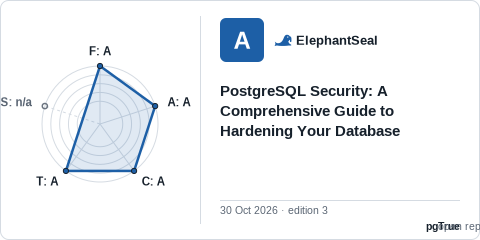
<a href="https://pgtrue.postgres.ai/shared/brief/06c213c4-93c3-479e-beb4-2913f70dedce"><img src="https://pgtrue.postgres.ai/badge/06c213c4-93c3-479e-beb4-2913f70dedce/wide.svg?v=13&amp;theme=light" alt="pgTrue fact-check" width="480" height="240" loading="lazy" decoding="async" style="display:inline-block;width:480px;height:240px"></a>
https://pgtrue.postgres.ai/badge/06c213c4-93c3-479e-beb4-2913f70dedce/wide.svg?v=13&theme=light
.. image:: https://pgtrue.postgres.ai/badge/06c213c4-93c3-479e-beb4-2913f70dedce/wide.svg?v=13&theme=light
   :target: https://pgtrue.postgres.ai/shared/brief/06c213c4-93c3-479e-beb4-2913f70dedce
   :alt: pgTrue fact-check
   :width: 480
   :height: 240
[![pgTrue fact-check](https://pgtrue.postgres.ai/badge/06c213c4-93c3-479e-beb4-2913f70dedce/wide.svg?v=13&theme=dark)](https://pgtrue.postgres.ai/shared/brief/06c213c4-93c3-479e-beb4-2913f70dedce)
<a href="https://pgtrue.postgres.ai/shared/brief/06c213c4-93c3-479e-beb4-2913f70dedce"><img src="https://pgtrue.postgres.ai/badge/06c213c4-93c3-479e-beb4-2913f70dedce/wide.svg?v=13&amp;theme=dark" alt="pgTrue fact-check" width="480" height="240" loading="lazy" decoding="async" style="display:inline-block;width:480px;height:240px"></a>
https://pgtrue.postgres.ai/badge/06c213c4-93c3-479e-beb4-2913f70dedce/wide.svg?v=13&theme=dark
.. image:: https://pgtrue.postgres.ai/badge/06c213c4-93c3-479e-beb4-2913f70dedce/wide.svg?v=13&theme=dark
   :target: https://pgtrue.postgres.ai/shared/brief/06c213c4-93c3-479e-beb4-2913f70dedce
   :alt: pgTrue fact-check
   :width: 480
   :height: 240
[![pgTrue fact-check](https://pgtrue.postgres.ai/badge/06c213c4-93c3-479e-beb4-2913f70dedce/wide.svg?v=13)](https://pgtrue.postgres.ai/shared/brief/06c213c4-93c3-479e-beb4-2913f70dedce)
<a href="https://pgtrue.postgres.ai/shared/brief/06c213c4-93c3-479e-beb4-2913f70dedce"><img src="https://pgtrue.postgres.ai/badge/06c213c4-93c3-479e-beb4-2913f70dedce/wide.svg?v=13" alt="pgTrue fact-check" width="480" height="240" loading="lazy" decoding="async" style="display:inline-block;width:480px;height:240px"></a>
https://pgtrue.postgres.ai/badge/06c213c4-93c3-479e-beb4-2913f70dedce/wide.svg?v=13
.. image:: https://pgtrue.postgres.ai/badge/06c213c4-93c3-479e-beb4-2913f70dedce/wide.svg?v=13
   :target: https://pgtrue.postgres.ai/shared/brief/06c213c4-93c3-479e-beb4-2913f70dedce
   :alt: pgTrue fact-check
   :width: 480
   :height: 240

Click the snippet to select all of it, then copy. Where SVG is stripped, as in some email clients and feed readers, change .svg to .png. PNG uses the light theme for Auto. For Markdown PNG embeds, use the HTML snippet where supported to preserve the display size.

Optional colours: append &color=26798E or &labelColor=333C47 after a theme query (use ? for the first parameter). Use 3- or 6-digit hex.

For pages with a light background.

For pages with a dark background. The ElephantSeal gets a thin edge so it does not blend in.

Auto follows the reader's light or dark setting where the host supports it, and shows the light ElephantSeal where it does not.

On a light page
On a dark page

PostgreSQL Security: A Comprehensive Guide to Hardening Your Database (opens in new tab)

percona.com
Broadly sound as far as we checked. Read the caveats below.
0
inaccuracy
0
dangerous-recipe
0
misleading
2
imprecise
0
transcription
0
aged
0
withdrawn
12
verified-accurate

Factual A · Applicable A · Consistent A · Transparent A · Safe —

ReportTechnical fact-check, edition 3 pgTrue versionaudited with v1.0.14 (approx.) · regraded with v1.1.3 Issued EditionUpdated after review. Corrections are listed below. SubmittedSubmitted by the PostgresAI team. Author responseNo written reply from the author. The article changed 1 time after our first audit; we re-audited each version. See Revisions below. Policy: right-of-reply and corrections policy.

InaccuraciesNone in this edition.

Dangerous or recipe bugsNone in this edition.

Misleading / imprecise

F1

Imprecise: “Enable ssl = on…”

IMPRECISEApplicable · partly holds after review

Claim ledger

Article says
Enable ssl = on…
What is true
Enabling ssl supports TLS but does not itself require encryption. PostgreSQL 17.4 documents this in runtime.sgml:2207-2212. Plaintext remains possible when matching authentication rules permit it. The article's encryption checklist omits enforcement. Require hostssl rules and remove matching plaintext-permitting rules to enforce TLS.
So what
Require hostssl authentication rules in pg_hba.conf and remove matching plaintext-permitting host rules.

Source

Source · REL_17_4 · doc/src/sgml/runtime.sgml:2200-2230<filename>postgresql.conf</filename>. The server will listen for both normal and <acronym>SSL</acronym> connections on the same TCP port, and will negotiate with any connecting client on whether to use <acronym>SSL</acronym>. By default, this is at the client's option; see <xref linkend="auth-pg-hba-conf"/> about how to set up the server to require use of <acronym>SSL</acronym> for some or all connections.
In the article · section “2. TLS/SSL encryption”

In the article

excerpt · section “2. TLS/SSL encryption” · as fetched 2026-10-19 · open in article ↗ (opens in new tab)

2. TLS/SSL encryption

Enable ssl = on , set certificate paths, and verify that your keys are valid and not self-signed (unless you know what you’re doing)

All sources and excerpts · 3
Evidence <filename>postgresql.conf</filename>. The server will listen for both normal and <acronym>SSL</acronym> connections on the same TCP port, and will negotiate with any connecting client on whether to use <acronym>SSL</acronym>. By default, this is at the client's option; see <xref linkend="auth-pg-hba-conf"/> about how to set up the server to require use of <acronym>SSL</acronym> for some or all connections.
Evidence /* Connection is not SSL, match both "host" and "hostnossl" */ if (hba->conntype == ctHostSSL) continue;
Evidence Enables <acronym>SSL</acronym> connections.
How the review tested this

Review: The article correctly recommends enabling TLS. It does not explicitly claim that ssl alone rejects plaintext. We checked that charitable reading against runtime.sgml and hba.c. The missing enforcement step remains material, but the evidence supports an incomplete checklist rather than an incorrect setting. We tested the reading that enabling TLS merely starts configuration. The surrounding instruction requires encryption for all traffic. runtime.sgml permits client-selected plaintext, and hba.c accepts matching host rules without SSL. The enforcement omission survives.

F2

listen_addresses defaults to localhost

IMPRECISETransparent · holds up after review

Claim ledger

Article says
…don’t let it default to ‘*’…
What is true
PostgreSQL 17.4 defaults listen_addresses to localhost. guc_tables.c:4427-4435 sets that value. config.sgml:644-678 documents loopback-only TCP access. A deployment can override it with *.
So what
Check SHOW listen_addresses before changing the configuration. Retain localhost when only local TCP access is required.
Charitable reading
A distribution or deployment can configure *. The article names no distribution when describing this default.

Source

Source · REL_17_4 · src/backend/utils/misc/guc_tables.c:4427-4435&ListenAddresses, "localhost",
In the article · section “1. Network boundaries”

In the article

excerpt · section “1. Network boundaries” · as fetched 2026-10-19 · open in article ↗ (opens in new tab)

1. Network boundaries

Lock down listen_addresses in postgresql.conf —don’t let it default to ‘*’

All sources and excerpts · 2
Evidence &ListenAddresses, "localhost",
Evidence The default value is <systemitem class="systemname">localhost</systemitem>, which allows only local TCP/IP <quote>loopback</quote> connections to be made.
How the review tested this

Review: We considered deployment-specific defaults. The article names none for this setting. guc_tables.c sets localhost, and config.sgml confirms loopback-only TCP access. Checking SHOW listen_addresses avoids unnecessary configuration changes. We tested whether the wording refers to a deployment override. The article identifies no such deployment. guc_tables.c and config.sgml both specify localhost. Checking SHOW listen_addresses avoids an unnecessary configuration change.

Verified accurate

F3

SCRAM supports challenge-response authentication and hashed password storage

ACCURATEFactual · holds up after review

Claim ledger

Article says
…including password-based logins and SCRAM-SHA-256…
What is true
PostgreSQL 17.4 implements SCRAM-SHA-256 password authentication. client-auth.sgml:1229-1239 documents password-sniffing protection and hashed storage. The same section identifies older client-library compatibility limits.
Charitable reading
The article recommends SCRAM where clients support it. It does not claim every identity integration must use passwords.

Source

Source · REL_17_4 · doc/src/sgml/client-auth.sgml:1220-1330is a challenge-response scheme that prevents password sniffing on untrusted connections and supports storing passwords on the server in a cryptographically hashed form that is thought to be secure.
In the article · section “Who can connect to the database?”

In the article

excerpt · section “Who can connect to the database?” · as fetched 2026-10-19 · open in article ↗ (opens in new tab)

Who can connect to the database?

Internal authentication : The most common, including password-based logins and SCRAM-SHA-256 (which you should be using by default).

All sources and excerpts · 1
Evidence is a challenge-response scheme that prevents password sniffing on untrusted connections and supports storing passwords on the server in a cryptographically hashed form that is thought to be secure.
How the review tested this

Review: We checked older-client compatibility and password-storage qualifications. client-auth.sgml supports the SCRAM description and the finding includes the compatibility limitation. We checked whether the finding overstates SCRAM protection or client compatibility. client-auth.sgml documents challenge-response authentication, hashed storage, and older-client limitations. The finding stays within those claims.

F4

Peer authentication uses the local operating system identity

ACCURATEFactual · holds up after review

Claim ledger

Article says
…peer , which uses the OS user account to verify identity…
What is true
PostgreSQL 17.4 obtains peer credentials from the kernel. auth.c:1850-1905 resolves the operating system account and checks its mapping. client-auth.sgml:1704-1707 limits peer authentication to local connections.
Charitable reading
The description concerns local connections and permits operating system identity mapping.

Source

Source · REL_17_4 · doc/src/sgml/client-auth.sgml:1696-1710The peer authentication method works by obtaining the client's operating system user name from the kernel and using it as the allowed database user name (with optional user name mapping). This method is only supported on local connections.
In the article · section “Who can connect to the database?”

In the article

excerpt · section “Who can connect to the database?” · as fetched 2026-10-19 · open in article ↗ (opens in new tab)

Who can connect to the database?

Operating system authentication : Like peer , which uses the OS user account to verify identity. Great for local, controlled environments.

All sources and excerpts · 2
Evidence The peer authentication method works by obtaining the client's operating system user name from the kernel and using it as the allowed database user name (with optional user name mapping). This method is only supported on local connections.
Evidence set_authn_id(port, pw->pw_name); ret = check_usermap(port->hba->usermap, port->user_name, MyClientConnectionInfo.authn_id, false);
How the review tested this

Review: We checked whether peer requires identical operating-system and database names. auth.c applies check_usermap after obtaining kernel credentials. The finding preserves mapping and local-connection qualifications. We checked identity mapping and connection scope. auth.c obtains peer credentials and checks the user mapping. client-auth.sgml restricts peer authentication to local connections. Both qualifications match the finding.

F5

Roles and object privileges control database authorization

ACCURATEFactual · holds up after review

Claim ledger

Article says
PostgreSQL uses Role-Based Access Control (RBAC)…
What is true
PostgreSQL 17.4 manages permissions through roles. user-manag.sgml:5-22 documents object ownership, privileges, and membership. ddl.sgml:1850-1898 documents granting and revoking privileges.
Charitable reading
RBAC summarizes PostgreSQL roles, memberships, and privileges. The article does not present it as an exclusive formal model.

Source

Source · REL_17_4 · doc/src/sgml/user-manag.sgml:5-22<productname>PostgreSQL</productname> manages database access permissions using the concept of <firstterm>roles</firstterm>.
In the article · section “What can they do once they’re in?”

In the article

excerpt · section “What can they do once they’re in?” · as fetched 2026-10-19 · open in article ↗ (opens in new tab)

What can they do once they’re in?

PostgreSQL uses Role-Based Access Control (RBAC) , meaning you define what each role (or user or group) is allowed to do, and on which objects. This includes:

All sources and excerpts · 2
Evidence <productname>PostgreSQL</productname> manages database access permissions using the concept of <firstterm>roles</firstterm>.
Evidence To revoke a previously-granted privilege, use the fittingly named <xref linkend="sql-revoke"/> command:
How the review tested this

Review: We checked ownership rights that GRANT and REVOKE cannot change. The finding describes role-based permissions without claiming every ownership right is independently revocable. We tested whether RBAC implies an exclusive authorization model. The finding makes no exclusivity claim. user-manag.sgml describes roles, ownership, privileges, and membership. ddl.sgml documents GRANT and REVOKE.

F6

RLS policies restrict rows users can query or modify

ACCURATEFactual · holds up after review

Claim ledger

Article says
…Enforce policies that determine which rows a given user can see or modify.
What is true
PostgreSQL 17.4 supports per-user row policies. ddl.sgml:2517-2519 documents restrictions on returned, inserted, updated, and deleted rows. Its later paragraphs describe owner exceptions and operations outside RLS.
Charitable reading
The article describes ordinary row access. It does not assert that RLS overrides owners or every privileged role.

Source

Source · REL_17_4 · doc/src/sgml/ddl.sgml:2510-2548tables can have <firstterm>row security policies</firstterm> that restrict, on a per-user basis, which rows can be returned by normal queries or inserted, updated, or deleted by data modification commands.
In the article · section “What can they do once they’re in?”

In the article

excerpt · section “What can they do once they’re in?” · as fetched 2026-10-19 · open in article ↗ (opens in new tab)

What can they do once they’re in?

Row-Level Security (RLS) : Enforce policies that determine which rows a given user can see or modify.

All sources and excerpts · 1
Evidence tables can have <firstterm>row security policies</firstterm> that restrict, on a per-user basis, which rows can be returned by normal queries or inserted, updated, or deleted by data modification commands.
How the review tested this

Review: We checked owner exceptions, default behavior, and TRUNCATE exclusions. ddl.sgml supports per-user row policies. The finding acknowledges exceptions rather than claiming universal enforcement. We checked owner exceptions, default behavior, and whole-table operations. ddl.sgml confirms row filtering and describes those exceptions. The finding expressly limits verification to ordinary row access.

F7

The three logging settings cover statements and connection events

ACCURATEFactual · holds up after review

Claim ledger

Article says
…Use settings like log_statement , log_connections , and log_disconnections…
What is true
PostgreSQL 17.4 log_statement selects SQL statement classes. log_connections records attempts and successful authentication and authorization. log_disconnections records session termination and duration. config.sgml:7320-7365 and 7762-7810 document these functions. postgres.c and auth.c implement the corresponding checks.
Charitable reading
The article recommends configuring these settings. It does not claim their defaults already record every event.

Source

Source · REL_17_4 · doc/src/sgml/config.sgml:7762-7810Controls which SQL statements are logged. Valid values are <literal>none</literal> (off), <literal>ddl</literal>, <literal>mod</literal>, and <literal>all</literal> (all statements).
In the article · section “4. Logging and observability”

In the article

excerpt · section “4. Logging and observability” · as fetched 2026-10-19 · open in article ↗ (opens in new tab)

4. Logging and observability

Database logging : Use settings like log_statement , log_connections , and log_disconnections to capture the basics, such as who’s connecting, what they’re running, and when.

All sources and excerpts · 6
Evidence Controls which SQL statements are logged. Valid values are <literal>none</literal> (off), <literal>ddl</literal>, <literal>mod</literal>, and <literal>all</literal> (all statements).
Evidence Causes each attempted connection to the server to be logged, as well as successful completion of both client authentication (if necessary) and authorization.
Evidence Causes session terminations to be logged. The log output provides information similar to <varname>log_connections</varname>, plus the duration of the session.
Evidence if (log_statement == LOGSTMT_NONE) return false; if (log_statement == LOGSTMT_ALL) return true;
Evidence if (Log_connections) { ereport(LOG, errmsg("connection authenticated: identity=\"%s\" method=%s "
Evidence if (IsUnderPostmaster && Log_disconnections) on_proc_exit(log_disconnections, 0);
How the review tested this

Review: We checked disabled defaults and statements that fail before logging. The finding describes configurable coverage, not exhaustive auditing. config.sgml and the implementation support that limited claim. We checked disabled defaults and statement-logging exclusions. config.sgml confirms configurable statement classes, connection events, and session duration. postgres.c and auth.c corroborate the controls. Neither article nor finding promises exhaustive default logging.

F8

pg_read_file can return an entire text file

ACCURATEFactual · holds up after review

Claim ledger

Article says
…pg_read_file…
What is true
PostgreSQL 17.4 pg_read_file returns the entire file when offset and length are omitted. func.sgml:30341-30364 documents this behavior. genfile.c:319-327 passes the whole-file arguments to the common reader.
Charitable reading
This check covers the named SQL function. It does not validate the reader comment's complete shell pipeline.

Source

Source · REL_17_4 · doc/src/sgml/func.sgml:30341-30364and <parameter>length</parameter> are omitted, the entire file is returned.
In the article · section “What is pgAudit used for in PostgreSQL security?”

In the article

excerpt · section “What is pgAudit used for in PostgreSQL security?” · as fetched 2026-10-19 · open in article ↗ (opens in new tab)

What is pgAudit used for in PostgreSQL security?

$psql -c “SELECT pg_read_file(‘pg_hba.conf’);” | head -n -41 | tail -n 3 # METHOD can be “trust”, “reject”, “md5”, “password”, “gss”, “sspi”, “krb5”, + # “ident”, “pam”, “ldap” or “cert”. Note that “password” sends passwords + # in clear text; “md5” is preferred since it sends encrypted passwords. + ==> Informations from hba_conf_file.

All sources and excerpts · 2
Evidence and <parameter>length</parameter> are omitted, the entire file is returned.
Evidence ret = pg_read_file_common(filename_t, 0, -1, true, false);
How the review tested this

Review: We checked omitted arguments, permissions, and encoding restrictions. func.sgml and genfile.c support whole-file reading. This verifies the function in a reader comment, not its complete command or unrestricted access. We checked whether this finding validates the complete comment command. It expressly excludes that pipeline. func.sgml and genfile.c confirm whole-file reading for the one-argument function. The narrower capability claim survives.

F9

pg_hba.conf controls client authentication

ACCURATEFactual · holds up after review

Claim ledger

Article says
…configured in pg_hba.conf…
What is true
PostgreSQL 17.4 configures client authentication through pg_hba.conf. client-auth.sgml:64-83 documents the default location and reload behavior. The hba_file parameter can select another location.
Charitable reading
The filename denotes the authentication configuration. PostgreSQL permits administrators to place that file elsewhere.

Source

Source · REL_17_4 · doc/src/sgml/client-auth.sgml:64-83Client authentication is controlled by a configuration file, which traditionally is named <filename>pg_hba.conf</filename> and is stored in the database cluster's data directory.
In the article · section “How does PostgreSQL handle password security and authentication?”

In the article

excerpt · section “How does PostgreSQL handle password security and authentication?” · as fetched 2026-10-19 · open in article ↗ (opens in new tab)

How does PostgreSQL handle password security and authentication?

PostgreSQL supports various PostgreSQL authentication methods configured in pg_hba.conf . For password security, it uses methods like SCRAM-SHA-256 (recommended), which stores hashed passwords securely. It also supports external methods like LDAP, Kerberos, and certificate-based authentication.

All sources and excerpts · 1
Evidence Client authentication is controlled by a configuration file, which traditionally is named <filename>pg_hba.conf</filename> and is stored in the database cluster's data directory.
How the review tested this

Review: We checked whether hba_file invalidates the filename claim. client-auth.sgml identifies pg_hba.conf as the traditional authentication file and permits another location. The finding includes that qualification. We checked whether alternate file locations undermine the filename claim. client-auth.sgml names pg_hba.conf and documents hba_file overrides. The finding includes that qualification.

F10

EXECUTE privileges control procedure calls

ACCURATEFactual · holds up after review

Claim ledger

Article says
…Lock down who can run stored procedures…
What is true
PostgreSQL 17.4 uses EXECUTE privileges for functions and procedures. ddl.sgml:2059-2074 documents this control. Administrators can grant or revoke that privilege.
Charitable reading
The recommendation concerns routine execution privileges, rather than a claim that every procedure requires special treatment.

Source

Source · REL_17_4 · doc/src/sgml/ddl.sgml:2059-2074Allows calling a function or procedure, including use of any operators that are implemented on top of the function. This is the only type of privilege that is applicable to functions and procedures.
In the article · section “3. Access control within the database”

In the article

excerpt · section “3. Access control within the database” · as fetched 2026-10-19 · open in article ↗ (opens in new tab)

3. Access control within the database

Lock down who can run stored procedures, especially anything with side effects

All sources and excerpts · 1
Evidence Allows calling a function or procedure, including use of any operators that are implemented on top of the function. This is the only type of privilege that is applicable to functions and procedures.
How the review tested this

Review: We checked whether EXECUTE covers procedures as well as functions. ddl.sgml explicitly includes both. The finding makes no unsupported claim about default grants. We checked whether EXECUTE applies only to functions. ddl.sgml explicitly includes procedures. The finding confirms the access-control mechanism without asserting that existing privileges already provide a secure configuration.

F11

PostgreSQL supports multiple authentication methods

ACCURATEFactual · holds up after review

Claim ledger

Article says
PostgreSQL supports multiple methods…
What is true
PostgreSQL 17.4 dispatches LDAP and RADIUS authentication in src/backend/libpq/auth.c:606–669. Its authentication result controls connection acceptance.
Charitable reading
The article describes available methods, not methods enabled in every build.

Source

Source · REL_17_4 · src/backend/libpq/auth.c:606-669 case uaLDAP: #ifdef USE_LDAP status = CheckLDAPAuth(port); #else Assert(false); #endif break; case uaRADIUS: status = CheckRADIUSAuth(port); break;
In the article · section “Who can connect to the database?”

In the article

excerpt · section “Who can connect to the database?” · as fetched 2026-10-19 · open in article ↗ (opens in new tab)

Who can connect to the database?

Start with authentication because if this part’s wrong, nothing else matters. PostgreSQL supports multiple methods, but not all are created equal, and they fall into three main categories:

All sources and excerpts · 1
Evidence case uaLDAP: #ifdef USE_LDAP status = CheckLDAPAuth(port); #else Assert(false); #endif break; case uaRADIUS: status = CheckRADIUSAuth(port); break;
How the review tested this

Review: We checked conditional LDAP compilation and authentication failures. auth.c dispatches multiple methods and rejects unsuccessful authentication. Neither the article excerpt nor the finding promises every method in every build. We checked conditional compilation and authentication-result handling. auth.c dispatches LDAP conditionally and RADIUS directly. It accepts or rejects authentication from the resulting status. The finding acknowledges build dependence.

F12

Built-in logging can record connection attempts

ACCURATEFactual · holds up after review

Claim ledger

Article says
PostgreSQL’s built-in logging covers the basics: connection attempts…
What is true
PostgreSQL 17.4 documents connection-attempt logging in doc/src/sgml/config.sgml:7320–7346. Enable log_connections to record these attempts.
Charitable reading
The article describes logging capabilities and later recommends configuring logging.

Source

Source · REL_17_4 · doc/src/sgml/config.sgml:7320-7346Causes each attempted connection to the server to be logged,
In the article · section “What did they touch?”

In the article

excerpt · section “What did they touch?” · as fetched 2026-10-19 · open in article ↗ (opens in new tab)

What did they touch?

If something goes wrong or someone starts asking questions, you need an audit trail. This is accounting, and it’s a non-negotiable for compliance, monitoring, and incident response. PostgreSQL’s built-in logging covers the basics: connection attempts, disconnections, and queries. But that’s just one layer. A solid audit setup should cover:

All sources and excerpts · 1
Evidence Causes each attempted connection to the server to be logged,
How the review tested this

Review: We checked the off default and duplicate connection attempts. config.sgml supports the capability claim. The finding explicitly requires enabling log_connections. We tested a default-enabled interpretation. The article later recommends configuring logging. config.sgml confirms connection-attempt logging and its disabled default. The finding verifies capability rather than default output.

F13

Built-in logging can record disconnections

ACCURATEFactual · holds up after review

Claim ledger

Article says
…disconnections…
What is true
PostgreSQL 17.4 documents session-termination logging in doc/src/sgml/config.sgml:7348–7365. Enable log_disconnections to record session endings.
Charitable reading
The claim describes configurable logging rather than default output.

Source

Source · REL_17_4 · doc/src/sgml/config.sgml:7348-7365Causes session terminations to be logged.
In the article · section “What did they touch?”

In the article

excerpt · section “What did they touch?” · as fetched 2026-10-19 · open in article ↗ (opens in new tab)

What did they touch?

If something goes wrong or someone starts asking questions, you need an audit trail. This is accounting, and it’s a non-negotiable for compliance, monitoring, and incident response. PostgreSQL’s built-in logging covers the basics: connection attempts, disconnections, and queries. But that’s just one layer. A solid audit setup should cover:

All sources and excerpts · 1
Evidence Causes session terminations to be logged.
How the review tested this

Review: We checked whether disconnection logging happens by default. config.sgml says off. The finding describes an enabled capability and does not misstate the default. We checked whether disabled defaults contradict the article. config.sgml documents configurable session-termination logging. The finding explicitly requires enabling log_disconnections.

F14

Built-in logging can record SQL statements

ACCURATEFactual · holds up after review

Claim ledger

Article says
…and queries…
What is true
PostgreSQL 17.4 documents SQL statement logging in doc/src/sgml/config.sgml:7762–7810. log_statement controls which statement classes appear.
Charitable reading
The article claims statement-logging capability, not complete logging under default settings.

Source

Source · REL_17_4 · doc/src/sgml/config.sgml:7762-7810Controls which SQL statements are logged.
In the article · section “What did they touch?”

In the article

excerpt · section “What did they touch?” · as fetched 2026-10-19 · open in article ↗ (opens in new tab)

What did they touch?

If something goes wrong or someone starts asking questions, you need an audit trail. This is accounting, and it’s a non-negotiable for compliance, monitoring, and incident response. PostgreSQL’s built-in logging covers the basics: connection attempts, disconnections, and queries. But that’s just one layer. A solid audit setup should cover:

All sources and excerpts · 1
Evidence Controls which SQL statements are logged.
How the review tested this

Review: We checked syntax-error and extended-protocol exclusions. config.sgml supports configurable statement logging. The finding does not promise that log_statement records every failed statement. We checked statements excluded before parsing or execution. config.sgml describes these limits. The finding claims configurable SQL logging, without promising complete capture of every attempted statement.

Notes

1 not graded: findings no reader would act on differently
F15

Note: “…monitor what happens next…”

NOTEpartly holds after review

Claim ledger

Article says
…monitor what happens next…
What is true
auth.c:330-374 logs authenticated identity and authentication method when log_connections is enabled. This range verifies authentication logging. It does not verify monitoring of later queries or other session activity.

Source

Source · REL_17_4 · src/backend/libpq/auth.c:330-374The ID will be logged if log_connections is enabled.

Not graded: no reader would act differently on it.

In the article · section “The building blocks: Authentication, Authorization, and Accounting (AAA)”

In the article

excerpt · section “The building blocks: Authentication, Authorization, and Accounting (AAA)” · as fetched 2026-10-19 · open in article ↗ (opens in new tab)

The building blocks: Authentication, Authorization, and Accounting (AAA)

PostgreSQL gives you the capabilities to control who gets access, restrict what they can do, and monitor what happens next. But those controls only matter if they’re used with intention. Let’s break down what that looks like in practice:

All sources and excerpts · 1
EvidenceThe ID will be logged if log_connections is enabled.
How the review tested this

Review: We tested whether authentication records establish monitoring after access. auth.c:330-374 logs authentication identity and method. That range does not verify subsequent session activity. The broad verification becomes a narrower note. We checked whether authentication logging proves comprehensive activity auditing. It does not, but the finding makes only a capability claim. auth.c records identity and method when log_connections is enabled.

More in this report

Section checks · 9 sections

Section checks

AspectGradeFindingsCoverage
AuthenticationA3 verified-accurate100% of claims (7 of 7, plus 4 that need data we do not have)
AuthorizationA2 verified-accurate100% of claims (5 of 5, plus 1 that need data we do not have)
AccountingA3 verified-accurate100% of claims (3 of 3, plus 5 that need data we do not have)
Network boundariesA1 imprecise100% of claims (3 of 3, plus 2 that need data we do not have)
TLS encryptionA1 imprecise85% of claims (6 of 7, plus 1 that need data we do not have)
Database access controlA1 verified-accurate100% of claims (2 of 2, plus 1 that need data we do not have)
Logging and observabilityA1 verified-accurate100% of claims (3 of 3)
Password authentication FAQA1 verified-accurate100% of claims (2 of 2)
Reader commentA1 verified-accurate33% of claims (1 of 3, plus 2 that need data we do not have)provisional
Coverage and assessment · Checked 34 of 37 Postgres claims across 22 sections; 1 section below half

A — the findings address the article's main subject. What we did not check is listed below. The findings directly check PostgreSQL 17.4 authentication, privileges, transport encryption, network exposure, and built-in logging.

We did not check everything in this article. What we did not check is listed below, in the words we recorded at the time. None of it moved the letter. We never charge our own limits to the article.

Part of this audit returned no findings, so our coverage of the article is thinner than usual.

What we did not check

  • We did not verify pgAudit installation, configuration, or audit coverage against its own documentation.
  • We did not check the complete configuration-reading command or its displayed output in the reader comment.
  • We did not fully check the authentication advice in the reader comment.
  • We did not check PostgreSQL and OpenSSL update compatibility or security advisories.
  • We could not determine which existing permissions an application could safely lose.
  • We did not verify how distributions and hosting services divide security configuration responsibilities.
  • We did not verify the historical comment’s authentication-method list against its original PostgreSQL version.
  • We did not establish which security claims changed between April 2025 and October 2026.
  • We did not verify the article’s pgAudit capabilities or PMM log-correlation recommendation against product documentation.
  • We did not establish five distinct primary-source checks of the article’s external claims.
  • We did not verify SCRAM-SHA-256 security, centralized identity integration, or distribution security defaults.
  • We did not check authorization enforcement or the FAQ’s vulnerability claims.
  • We did not verify pgAudit’s configuration requirements or audit output.
  • We did not verify query timing logs or compare Unix socket performance and security.
  • We did not verify the reader comment’s command output without its original pg_hba.conf contents.
  • Safe: we did not complete every applicable check.
  • Section “Reader comment”: we checked 1 of 5 checkable claims.
  • We could not decide whether the evidence backs the central claim.
Checked 34 of 37 Postgres claims across 22 sections; 1 section below half
  • Page metadata: no checkable claims; not counted: 1 product or opinion, 4 not a claim
  • Security overview: 2 claims are the author's own account; nothing checkable; not counted: 3 product or opinion, 2 not a claim
  • Why security matters: no checkable claims; not counted: 6 product or opinion, 1 not a claim
  • AAA: 2 of 2 Postgres claims checked, plus 1 that need data we do not have; not counted: 4 product or opinion, 1 not a claim
  • Authentication: 7 of 7 Postgres claims checked, plus 4 that need data we do not have; not counted: 5 product or opinion, 1 duplicate, 1 not a claim
  • Authorization: 5 of 5 Postgres claims checked, plus 1 that need data we do not have; not counted: 3 product or opinion, 1 duplicate, 1 not a claim
  • Accounting: 3 of 3 Postgres claims checked, plus 5 that need data we do not have; not counted: 6 product or opinion, 2 not a claim
  • Layered security: no checkable claims; not counted: 2 product or opinion, 1 not a claim
  • Network boundaries: 3 of 3 Postgres claims checked, plus 2 that need data we do not have; not counted: 5 product or opinion, 1 not a claim
  • TLS encryption: 6 of 7 Postgres claims checked, plus 1 that need data we do not have; not counted: 2 product or opinion, 2 duplicate, 1 not a claim; not checked: 1 for other reasons
  • Database access control: 2 of 2 Postgres claims checked, plus 1 that need data we do not have; not counted: 3 product or opinion, 1 duplicate, 1 not a claim
  • Logging and observability: 3 of 3 Postgres claims checked; not counted: 6 product or opinion, 8 duplicate, 1 not a claim
  • Ongoing maintenance: no checkable claims; not counted: 8 product or opinion, 3 not a claim
  • Targeted improvements: no checkable claims; not counted: 3 product or opinion, 1 not a claim
  • Security resources: no checkable claims; not counted: 3 product or opinion, 1 duplicate, 4 not a claim
  • Security definition FAQ: no checkable claims; not counted: 2 product or opinion, 1 not a claim
  • Vulnerabilities FAQ: 6 claims are the author's own account; nothing checkable; not counted: 1 not a claim
  • Access management FAQ: no checkable claims; not counted: 6 duplicate, 1 not a claim
  • Password authentication FAQ: 2 of 2 Postgres claims checked; not counted: 3 duplicate, 1 not a claim
  • pgAudit FAQ: 2 claims are the author's own account; nothing checkable; not counted: 3 product or opinion, 1 duplicate, 1 not a claim
  • Reader comment: 1 of 3 Postgres claims checked, plus 2 that need data we do not have; not counted: 1 duplicate, 2 not a claim; not checked: 3 for other reasons
  • Page footer: no checkable claims; not counted: 1 product or opinion, 1 duplicate, 2 not a claim

Average of 4 axes: 4 · result A

Some explanatory text is not shown in this edition; the grade and findings are complete.

Scorecard · the five axes
FACTS scorecard Scorecard radar, 5 axes, bigger is better. Overall A. Factual A · 0 wrong of 14 checked · 0 caveats. Applicable A · 0 wrong of 12 checked · 1 caveat. Consistent A · 0 wrong of 14 checked · 0 caveats. Transparent A · 0 wrong of 9 checked · 1 caveat. Safe not applicable (n/a). A 0 wrong of 14 checked · 0 caveatsFactual A0 wrong of 140 caveats A 0 wrong of 12 checked · 1 caveatApplicable A0 wrong of 121 caveat A 0 wrong of 14 checked · 0 caveatsConsistent A0 wrong of 140 caveats A 0 wrong of 9 checked · 1 caveatTransparent A0 wrong of 91 caveat not applicable (n/a), nothing to checkSafe n/anothingto check A

By topic: Authentication — 3 findings, 0 wrong · Authorization — 2 findings, 0 wrong · Accounting — 3 findings, 0 wrong · Network boundaries — 1 finding, 0 wrong · TLS encryption — 1 finding, 0 wrong · Database access control — 1 finding, 0 wrong · Logging and observability — 1 finding, 0 wrong · Password authentication FAQ — 1 finding, 0 wrong · Reader comment — 1 finding, 0 wrong

Further out is better. Each axis has its own letter, from the wrong claims and caveats among the claims we checked of that kind.

Checked on the FACTS: Factual, Applicable, Consistent, Transparent, Safe. Clockwise: Factual (is it true?), Applicable (does it apply to my setup, today?), Consistent (does it agree with itself?), Transparent (can I check it myself?), Safe (can I run this on prod?).

We checked 14 claims.

AxisLetterWrongCaveatsCheckedCoverage
FactualA0014assessed: A · 0 wrong of 14 checked · 0 caveats
ApplicableA0112assessed: A · 0 wrong of 12 checked · 1 caveat
ConsistentA0014assessed: A · 0 wrong of 14 checked · 0 caveats
TransparentA019assessed: A · 0 wrong of 9 checked · 1 caveat
Safe—000partly assessed
Topics · 9 topics

Topics

TopicFactualApplicableConsistentTransparentSafe
Authentication0 issues 3 checked F3 F4 F110 issues 3 checked0 issues 3 checked0 issues 1 checked
Authorization0 issues 2 checked F5 F60 issues 2 checked0 issues 2 checked
Accounting0 issues 3 checked F12 F13 F140 issues 3 checked0 issues 3 checked0 issues 3 checked
Network boundaries0 issues 1 checked0 issues 1 checked0 issues 1 checked1 issue 1 checked F2
TLS encryption0 issues 1 checked1 issue 1 checked F10 issues 1 checked
Database access control0 issues 1 checked F100 issues 1 checked0 issues 1 checked0 issues 1 checked
Logging and observability0 issues 1 checked F70 issues 1 checked0 issues 1 checked
Password authentication FAQ0 issues 1 checked F90 issues 1 checked0 issues 1 checked0 issues 1 checked
Reader comment0 issues 1 checked F80 issues 1 checked0 issues 1 checked

Issues found among the claims checked, per topic and axis. Each link goes to the finding behind the count.

Revisions: 2 · B+ -> A

We audited this article 2 times. Each row is the final edition of one audit. Letters and findings of earlier revisions stay readable at their own address.

  1. Revision 1 · 2026-09-28 00:00 UTC · B+ · audit version not recorded · regrade version not recorded

    Article as first submitted. 4 accurate · 1 wrong · 3 caveats.

    ElephantSeal: B+.

    Changes: First audit. Open: F2 “The TLS checklist enables encryption without requiring it” (misleading); F1 “Lock down listen_addresses in postgresql.conf —don’t let it default to ‘*’…” (mostly accurate); F7 “listen_addresses defaults to localhost” (mostly accurate); F8 “Feed them into Percona Monitoring and Management (PMM) or another observability platform…” (mostly accurate).

  2. Revision 2 · this page · 2026-10-19 07:10 UTC · A · audited with v1.0.14 (approx.) · regraded with v1.1.3

    Article text changed. 12 accurate · 0 wrong · 2 caveats.

    ElephantSeal: A.

    Changes: No longer reported: “The TLS checklist enables encryption without requiring it”; “Lock down listen_addresses in postgresql.conf —don’t let it default to ‘*’…”; “Feed them into Percona Monitoring and Management (PMM) or another observability platform…”. New: F1 “Enable ssl = on…” (mostly accurate).

Questions and answers

Questions and answers

What is pgTrue?

pgTrue is an independent fact-check of technical Postgres articles, made by PostgresAI. It helps you check advice before you use it.

What does the letter grade mean?

The letter grade summarizes the claims we checked. Five axes show what we checked:

  • Factual: is it true?
  • Applicable: does it apply to my setup, today?
  • Consistent: does it agree with itself?
  • Transparent: can I check it myself?
  • Safe: can I run this in production?

What is the ElephantSeal?

The ElephantSeal is the mark an article earns. It always shows the latest edition. “Open:” lists what is still open.

Can an author reply?

Authors can ask us to correct a finding, reply to it, or withdraw it. Right-of-reply policy.

Paste into your AI assistant to fix the article, then ask for a re-review.

Show the text
Fix the article with this report, then ask pgTrue for a re-review.

# pgTrue report: PostgreSQL Security: A Comprehensive Guide to Hardening Your Database

Article title: PostgreSQL Security: A Comprehensive Guide to Hardening Your Database
Article URL: https://www.percona.com/blog/postgresql-database-security-what-you-need-to-know
Report URL: https://pgtrue.postgres.ai/shared/brief/06c213c4-93c3-479e-beb4-2913f70dedce
Audited revision: 2 of 2, 2026-10-19 07:10:35 UTC
Overall letter: A

## Axes

- Factual: A · 0 wrong · 14 checked · 0 caveats · assessed
- Applicable: A · 0 wrong · 12 checked · 1 caveats · assessed
- Consistent: A · 0 wrong · 14 checked · 0 caveats · assessed
- Transparent: A · 0 wrong · 9 checked · 1 caveats · assessed
- Safe: — · 0 wrong · 0 checked · 0 caveats · partly assessed

ElephantSeal: A.

## Report metadata

- Report: Technical fact-check, edition 3
- pgTrue version: audited with v1.0.14 (approx.) · regraded with v1.1.3
- Issued: 2026-10-19
- Edition: Updated after review. Corrections are listed below.
- Submitted: Submitted by the PostgresAI team.
- Author response: No written reply from the author. The article changed 1 time after our first audit; we re-audited each version. See Revisions below. Policy: [right-of-reply and corrections policy](/pgtrue/security).

## Findings needing a change (2)

### F1 · Imprecise · Applicable · Imprecise: “Enable ssl = on…”
Location: excerpt · section “2. TLS/SSL encryption” · as fetched 2026-10-19 · [open in article](https://www.percona.com/blog/postgresql-database-security-what-you-need-to-know#:~:text=Enable%20ssl%20%3D%20on)
Article says:
```text
Enable ssl = on…
```
What is true:
Enabling ssl supports TLS but does not itself require encryption. PostgreSQL 17.4 documents this in runtime.sgml:2207-2212. Plaintext remains possible when matching authentication rules permit it. The article's encryption checklist omits enforcement. Require hostssl rules and remove matching plaintext-permitting rules to enforce TLS.
So what:
Require hostssl authentication rules in pg_hba.conf and remove matching plaintext-permitting host rules.
Review: The article correctly recommends enabling TLS. It does not explicitly claim that ssl alone rejects plaintext. We checked that charitable reading against runtime.sgml and hba.c. The missing enforcement step remains material, but the evidence supports an incomplete checklist rather than an incorrect setting. We tested the reading that enabling TLS merely starts configuration. The surrounding instruction requires encryption for all traffic. runtime.sgml permits client-selected plaintext, and hba.c accepts matching host rules without SSL. The enforcement omission survives.

Sources:
- [REL_17_4 · doc/src/sgml/runtime.sgml:2200-2230](https://github.com/postgres/postgres/blob/f8554dee417ffc4540c94cf357f7bf7d4b6e5d80/doc/src/sgml/runtime.sgml#L2200-L2230)
  Excerpt:
  ```text
  <filename>postgresql.conf</filename>.  The server will listen for both normal
   and <acronym>SSL</acronym> connections on the same TCP port, and will negotiate
   with any connecting client on whether to use <acronym>SSL</acronym>.  By
   default, this is at the client's option; see <xref
   linkend="auth-pg-hba-conf"/> about how to set up the server to require
   use of <acronym>SSL</acronym> for some or all connections.
  ```
- [REL_17_4 · src/backend/libpq/hba.c:2488-2520](https://github.com/postgres/postgres/blob/f8554dee417ffc4540c94cf357f7bf7d4b6e5d80/src/backend/libpq/hba.c#L2488-L2520)
  Excerpt:
  ```text
  /* Connection is not SSL, match both "host" and "hostnossl" */
				if (hba->conntype == ctHostSSL)
					continue;
  ```
- [REL_17_4 · doc/src/sgml/config.sgml:1221-1235](https://github.com/postgres/postgres/blob/f8554dee417ffc4540c94cf357f7bf7d4b6e5d80/doc/src/sgml/config.sgml#L1221-L1235)
  Excerpt:
  ```text
  Enables <acronym>SSL</acronym> connections.
  ```

Finding URL: https://pgtrue.postgres.ai/shared/brief/06c213c4-93c3-479e-beb4-2913f70dedce#F1

### F2 · Imprecise · Transparent · listen_addresses defaults to localhost
Location: excerpt · section “1. Network boundaries” · as fetched 2026-10-19 · [open in article](https://www.percona.com/blog/postgresql-database-security-what-you-need-to-know#:~:text=don%E2%80%99t%20let%20it%20default%20to%20%E2%80%98%2A%E2%80%99)
Article says:
```text
…don’t let it default to ‘*’…
```
What is true:
PostgreSQL 17.4 defaults listen_addresses to localhost. guc_tables.c:4427-4435 sets that value. config.sgml:644-678 documents loopback-only TCP access. A deployment can override it with \*.
So what:
Check SHOW listen_addresses before changing the configuration. Retain localhost when only local TCP access is required.
Charitable reading:
A distribution or deployment can configure \*. The article names no distribution when describing this default.
Review: We considered deployment-specific defaults. The article names none for this setting. guc_tables.c sets localhost, and config.sgml confirms loopback-only TCP access. Checking SHOW listen_addresses avoids unnecessary configuration changes. We tested whether the wording refers to a deployment override. The article identifies no such deployment. guc_tables.c and config.sgml both specify localhost. Checking SHOW listen_addresses avoids an unnecessary configuration change.

Sources:
- [REL_17_4 · src/backend/utils/misc/guc_tables.c:4427-4435](https://github.com/postgres/postgres/blob/f8554dee417ffc4540c94cf357f7bf7d4b6e5d80/src/backend/utils/misc/guc_tables.c#L4427-L4435)
  Excerpt:
  ```text
  &ListenAddresses,
		"localhost",
  ```
- [REL_17_4 · doc/src/sgml/config.sgml:644-678](https://github.com/postgres/postgres/blob/f8554dee417ffc4540c94cf357f7bf7d4b6e5d80/doc/src/sgml/config.sgml#L644-L678)
  Excerpt:
  ```text
  The default value is <systemitem class="systemname">localhost</systemitem>,
         which allows only local TCP/IP <quote>loopback</quote> connections to be
         made.
  ```

Finding URL: https://pgtrue.postgres.ai/shared/brief/06c213c4-93c3-479e-beb4-2913f70dedce#F2

## Verified accurate claims (12)

### F3 · Accurate · Factual · SCRAM supports challenge-response authentication and hashed password storage
Location: excerpt · section “Who can connect to the database?” · as fetched 2026-10-19 · [open in article](https://www.percona.com/blog/postgresql-database-security-what-you-need-to-know#:~:text=including%20password%2Dbased%20logins%20and%20SCRAM%2DSHA%2D256)
Article says:
```text
…including password-based logins and SCRAM-SHA-256…
```
What is true:
PostgreSQL 17.4 implements SCRAM-SHA-256 password authentication. client-auth.sgml:1229-1239 documents password-sniffing protection and hashed storage. The same section identifies older client-library compatibility limits.
Charitable reading:
The article recommends SCRAM where clients support it. It does not claim every identity integration must use passwords.
Review: We checked older-client compatibility and password-storage qualifications. client-auth.sgml supports the SCRAM description and the finding includes the compatibility limitation. We checked whether the finding overstates SCRAM protection or client compatibility. client-auth.sgml documents challenge-response authentication, hashed storage, and older-client limitations. The finding stays within those claims.

Sources:
- [REL_17_4 · doc/src/sgml/client-auth.sgml:1220-1330](https://github.com/postgres/postgres/blob/f8554dee417ffc4540c94cf357f7bf7d4b6e5d80/doc/src/sgml/client-auth.sgml#L1220-L1330)
  Excerpt:
  ```text
  is a challenge-response scheme that prevents password sniffing on
       untrusted connections and supports storing passwords on the server in a
       cryptographically hashed form that is thought to be secure.
  ```

Finding URL: https://pgtrue.postgres.ai/shared/brief/06c213c4-93c3-479e-beb4-2913f70dedce#F3

### F4 · Accurate · Factual · Peer authentication uses the local operating system identity
Location: excerpt · section “Who can connect to the database?” · as fetched 2026-10-19 · [open in article](https://www.percona.com/blog/postgresql-database-security-what-you-need-to-know#:~:text=peer%20%2C%20which%20uses%20the,user%20account%20to%20verify%20identity)
Article says:
```text
…peer , which uses the OS user account to verify identity…
```
What is true:
PostgreSQL 17.4 obtains peer credentials from the kernel. auth.c:1850-1905 resolves the operating system account and checks its mapping. client-auth.sgml:1704-1707 limits peer authentication to local connections.
Charitable reading:
The description concerns local connections and permits operating system identity mapping.
Review: We checked whether peer requires identical operating-system and database names. auth.c applies check_usermap after obtaining kernel credentials. The finding preserves mapping and local-connection qualifications. We checked identity mapping and connection scope. auth.c obtains peer credentials and checks the user mapping. client-auth.sgml restricts peer authentication to local connections. Both qualifications match the finding.

Sources:
- [REL_17_4 · doc/src/sgml/client-auth.sgml:1696-1710](https://github.com/postgres/postgres/blob/f8554dee417ffc4540c94cf357f7bf7d4b6e5d80/doc/src/sgml/client-auth.sgml#L1696-L1710)
  Excerpt:
  ```text
  The peer authentication method works by obtaining the client's
    operating system user name from the kernel and using it as the
    allowed database user name (with optional user name mapping). This
    method is only supported on local connections.
  ```
- [REL_17_4 · src/backend/libpq/auth.c:1850-1905](https://github.com/postgres/postgres/blob/f8554dee417ffc4540c94cf357f7bf7d4b6e5d80/src/backend/libpq/auth.c#L1850-L1905)
  Excerpt:
  ```text
  set_authn_id(port, pw->pw_name);

	ret = check_usermap(port->hba->usermap, port->user_name,
						MyClientConnectionInfo.authn_id, false);
  ```

Finding URL: https://pgtrue.postgres.ai/shared/brief/06c213c4-93c3-479e-beb4-2913f70dedce#F4

### F5 · Accurate · Factual · Roles and object privileges control database authorization
Location: excerpt · section “What can they do once they’re in?” · as fetched 2026-10-19 · [open in article](https://www.percona.com/blog/postgresql-database-security-what-you-need-to-know#:~:text=PostgreSQL%20uses%20Role%2DBased%20Access%20Control%20%28RBAC%29)
Article says:
```text
PostgreSQL uses Role-Based Access Control (RBAC)…
```
What is true:
PostgreSQL 17.4 manages permissions through roles. user-manag.sgml:5-22 documents object ownership, privileges, and membership. ddl.sgml:1850-1898 documents granting and revoking privileges.
Charitable reading:
RBAC summarizes PostgreSQL roles, memberships, and privileges. The article does not present it as an exclusive formal model.
Review: We checked ownership rights that GRANT and REVOKE cannot change. The finding describes role-based permissions without claiming every ownership right is independently revocable. We tested whether RBAC implies an exclusive authorization model. The finding makes no exclusivity claim. user-manag.sgml describes roles, ownership, privileges, and membership. ddl.sgml documents GRANT and REVOKE.

Sources:
- [REL_17_4 · doc/src/sgml/user-manag.sgml:5-22](https://github.com/postgres/postgres/blob/f8554dee417ffc4540c94cf357f7bf7d4b6e5d80/doc/src/sgml/user-manag.sgml#L5-L22)
  Excerpt:
  ```text
  <productname>PostgreSQL</productname> manages database access permissions
  using the concept of <firstterm>roles</firstterm>.
  ```
- [REL_17_4 · doc/src/sgml/ddl.sgml:1850-1898](https://github.com/postgres/postgres/blob/f8554dee417ffc4540c94cf357f7bf7d4b6e5d80/doc/src/sgml/ddl.sgml#L1850-L1898)
  Excerpt:
  ```text
  To revoke a previously-granted privilege, use the fittingly named
   <xref linkend="sql-revoke"/> command:
  ```

Finding URL: https://pgtrue.postgres.ai/shared/brief/06c213c4-93c3-479e-beb4-2913f70dedce#F5

### F6 · Accurate · Factual · RLS policies restrict rows users can query or modify
Location: excerpt · section “What can they do once they’re in?” · as fetched 2026-10-19 · [open in article](https://www.percona.com/blog/postgresql-database-security-what-you-need-to-know#:~:text=Enforce%20policies%20that%20determine%20which,user%20can%20see%20or%20modify.)
Article says:
```text
…Enforce policies that determine which rows a given user can see or modify.
```
What is true:
PostgreSQL 17.4 supports per-user row policies. ddl.sgml:2517-2519 documents restrictions on returned, inserted, updated, and deleted rows. Its later paragraphs describe owner exceptions and operations outside RLS.
Charitable reading:
The article describes ordinary row access. It does not assert that RLS overrides owners or every privileged role.
Review: We checked owner exceptions, default behavior, and TRUNCATE exclusions. ddl.sgml supports per-user row policies. The finding acknowledges exceptions rather than claiming universal enforcement. We checked owner exceptions, default behavior, and whole-table operations. ddl.sgml confirms row filtering and describes those exceptions. The finding expressly limits verification to ordinary row access.

Sources:
- [REL_17_4 · doc/src/sgml/ddl.sgml:2510-2548](https://github.com/postgres/postgres/blob/f8554dee417ffc4540c94cf357f7bf7d4b6e5d80/doc/src/sgml/ddl.sgml#L2510-L2548)
  Excerpt:
  ```text
  tables can have <firstterm>row security policies</firstterm> that restrict,
   on a per-user basis, which rows can be returned by normal queries
   or inserted, updated, or deleted by data modification commands.
  ```

Finding URL: https://pgtrue.postgres.ai/shared/brief/06c213c4-93c3-479e-beb4-2913f70dedce#F6

### F7 · Accurate · Factual · The three logging settings cover statements and connection events
Location: excerpt · section “4. Logging and observability” · as fetched 2026-10-19 · [open in article](https://www.percona.com/blog/postgresql-database-security-what-you-need-to-know#:~:text=Use%20settings%20like%20log_statement%20%2C%20log_connections%20%2C%20and%20log_disconnections)
Article says:
```text
…Use settings like log_statement , log_connections , and log_disconnections…
```
What is true:
PostgreSQL 17.4 log_statement selects SQL statement classes. log_connections records attempts and successful authentication and authorization. log_disconnections records session termination and duration. config.sgml:7320-7365 and 7762-7810 document these functions. postgres.c and auth.c implement the corresponding checks.
Charitable reading:
The article recommends configuring these settings. It does not claim their defaults already record every event.
Review: We checked disabled defaults and statements that fail before logging. The finding describes configurable coverage, not exhaustive auditing. config.sgml and the implementation support that limited claim. We checked disabled defaults and statement-logging exclusions. config.sgml confirms configurable statement classes, connection events, and session duration. postgres.c and auth.c corroborate the controls. Neither article nor finding promises exhaustive default logging.

Sources:
- [REL_17_4 · doc/src/sgml/config.sgml:7762-7810](https://github.com/postgres/postgres/blob/f8554dee417ffc4540c94cf357f7bf7d4b6e5d80/doc/src/sgml/config.sgml#L7762-L7810)
  Excerpt:
  ```text
  Controls which SQL statements are logged. Valid values are
        <literal>none</literal> (off), <literal>ddl</literal>, <literal>mod</literal>, and
        <literal>all</literal> (all statements).
  ```
- [REL_17_4 · doc/src/sgml/config.sgml:7320-7346](https://github.com/postgres/postgres/blob/f8554dee417ffc4540c94cf357f7bf7d4b6e5d80/doc/src/sgml/config.sgml#L7320-L7346)
  Excerpt:
  ```text
  Causes each attempted connection to the server to be logged,
        as well as successful completion of both client authentication (if
        necessary) and authorization.
  ```
- [REL_17_4 · doc/src/sgml/config.sgml:7348-7365](https://github.com/postgres/postgres/blob/f8554dee417ffc4540c94cf357f7bf7d4b6e5d80/doc/src/sgml/config.sgml#L7348-L7365)
  Excerpt:
  ```text
  Causes session terminations to be logged.  The log output
        provides information similar to <varname>log_connections</varname>,
        plus the duration of the session.
  ```
- [REL_17_4 · src/backend/tcop/postgres.c:2360-2387](https://github.com/postgres/postgres/blob/f8554dee417ffc4540c94cf357f7bf7d4b6e5d80/src/backend/tcop/postgres.c#L2360-L2387)
  Excerpt:
  ```text
  if (log_statement == LOGSTMT_NONE)
		return false;
	if (log_statement == LOGSTMT_ALL)
		return true;
  ```
- [REL_17_4 · src/backend/libpq/auth.c:330-374](https://github.com/postgres/postgres/blob/f8554dee417ffc4540c94cf357f7bf7d4b6e5d80/src/backend/libpq/auth.c#L330-L374)
  Excerpt:
  ```text
  if (Log_connections)
	{
		ereport(LOG,
				errmsg("connection authenticated: identity=\"%s\" method=%s "
  ```
- [REL_17_4 · src/backend/tcop/postgres.c:4311-4390](https://github.com/postgres/postgres/blob/f8554dee417ffc4540c94cf357f7bf7d4b6e5d80/src/backend/tcop/postgres.c#L4311-L4390)
  Excerpt:
  ```text
  if (IsUnderPostmaster && Log_disconnections)
		on_proc_exit(log_disconnections, 0);
  ```

Finding URL: https://pgtrue.postgres.ai/shared/brief/06c213c4-93c3-479e-beb4-2913f70dedce#F7

### F8 · Accurate · Factual · pg_read_file can return an entire text file
Location: excerpt · section “What is pgAudit used for in PostgreSQL security?” · as fetched 2026-10-19 · [open in article](https://www.percona.com/blog/postgresql-database-security-what-you-need-to-know#:~:text=pg_read_file)
Article says:
```text
…pg_read_file…
```
What is true:
PostgreSQL 17.4 pg_read_file returns the entire file when offset and length are omitted. func.sgml:30341-30364 documents this behavior. genfile.c:319-327 passes the whole-file arguments to the common reader.
Charitable reading:
This check covers the named SQL function. It does not validate the reader comment's complete shell pipeline.
Review: We checked omitted arguments, permissions, and encoding restrictions. func.sgml and genfile.c support whole-file reading. This verifies the function in a reader comment, not its complete command or unrestricted access. We checked whether this finding validates the complete comment command. It expressly excludes that pipeline. func.sgml and genfile.c confirm whole-file reading for the one-argument function. The narrower capability claim survives.

Sources:
- [REL_17_4 · doc/src/sgml/func.sgml:30341-30364](https://github.com/postgres/postgres/blob/f8554dee417ffc4540c94cf357f7bf7d4b6e5d80/doc/src/sgml/func.sgml#L30341-L30364)
  Excerpt:
  ```text
  and <parameter>length</parameter> are omitted, the entire file is
        returned.
  ```
- [REL_17_4 · src/backend/utils/adt/genfile.c:319-327](https://github.com/postgres/postgres/blob/f8554dee417ffc4540c94cf357f7bf7d4b6e5d80/src/backend/utils/adt/genfile.c#L319-L327)
  Excerpt:
  ```text
  ret = pg_read_file_common(filename_t, 0, -1, true, false);
  ```

Finding URL: https://pgtrue.postgres.ai/shared/brief/06c213c4-93c3-479e-beb4-2913f70dedce#F8

### F9 · Accurate · Factual · pg_hba.conf controls client authentication
Location: excerpt · section “How does PostgreSQL handle password security and authentication?” · as fetched 2026-10-19 · [open in article](https://www.percona.com/blog/postgresql-database-security-what-you-need-to-know#:~:text=configured%20in%20pg_hba.conf)
Article says:
```text
…configured in pg_hba.conf…
```
What is true:
PostgreSQL 17.4 configures client authentication through pg_hba.conf. client-auth.sgml:64-83 documents the default location and reload behavior. The hba_file parameter can select another location.
Charitable reading:
The filename denotes the authentication configuration. PostgreSQL permits administrators to place that file elsewhere.
Review: We checked whether hba_file invalidates the filename claim. client-auth.sgml identifies pg_hba.conf as the traditional authentication file and permits another location. The finding includes that qualification. We checked whether alternate file locations undermine the filename claim. client-auth.sgml names pg_hba.conf and documents hba_file overrides. The finding includes that qualification.

Sources:
- [REL_17_4 · doc/src/sgml/client-auth.sgml:64-83](https://github.com/postgres/postgres/blob/f8554dee417ffc4540c94cf357f7bf7d4b6e5d80/doc/src/sgml/client-auth.sgml#L64-L83)
  Excerpt:
  ```text
  Client authentication is controlled by a configuration file,
   which traditionally is named
   <filename>pg_hba.conf</filename> and is stored in the database
   cluster's data directory.
  ```

Finding URL: https://pgtrue.postgres.ai/shared/brief/06c213c4-93c3-479e-beb4-2913f70dedce#F9

### F10 · Accurate · Factual · EXECUTE privileges control procedure calls
Location: excerpt · section “3. Access control within the database” · as fetched 2026-10-19 · [open in article](https://www.percona.com/blog/postgresql-database-security-what-you-need-to-know#:~:text=Lock%20down%20who%20can%20run%20stored%20procedures)
Article says:
```text
…Lock down who can run stored procedures…
```
What is true:
PostgreSQL 17.4 uses EXECUTE privileges for functions and procedures. ddl.sgml:2059-2074 documents this control. Administrators can grant or revoke that privilege.
Charitable reading:
The recommendation concerns routine execution privileges, rather than a claim that every procedure requires special treatment.
Review: We checked whether EXECUTE covers procedures as well as functions. ddl.sgml explicitly includes both. The finding makes no unsupported claim about default grants. We checked whether EXECUTE applies only to functions. ddl.sgml explicitly includes procedures. The finding confirms the access-control mechanism without asserting that existing privileges already provide a secure configuration.

Sources:
- [REL_17_4 · doc/src/sgml/ddl.sgml:2059-2074](https://github.com/postgres/postgres/blob/f8554dee417ffc4540c94cf357f7bf7d4b6e5d80/doc/src/sgml/ddl.sgml#L2059-L2074)
  Excerpt:
  ```text
  Allows calling a function or procedure, including use of
       any operators that are implemented on top of the function.  This is the
       only type of privilege that is applicable to functions and procedures.
  ```

Finding URL: https://pgtrue.postgres.ai/shared/brief/06c213c4-93c3-479e-beb4-2913f70dedce#F10

### F11 · Accurate · Factual · PostgreSQL supports multiple authentication methods
Location: excerpt · section “Who can connect to the database?” · as fetched 2026-10-19 · [open in article](https://www.percona.com/blog/postgresql-database-security-what-you-need-to-know#:~:text=PostgreSQL%20supports%20multiple%20methods)
Article says:
```text
PostgreSQL supports multiple methods…
```
What is true:
PostgreSQL 17.4 dispatches LDAP and RADIUS authentication in src/backend/libpq/auth.c:606–669. Its authentication result controls connection acceptance.
Charitable reading:
The article describes available methods, not methods enabled in every build.
Review: We checked conditional LDAP compilation and authentication failures. auth.c dispatches multiple methods and rejects unsuccessful authentication. Neither the article excerpt nor the finding promises every method in every build. We checked conditional compilation and authentication-result handling. auth.c dispatches LDAP conditionally and RADIUS directly. It accepts or rejects authentication from the resulting status. The finding acknowledges build dependence.

Sources:
- [REL_17_4 · src/backend/libpq/auth.c:606-669](https://github.com/postgres/postgres/blob/f8554dee417ffc4540c94cf357f7bf7d4b6e5d80/src/backend/libpq/auth.c#L606-L669)
  Excerpt:
  ```text
  case uaLDAP:
#ifdef USE_LDAP
			status = CheckLDAPAuth(port);
#else
			Assert(false);
#endif
			break;
		case uaRADIUS:
			status = CheckRADIUSAuth(port);
			break;
  ```

Finding URL: https://pgtrue.postgres.ai/shared/brief/06c213c4-93c3-479e-beb4-2913f70dedce#F11

### F12 · Accurate · Factual · Built-in logging can record connection attempts
Location: excerpt · section “What did they touch?” · as fetched 2026-10-19 · [open in article](https://www.percona.com/blog/postgresql-database-security-what-you-need-to-know#:~:text=PostgreSQL%E2%80%99s%20built%2Din%20logging%20covers%20the%20basics%3A%20connection%20attempts)
Article says:
```text
PostgreSQL’s built-in logging covers the basics: connection attempts…
```
What is true:
PostgreSQL 17.4 documents connection-attempt logging in doc/src/sgml/config.sgml:7320–7346. Enable log_connections to record these attempts.
Charitable reading:
The article describes logging capabilities and later recommends configuring logging.
Review: We checked the off default and duplicate connection attempts. config.sgml supports the capability claim. The finding explicitly requires enabling log_connections. We tested a default-enabled interpretation. The article later recommends configuring logging. config.sgml confirms connection-attempt logging and its disabled default. The finding verifies capability rather than default output.

Sources:
- [REL_17_4 · doc/src/sgml/config.sgml:7320-7346](https://github.com/postgres/postgres/blob/f8554dee417ffc4540c94cf357f7bf7d4b6e5d80/doc/src/sgml/config.sgml#L7320-L7346)
  Excerpt:
  ```text
  Causes each attempted connection to the server to be logged,
  ```

Finding URL: https://pgtrue.postgres.ai/shared/brief/06c213c4-93c3-479e-beb4-2913f70dedce#F12

### F13 · Accurate · Factual · Built-in logging can record disconnections
Location: excerpt · section “What did they touch?” · as fetched 2026-10-19 · [open in article](https://www.percona.com/blog/postgresql-database-security-what-you-need-to-know#:~:text=disconnections)
Article says:
```text
…disconnections…
```
What is true:
PostgreSQL 17.4 documents session-termination logging in doc/src/sgml/config.sgml:7348–7365. Enable log_disconnections to record session endings.
Charitable reading:
The claim describes configurable logging rather than default output.
Review: We checked whether disconnection logging happens by default. config.sgml says off. The finding describes an enabled capability and does not misstate the default. We checked whether disabled defaults contradict the article. config.sgml documents configurable session-termination logging. The finding explicitly requires enabling log_disconnections.

Sources:
- [REL_17_4 · doc/src/sgml/config.sgml:7348-7365](https://github.com/postgres/postgres/blob/f8554dee417ffc4540c94cf357f7bf7d4b6e5d80/doc/src/sgml/config.sgml#L7348-L7365)
  Excerpt:
  ```text
  Causes session terminations to be logged.
  ```

Finding URL: https://pgtrue.postgres.ai/shared/brief/06c213c4-93c3-479e-beb4-2913f70dedce#F13

### F14 · Accurate · Factual · Built-in logging can record SQL statements
Location: excerpt · section “What did they touch?” · as fetched 2026-10-19 · [open in article](https://www.percona.com/blog/postgresql-database-security-what-you-need-to-know#:~:text=and%20queries)
Article says:
```text
…and queries…
```
What is true:
PostgreSQL 17.4 documents SQL statement logging in doc/src/sgml/config.sgml:7762–7810. log_statement controls which statement classes appear.
Charitable reading:
The article claims statement-logging capability, not complete logging under default settings.
Review: We checked syntax-error and extended-protocol exclusions. config.sgml supports configurable statement logging. The finding does not promise that log_statement records every failed statement. We checked statements excluded before parsing or execution. config.sgml describes these limits. The finding claims configurable SQL logging, without promising complete capture of every attempted statement.

Sources:
- [REL_17_4 · doc/src/sgml/config.sgml:7762-7810](https://github.com/postgres/postgres/blob/f8554dee417ffc4540c94cf357f7bf7d4b6e5d80/doc/src/sgml/config.sgml#L7762-L7810)
  Excerpt:
  ```text
  Controls which SQL statements are logged.
  ```

Finding URL: https://pgtrue.postgres.ai/shared/brief/06c213c4-93c3-479e-beb4-2913f70dedce#F14

## Notes (not graded) (1)

### F15 · Note ·  · Note: “…monitor what happens next…”
Location: excerpt · section “The building blocks: Authentication, Authorization, and Accounting (AAA)” · as fetched 2026-10-19 · [open in article](https://www.percona.com/blog/postgresql-database-security-what-you-need-to-know#:~:text=monitor%20what%20happens%20next)
Article says:
```text
…monitor what happens next…
```
What is true:
auth.c:330-374 logs authenticated identity and authentication method when log_connections is enabled. This range verifies authentication logging. It does not verify monitoring of later queries or other session activity.
Explanation: Not graded: no reader would act differently on it.
Review: We tested whether authentication records establish monitoring after access. auth.c:330-374 logs authentication identity and method. That range does not verify subsequent session activity. The broad verification becomes a narrower note. We checked whether authentication logging proves comprehensive activity auditing. It does not, but the finding makes only a capability claim. auth.c records identity and method when log_connections is enabled.

Sources:
- [REL_17_4 · src/backend/libpq/auth.c:330-374](https://github.com/postgres/postgres/blob/f8554dee417ffc4540c94cf357f7bf7d4b6e5d80/src/backend/libpq/auth.c#L330-L374)
  Excerpt:
  ```text
  The ID will be logged if log_connections is enabled.
  ```

Finding URL: https://pgtrue.postgres.ai/shared/brief/06c213c4-93c3-479e-beb4-2913f70dedce#F15

## Withdrawn findings (0)

None.

## Section checks

- Authentication · A · 3 verified-accurate · 100% of claims (7 of 7, plus 4 that need data we do not have)
- Authorization · A · 2 verified-accurate · 100% of claims (5 of 5, plus 1 that need data we do not have)
- Accounting · A · 3 verified-accurate · 100% of claims (3 of 3, plus 5 that need data we do not have)
- Network boundaries · A · 1 imprecise · 100% of claims (3 of 3, plus 2 that need data we do not have)
- TLS encryption · A · 1 imprecise · 85% of claims (6 of 7, plus 1 that need data we do not have)
- Database access control · A · 1 verified-accurate · 100% of claims (2 of 2, plus 1 that need data we do not have)
- Logging and observability · A · 1 verified-accurate · 100% of claims (3 of 3)
- Password authentication FAQ · A · 1 verified-accurate · 100% of claims (2 of 2)
- Reader comment · A · 1 verified-accurate · 33% of claims (1 of 3, plus 2 that need data we do not have) provisional

## Claim coverage

- Page metadata: no checkable claims; not counted: 1 product or opinion, 4 not a claim
- Security overview: 2 claims are the author's own account; nothing checkable; not counted: 3 product or opinion, 2 not a claim
- Why security matters: no checkable claims; not counted: 6 product or opinion, 1 not a claim
- AAA: 2 of 2 Postgres claims checked, plus 1 that need data we do not have; not counted: 4 product or opinion, 1 not a claim
- Authentication: 7 of 7 Postgres claims checked, plus 4 that need data we do not have; not counted: 5 product or opinion, 1 duplicate, 1 not a claim
- Authorization: 5 of 5 Postgres claims checked, plus 1 that need data we do not have; not counted: 3 product or opinion, 1 duplicate, 1 not a claim
- Accounting: 3 of 3 Postgres claims checked, plus 5 that need data we do not have; not counted: 6 product or opinion, 2 not a claim
- Layered security: no checkable claims; not counted: 2 product or opinion, 1 not a claim
- Network boundaries: 3 of 3 Postgres claims checked, plus 2 that need data we do not have; not counted: 5 product or opinion, 1 not a claim
- TLS encryption: 6 of 7 Postgres claims checked, plus 1 that need data we do not have; not counted: 2 product or opinion, 2 duplicate, 1 not a claim; not checked: 1 for other reasons
- Database access control: 2 of 2 Postgres claims checked, plus 1 that need data we do not have; not counted: 3 product or opinion, 1 duplicate, 1 not a claim
- Logging and observability: 3 of 3 Postgres claims checked; not counted: 6 product or opinion, 8 duplicate, 1 not a claim
- Ongoing maintenance: no checkable claims; not counted: 8 product or opinion, 3 not a claim
- Targeted improvements: no checkable claims; not counted: 3 product or opinion, 1 not a claim
- Security resources: no checkable claims; not counted: 3 product or opinion, 1 duplicate, 4 not a claim
- Security definition FAQ: no checkable claims; not counted: 2 product or opinion, 1 not a claim
- Vulnerabilities FAQ: 6 claims are the author's own account; nothing checkable; not counted: 1 not a claim
- Access management FAQ: no checkable claims; not counted: 6 duplicate, 1 not a claim
- Password authentication FAQ: 2 of 2 Postgres claims checked; not counted: 3 duplicate, 1 not a claim
- pgAudit FAQ: 2 claims are the author's own account; nothing checkable; not counted: 3 product or opinion, 1 duplicate, 1 not a claim
- Reader comment: 1 of 3 Postgres claims checked, plus 2 that need data we do not have; not counted: 1 duplicate, 2 not a claim; not checked: 3 for other reasons
- Page footer: no checkable claims; not counted: 1 product or opinion, 1 duplicate, 2 not a claim

## What we did not check

- We did not verify pgAudit installation, configuration, or audit coverage against its own documentation.
- We did not check the complete configuration-reading command or its displayed output in the reader comment.
- We did not fully check the authentication advice in the reader comment.
- We did not check PostgreSQL and OpenSSL update compatibility or security advisories.
- We could not determine which existing permissions an application could safely lose.
- We did not verify how distributions and hosting services divide security configuration responsibilities.
- We did not verify the historical comment’s authentication-method list against its original PostgreSQL version.
- We did not establish which security claims changed between April 2025 and October 2026.
- We did not verify the article’s pgAudit capabilities or PMM log-correlation recommendation against product documentation.
- We did not establish five distinct primary-source checks of the article’s external claims.
- We did not verify SCRAM-SHA-256 security, centralized identity integration, or distribution security defaults.
- We did not check authorization enforcement or the FAQ’s vulnerability claims.
- We did not verify pgAudit’s configuration requirements or audit output.
- We did not verify query timing logs or compare Unix socket performance and security.
- We did not verify the reader comment’s command output without its original pg_hba.conf contents.
- Safe: we did not complete every applicable check.
- Section “Reader comment”: we checked 1 of 5 checkable claims.
- We could not decide whether the evidence backs the central claim.

## Notes

- A — the findings address the article's main subject. What we did not check is listed below. The findings directly check PostgreSQL 17.4 authentication, privileges, transport encryption, network exposure, and built-in logging.
- We did not check everything in this article. What we did not check is listed below, in the words we recorded at the time. None of it moved the letter. We never charge our own limits to the article.
- Part of this audit returned no findings, so our coverage of the article is thinner than usual.
- Average of 4 axes: 4 · result A
- Some explanatory text is not shown in this edition; the grade and findings are complete.
- Some checks did not happen for this edition, and each one we know of is listed above.
- Checked against: github.com/postgres/postgres REL_17_4 at commit f8554dee417ffc4540c94cf357f7bf7d4b6e5d80 (pinned target); https://www.percona.com/ (fetched 2026-10-19T07:10:47.907474Z); https://www.percona.com/cloud-native/ (fetched 2026-10-19T07:11:12.904626Z); https://www.percona.com/cloud-native/mysql-kubernetes-calculator/ (fetched 2026-10-19T07:10:58.709439Z); https://www.percona.com/coroot/ (fetched 2026-10-19T07:11:16.746655Z); https://www.percona.com/downloads/ (fetched 2026-10-19T07:10:52.445504Z); https://www.percona.com/mariadb-support/ (fetched 2026-10-19T07:11:01.358097Z); https://www.percona.com/mongodb/ (fetched 2026-10-19T07:11:03.060603Z); https://www.percona.com/mongodb/calculator/ (fetched 2026-10-19T07:11:05.544355Z); https://www.percona.com/mongodb/software/ (fetched 2026-10-19T07:11:04.319387Z); https://www.percona.com/mongodb/support/ (fetched 2026-10-19T07:11:06.824759Z); https://www.percona.com/monitoring/ (fetched 2026-10-19T07:11:14.939940Z); https://www.percona.com/mysql/ (fetched 2026-10-19T07:10:56.444042Z); https://www.percona.com/mysql/software/ (fetched 2026-10-19T07:10:57.569394Z); https://www.percona.com/mysql/support/ (fetched 2026-10-19T07:10:59.928018Z); https://www.percona.com/mysql/vision/ (fetched 2026-10-19T07:10:55.206979Z); https://www.percona.com/postgresql/ (fetched 2026-10-19T07:10:48.983726Z); https://www.percona.com/postgresql/calculator/ (fetched 2026-10-19T07:10:51.319498Z); https://www.percona.com/postgresql/software/ (fetched 2026-10-19T07:10:50.142193Z); https://www.percona.com/postgresql/support/ (fetched 2026-10-19T07:10:53.679333Z); https://www.percona.com/resource/state-of-open-source-db-management/ (fetched 2026-10-19T07:10:46.745744Z); https://www.percona.com/services/database-health-audit/ (fetched 2026-10-19T07:11:25.787175Z); https://www.percona.com/services/database-migrations/ (fetched 2026-10-19T07:11:24.646987Z); https://www.percona.com/services/expert-consulting-and-services/ (fetched 2026-10-19T07:11:22.974551Z); https://www.percona.com/services/expert-support/ (fetched 2026-10-19T07:11:20.652486Z); https://www.percona.com/services/expertops/ (fetched 2026-10-19T07:11:21.800061Z); https://www.percona.com/solution-bundles/ (fetched 2026-10-19T07:11:19.480755Z); https://www.percona.com/toolkit/ (fetched 2026-10-19T07:11:18.165987Z); https://www.percona.com/valkey-redis/ (fetched 2026-10-19T07:11:08.074771Z); https://www.percona.com/valkey-redis/calculator/ (fetched 2026-10-19T07:11:09.791826Z); https://www.percona.com/valkey-redis/support/ (fetched 2026-10-19T07:11:11.591621Z).
- Article captured 2026-10-19T07:10:35.364521Z · SHA-256 4c41e7573d3bea95d7d8b6288eede80a24b5a04e79270fe40a161bf1b383d5dd · Text extracted from the article's HTML.
- Policy SHA-256 266a28120c7e54f87a8f73075e0debb1cfa004ebf9b61af891d75f2692a9bbc5 · Grading rules SHA-256 6fb334e79d6b9e7ed81d3238cc10d9de602ff87ed65ff2fa781f53bac5798765.
- We checked PostgreSQL 17.4 behavior. We did not establish which security claims changed between April 2025 and October 2026.
- We did not verify pgAudit installation, configuration, audit output, or coverage.
- We did not verify the recommended log-correlation integration against product documentation.
- We did not establish 5 distinct primary-source checks of linked product and historical claims.
- We did not check the reader comment’s complete command, displayed output, or historical authentication-method list.
- We did not check PostgreSQL and OpenSSL update compatibility or security advisories.
- We did not verify how distributions and hosting services divide security configuration responsibilities.
- We did not determine which existing application permissions administrators could safely revoke.
- We did not check query-timing logs, compare Unix socket performance and security, or verify the vulnerability FAQ.
- The article gives April 1, 2025 without a time. We list that date at midnight UTC.
- source: the article names no postgres release, so it was read at REL_17_4, the latest release when it was published
- review: the findings were written by one model and reviewed independently by a different model.
- 2026-10-30: Regraded under the current grading rules: the letter is the average of the axis letters, with every cap stated under it.
- 3 passages in this edition fell short of our own plain-English rules.
- Built from the article text captured above, one pinned source tree, and 30 fetched pages.
- 13 survived · 2 weakened · 0 withdrawn.

## Revision history

- [Revision 1](https://pgtrue.postgres.ai/shared/brief/06c213c4-93c3-479e-beb4-2913f70dedce?v=18) · 2026-09-28 00:00 UTC · B+ · audit version not recorded · regrade version not recorded
  Article as first submitted. 4 accurate · 1 wrong · 3 caveats.
  ElephantSeal: B+.
  Changes: First audit. Open: F2 “The TLS checklist enables encryption without requiring it” (misleading); F1 “Lock down listen_addresses in postgresql.conf —don’t let it default to ‘\*’…” (mostly accurate); F7 “listen_addresses defaults to localhost” (mostly accurate); F8 “Feed them into Percona Monitoring and Management (PMM) or another observability platform…” (mostly accurate).
- [Revision 2](https://pgtrue.postgres.ai/shared/brief/06c213c4-93c3-479e-beb4-2913f70dedce?v=24) · this page · 2026-10-19 07:10 UTC · A · audited with v1.0.14 (approx.) · regraded with v1.1.3
  Article text changed. 12 accurate · 0 wrong · 2 caveats.
  ElephantSeal: A.
  Changes: No longer reported: “The TLS checklist enables encryption without requiring it”; “Lock down listen_addresses in postgresql.conf —don’t let it default to ‘\*’…”; “Feed them into Percona Monitoring and Management (PMM) or another observability platform…”. New: F1 “Enable ssl = on…” (mostly accurate).

Updated your article? Request a correction. A new edition appears at this address.